TARA-4 Yard Slugs/ TARA-4 Road Slugs
The Georgia Road embraced the use of slugs from its inception in the mid 1990s. Many of the units were inherited from the Central Alabama & Southern RR (CA&S) bankruptcy estate and worked to rebuild, reconfigure and add units to increase tractive effort in heavy yard, transfer and even road service. Modern microprocessor control systems on upgraded “mother” locomotives and on upgraded and remanufactured slugs made their use efficient in many applications across the combined system. The use of slugs was viewed as an enhancement of horsepower as opposed to substitution for typical multiple unit yard and road sets. This philosophy reduced the potential of power shortage caused by too much reliance on slug applications being used to fill in for powered locomotives. As a result, slug usage in both yard, transfer and road service gave power assignment a slight edge over minimum assignment requirements. This also extended the use of core units that otherwise would not be suitable or economically viable due to age and lack of integrated modern technology.
Georgia Road uses its own unique acronym when referencing its slugs.TAYA is short for “Tractive Assist-Yard Application” with the number following indicating the number of axles. TARA is short for “Tractive Assist-Road Application” with the number following indicating the number of axles. This allows the power desk to assign these units based on general parameters in any applications, based on job specific needs and typical consist generation for trains.
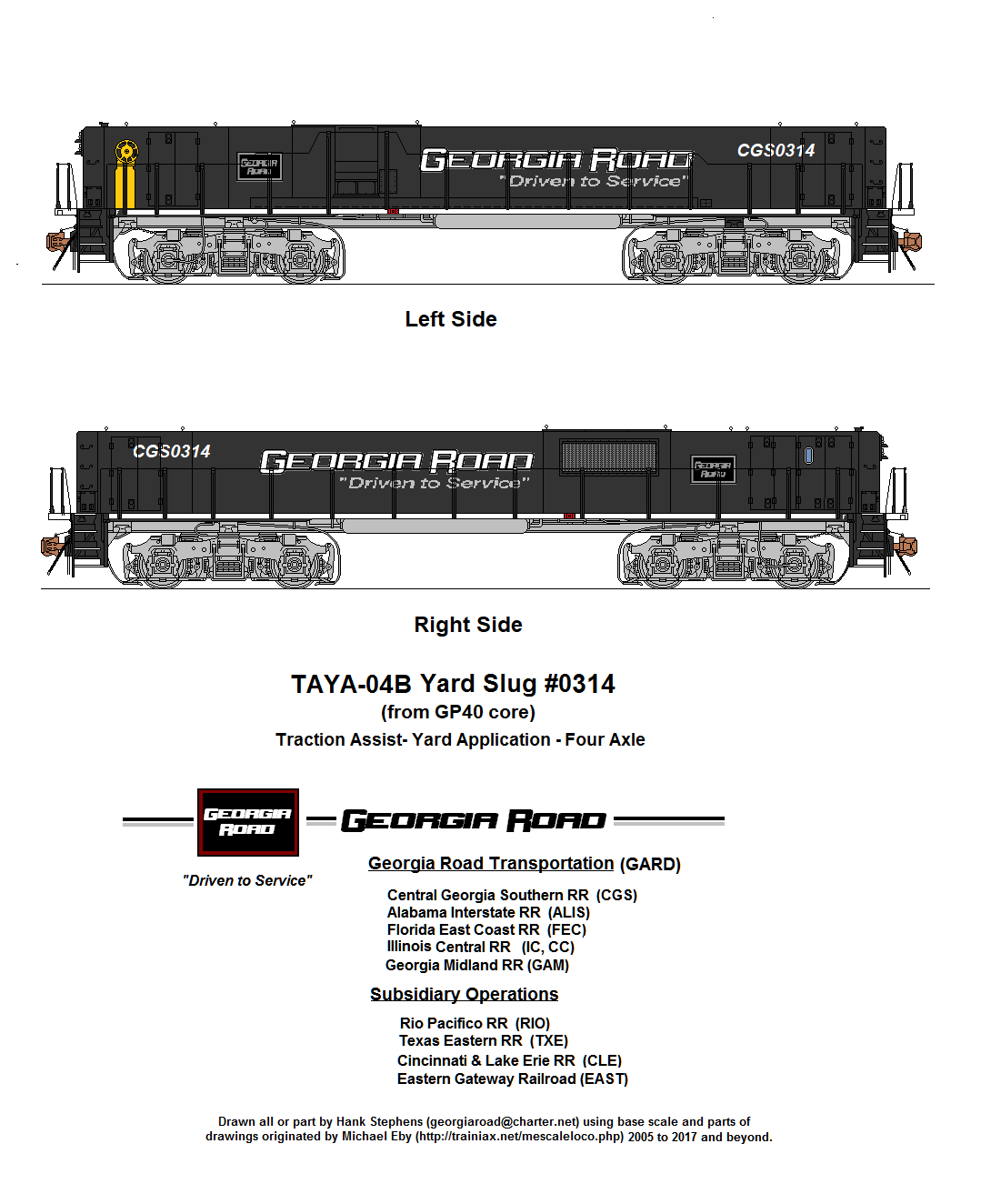
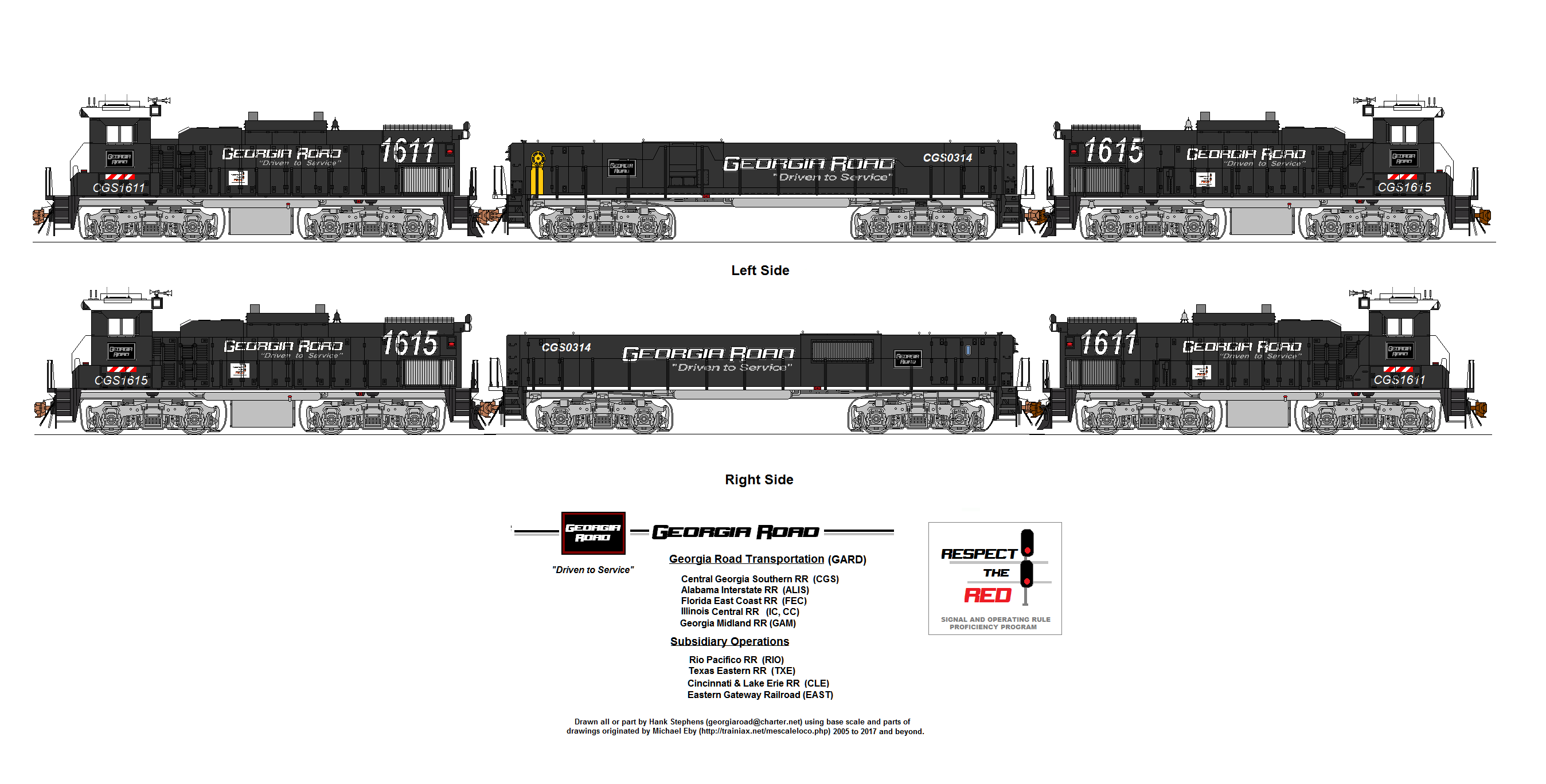
TARA-4 Yard Slugs
Georgia Road TARA-4 slugs are a small grouping, used primarily in terminal classification yard service. These work transfer, hump, trim and flat sorting tasks. Most are paired with lower horsepower 4axle end cab switchers, but some also work in hump and trim sets at one of the several major classification yards on the combined system. In recent years, many of the 4 axle yard slugs have fallen out of favor for six axle versions, mainly due to the longer and heavier trains of the 21st century where block swapping is preferred over terminal classification. As with the switchers, the yard slugs lacked the Cornell Red color found on road locomotives and road slugs to easily differentiate their operational assignment category.
| Road Number | Model | Total Units | Notes |
| 0300-0319 | ex-IC GP38 and GP40, ex UP GP50 cores | 20 | |
| 0320-0331 | ex-UP GP50 core | 10 | |
Note 2–Rebuilt at Stephens Railcar JTLS, Birmingham, AL, from stock acquired by the rebuilder. These units originally intended for TGX Program GP program but were never put through remanufacturing. Units assigned to various SW1500, SW1504, MP15AC and MP15DC mother control units. Assigned to various terminal yards on combined system. Some units paired with SD40-2H mother control units where SW and MP units not suitable due to sized and weight of cuts of cars switched or humped.
The GP TAYA-4B slug rebuild program was the first attempt by Georgia Road to standardize both four axle and six axle slugs under the same specification to allow ease of maintenance across the combined system. IC used a group of older SW14 and SW14M switchers primarily at its Markham Yard in Chicago and Johnson Yard in Memphis along with some outdated TRA type slugs. Georgia Road found it could effectively upgrade some jobs with a combination of SW1500 and MP15AC units in areas where the SW14 was finding itself outclassed due to its lower horsepower and lack of modern cab features.
TARA-4 Road Slugs
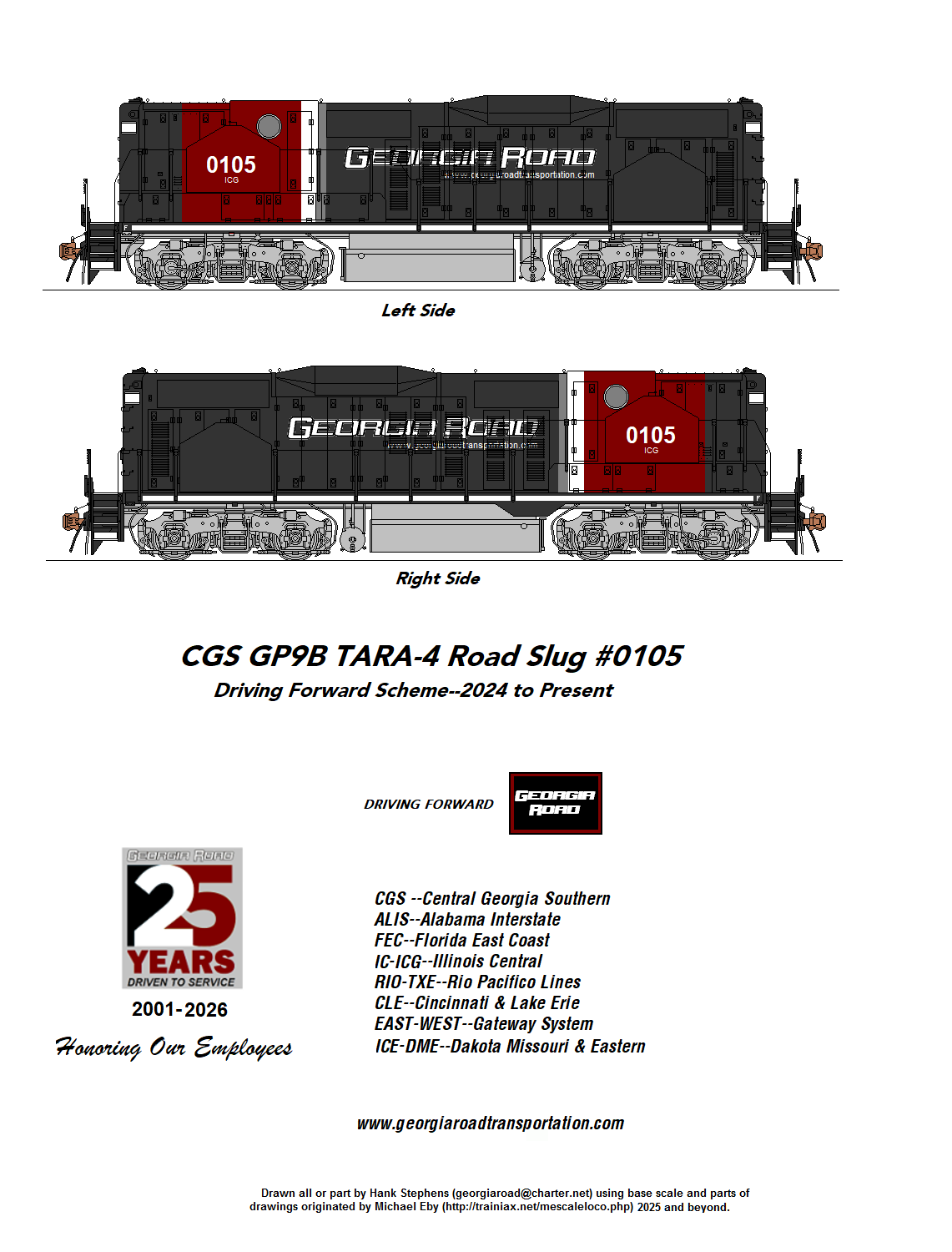
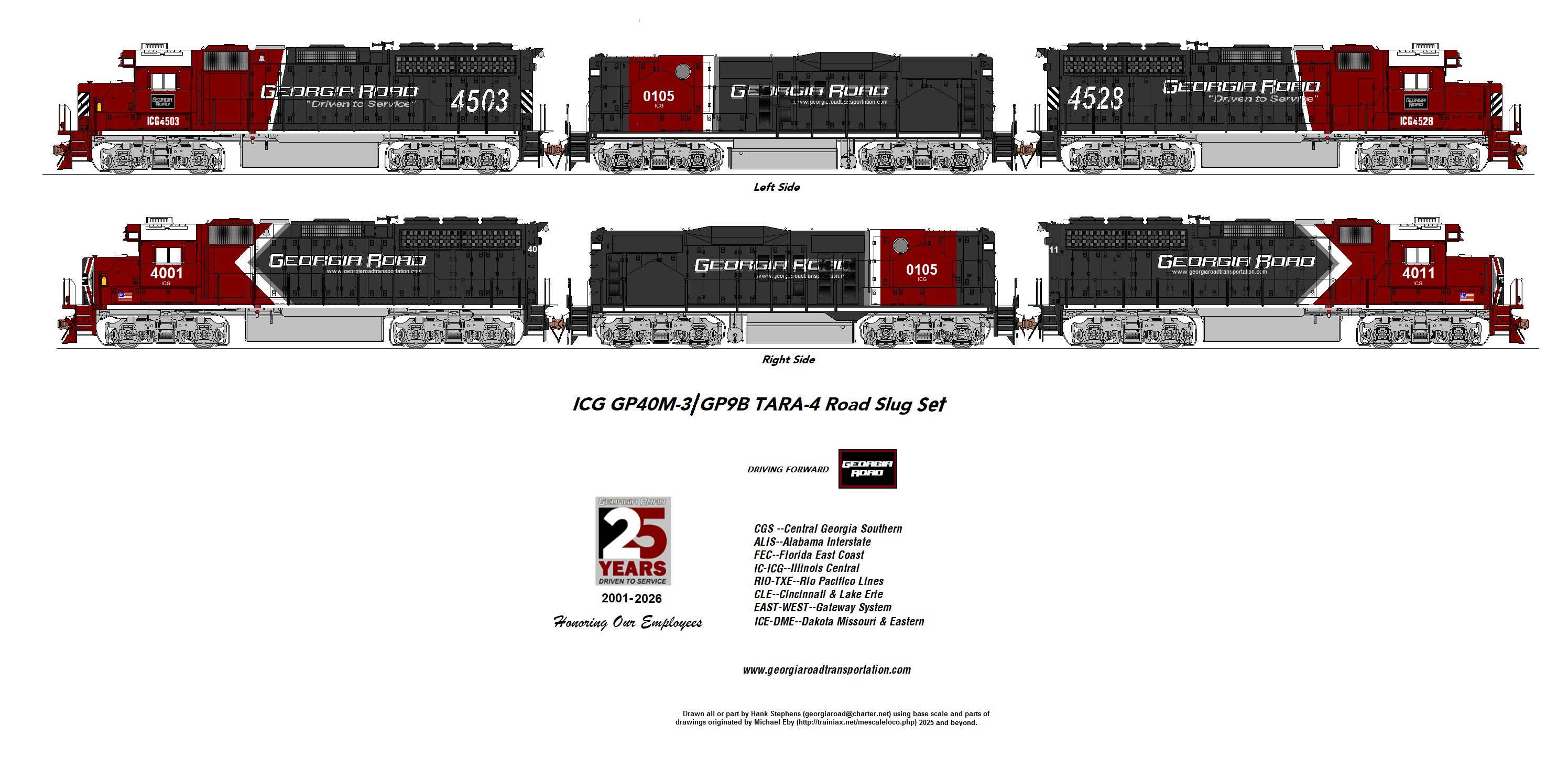
Georgia Road inherited a fleet of ex- Union Pacific Railroad (UP) slugs from the bankrupt Central Alabama & Southern RR (CA&S) in 1995. CA&S used these slugs much as UP had, assigning them to major classification points on its system. As financial conditions worsened just prior to bankruptcy, many were out of service due to various electrical issues. These units were conveyed to Georgia Road when it assumed the bankrupt CA&S estate at its start up in 1996, but they remained stored into the early 2000s. During the 2000s, GARD found it needed a replacement for many of the IC GP40 and GP40R units that came with the IC acquisition in 1999. Road slug sets were proving themselves on Class One railroads like NS and CSX and Georgia Road opted to follow suit. The ex-UP GP9B slugs were available and entered the GP40M-3 Rebuild program for ex IC GP40 and GP40R units as road slug companions. The five former UP S1-S6 GP9B slugs owned by CA&S (S4 was destroyed on UP before the fleet was retired in 1987-1991) were earmarked for road slug conversion to match with select GP40M-3 Program Rebuilds set up as “mother” control units in 2018. UP never rewired the slugs, and electrical issues were always a problem as the GP9B worked for UP. CA&S tried to address the issues with minimal rewiring when it acquired the slugs in 1991 only to see them struggle with availability issues that finally sidelined them when money to maintain them ran out. Georgia Road restored most to yard service but slowly phased them out due to the need for more traction switching the growing larger and heavier trains of the early 2000s. These were stored again until they were converted to road slugs and mated between pairs of GP40M-3 units in 2018. The five original units were assigned to the IC lines with ICG reporting marks matching the rebuilder new GP40M-3s (GARD resurrected the ICG mark to delineate rebuilds and upgrades from those untouched since the IC acquisition).
The three-unit road sets were painted in the standard GARD barricade scheme typical of standard cab units, and at least two sets were renewed and repainted in the 2024 “Driving Forward” arrow scheme. These are double ended road slugs but lack dynamics and cabs. GARD would pull additional GP7 units and convert them to slugs also. These retained their cabs and most had dynamic braking, which was incorporated on later iteration of road slugs as GP9C slugs. The cab was stripped and used only to cross through the slug. Later the program moved to second generation ex SOU GP30 and GP35 units for cores. These were paired with single GP40M-3 mothers as two-unit dual cab equipped sets. These units also retained their fuel tanks and worked as both slug and fuel tender for the mother control unit.
| Road Number | Model | Total Units | Notes |
| 0100-0110 | ex-UP GP9B yard slugs converted for road service | 5 | 1 |
| 0111-0129 | ex- SOU GP9R (retains cab and dynamics | 15 | 2 |
| 0130-0149 | ex SOU GP30 and SOU and NW GP35 cores | 35 | 3 |
Note 2– Ex-SOU GP9R units owned by CA&S and inherited by Georgia Road. Units stored by early 2000s and selective units pulled for road slug conversion in 2018-20219
Note 3–Ex SOU and ex NW GP30, GP35 and GP40 cores used. These are a combination of paired road sets with GP40M-2 Rebuilds and in three-unit sets. Cores with dynamics retained and cab stripped but retained on three-unit sets.
 Georgia Road Transportation