Yard Switching and Transfer Power
Georgia Road uses its own unique acronym when referencing its slugs. TAYA is short for “Tractive Assist-Yard Application” with the number following indicating the number of axles. TARA is short for “Tractive Assist-Road Application” with the number following indicating the number of axles. The addition of a “B” behind the axle number indicates the lack of an operable cab. This allows the power desk to assign these units based on general parameters in any applications, based on job specific needs and typical consist generation for trains.
| Road Number | Model | Total Units | Notes |
| 2995-2999 | SD24M | 6 | 1 |
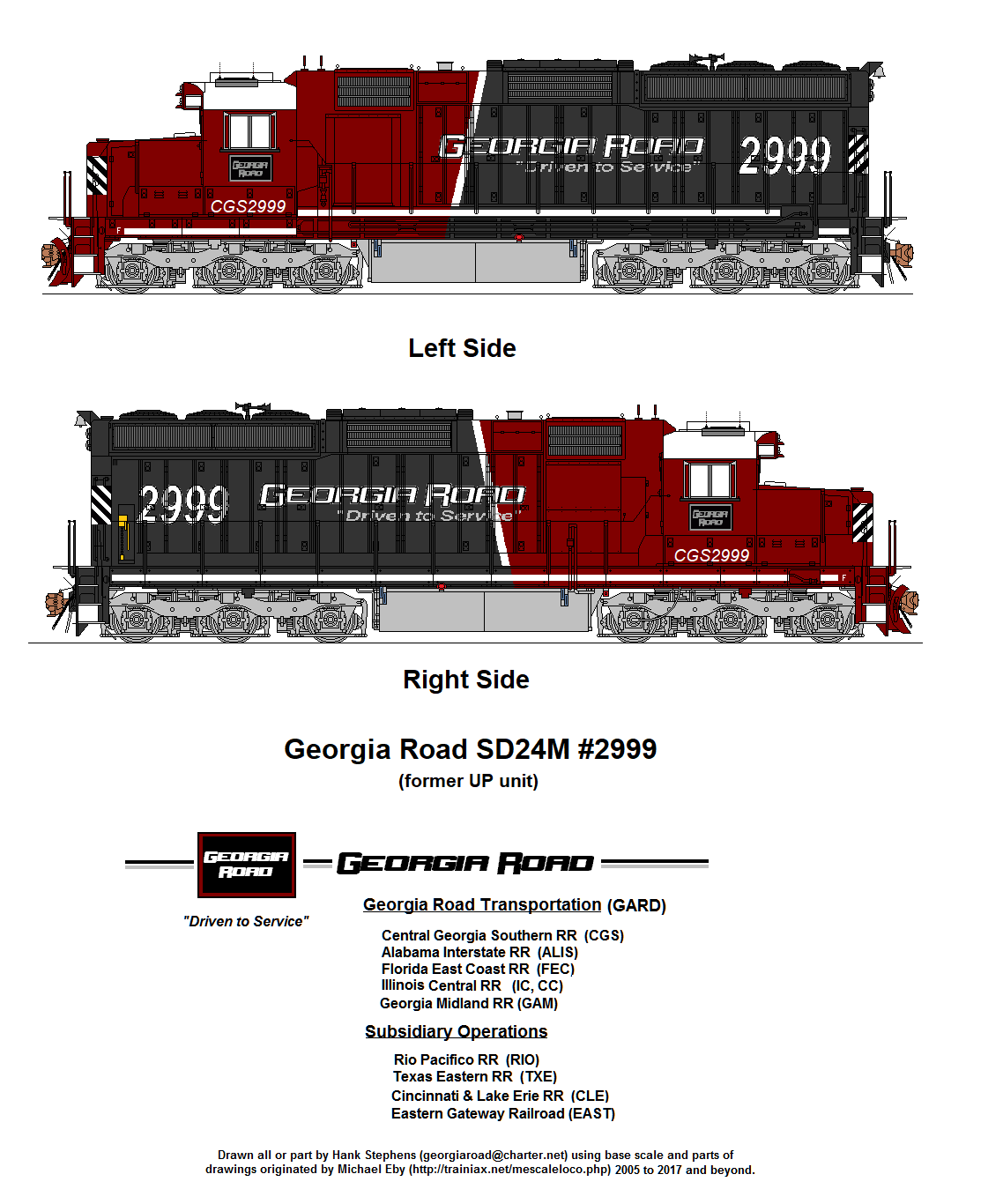
SD24M
he very first Program Rebuild attempted by the Georgia Road after its start up in 1996 was a project to rebuild its worn out ex SOU SD24 units to modernize and extend their operational lifespan. Georgia Road inherited ex UP SD24M #99 from the bankruptcy estate of the Central Alabama & Southern RR (CA&S), who acquired it with a group of ex UP units in the early 1990s in an effort to stem locomotive shortages stemming from failures due to deteriorating finances before its eventual bankruptcy. With the Georgia Road take-over and start of operations, managers quickly evaluated the dozens of CA&S locomotives in an effort to shore up the roster. The ex-UP #99 retained its UP number and was operational. Georgia Road eventually moved the unit to yard operations and stored it for a time.
UP #99 was remarkable in it was a stillborn attempt by Union Pacific to rebuild its SD24 units comparable to its growing SD40 and later SD40-2 fleet. UP figured it could use these new SD24M units to fill in as it waited for EMD to deliver SD40-2 orders, and them move to yard and local service to replace aging SW10 and SD7 and SD9 units working at the time. UP #423 SD24 became the prototype for the program and entered the UP Cheyenne back shop in 1968 to be converted to SD40 specifications. The program was deemed too costly, and the unit became a one unit experiment rather than the first of a series of rebuilds. By the time CA&S purchased the unit, UP had pretty much worked the bugs out of the unit but saw it as a oddity on the roster and retired it. CA&S managed to keep the unit running in mainline road switching until it collapsed in 1996. Georgia Road contracted Stephens Railcar to “reverse engineer” the #99 and created a program to create rebuilder grade SD40-2 units from its ex-SOU SD24 fleet. While Stephens Railcar followed the general layout of the SD24M produced by UP, the years of rebuild experience in the 1980s and 1990s created a better specification for the unit that proved it a reliable and equivalent to the SD40-2 units on the Georgia Road roster. In all, six units including the ex-UP #99 graduated the SD40M program before Georgia Road decided the cost of rebuilding was too high. As a result, Georgia Road added second hand SD40M-2 and SD40-2 units to its roster and cancelled the program after five units were completed. These five and the UP unit were given numbers 2995-2999 and assigned to road and local service. These served in that role until October 2004 when they were demoted to yard and transfer service. Georgia Road and Stephens Railcar also moved its remaining unbuilt SD40, SD35, SD9 and SD24 units in the group. Unit 2997 suffered a main generator fire in 2015 and was retired and scrapped at Stephens Railcar in Birmingham, AL after damage was deemed to severe to economically repair. All remaining units are in service, assigned to Birmingham Terminal due to the proximity to a back shop capable of maintaining these units. Local railfans and some railroad crews gave the five units the nickname “humpbacks of Birmingham” due to the extended height hood behind the cab, creating a distinctive hump spotting feature.
The SD40-2 TAY-06B units were deemed very successful and constituted the largest model of Georgia Road slugs. They could be used in heavy classification, trim, transfer and even flat yard classification using R/C platforms with no setup time, provided a mother unit was handy. All units are currently active, with the group split between Macon, Birmingham and Memphis terminals on the combined Georgia Road system. Unit 2998 and 2999 are slug control capable and are mated with TAYA-6B slugs.,

SD40-2H
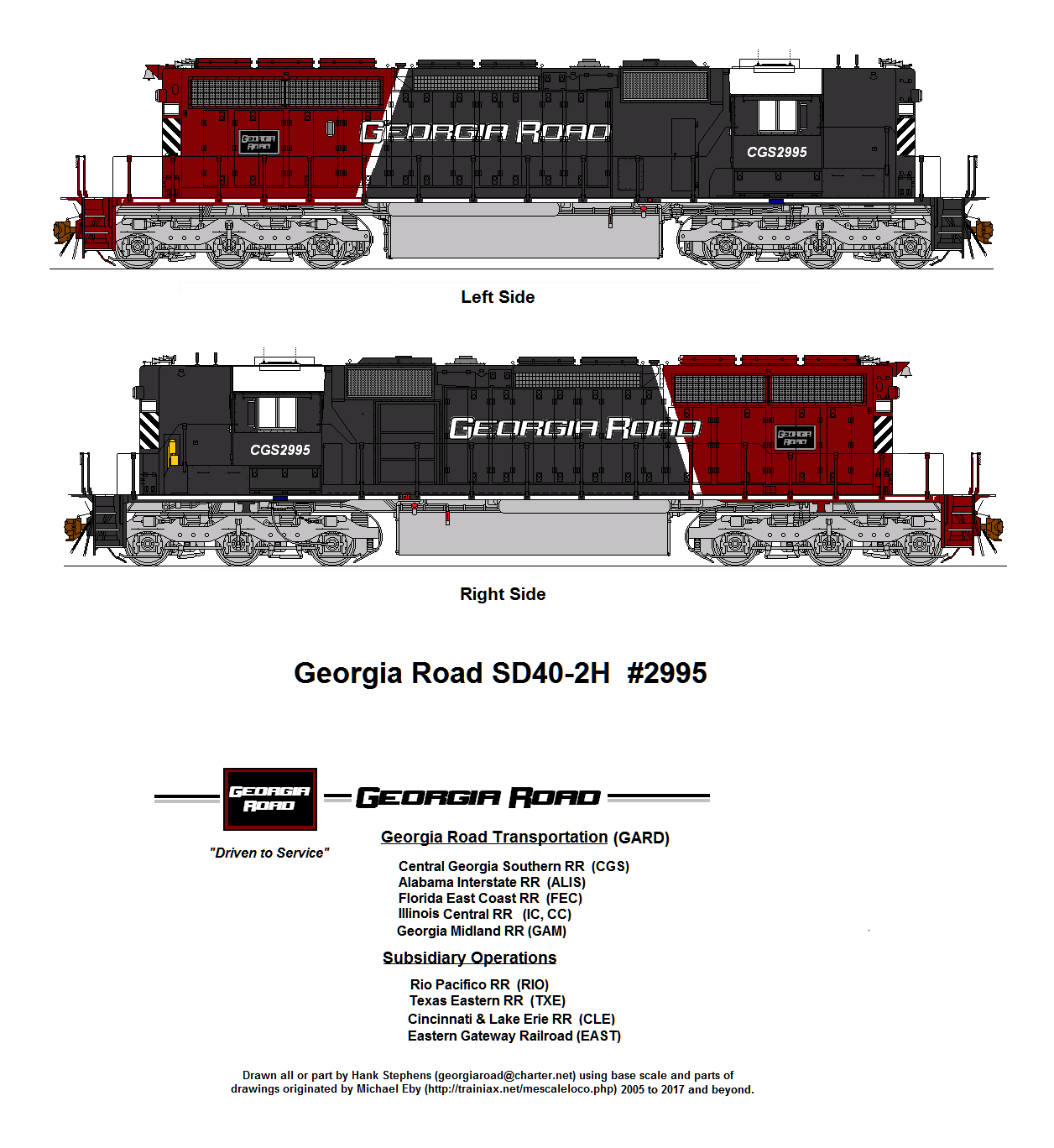
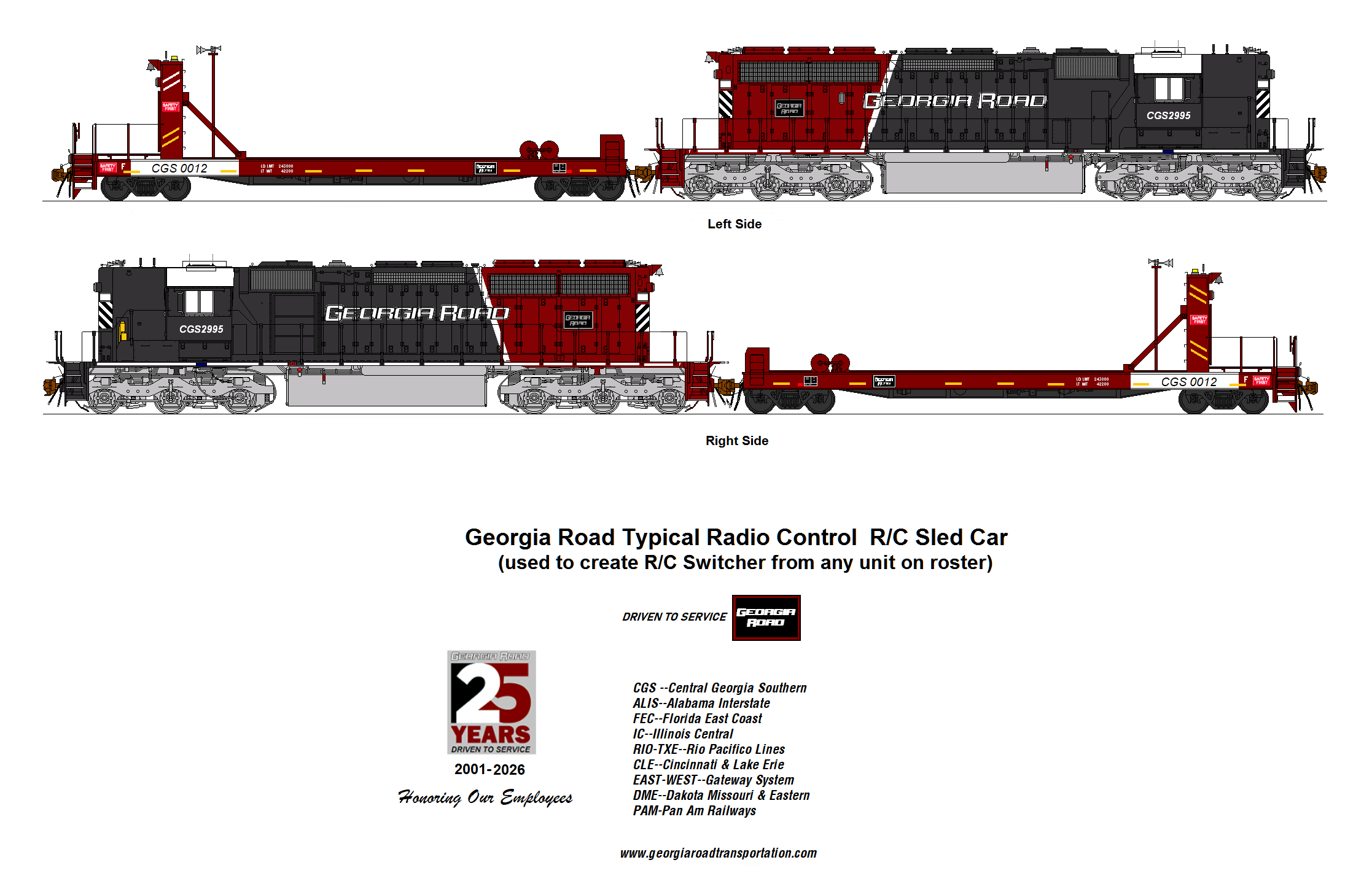
Georgia Road purchased the original CA&S estate along with a group of ex-Central of Georgia and Southern secondary lines. Along with these purchases, Georgia Road received a group of SD40-2H, SD45H SD35H, and SD24 units that become the core of its mainline power at start up. Georgia Road quickly added additional new, second hand and even rebuilder new units through the early 2000s to create a modern and efficient roster. Growth through promoting innovative traffic and acquisition of the IC lines quelled any hopes of completely modernizing the roster, as chronic power shortages and conservative spending sought to always use any resources fully. As Georgia Road added newer power, older power than was deemed unsuitable for mainline operation were quickly demoted to yard, transfer and local service. The SD40-2H units quickly fell out of favor with managers and crews alike due to the visual and operational handicaps of the high short hoods and long hood forward operation. These were placed in R/C control and heavy yard switching were the issues with the cab configuration noted were not an issue. The high-hood, long hood forward operation units received a “reverse” scheme, with the burgundy placed at the rear which was technically the front of the locomotive. Some units were also equipped for slug control operation and most are assigned in yard and transfer service over the system.
SD35M / SD9M
Georgia Road
 Georgia Road Transportation