AC4400CW and AC4400B
AC4400
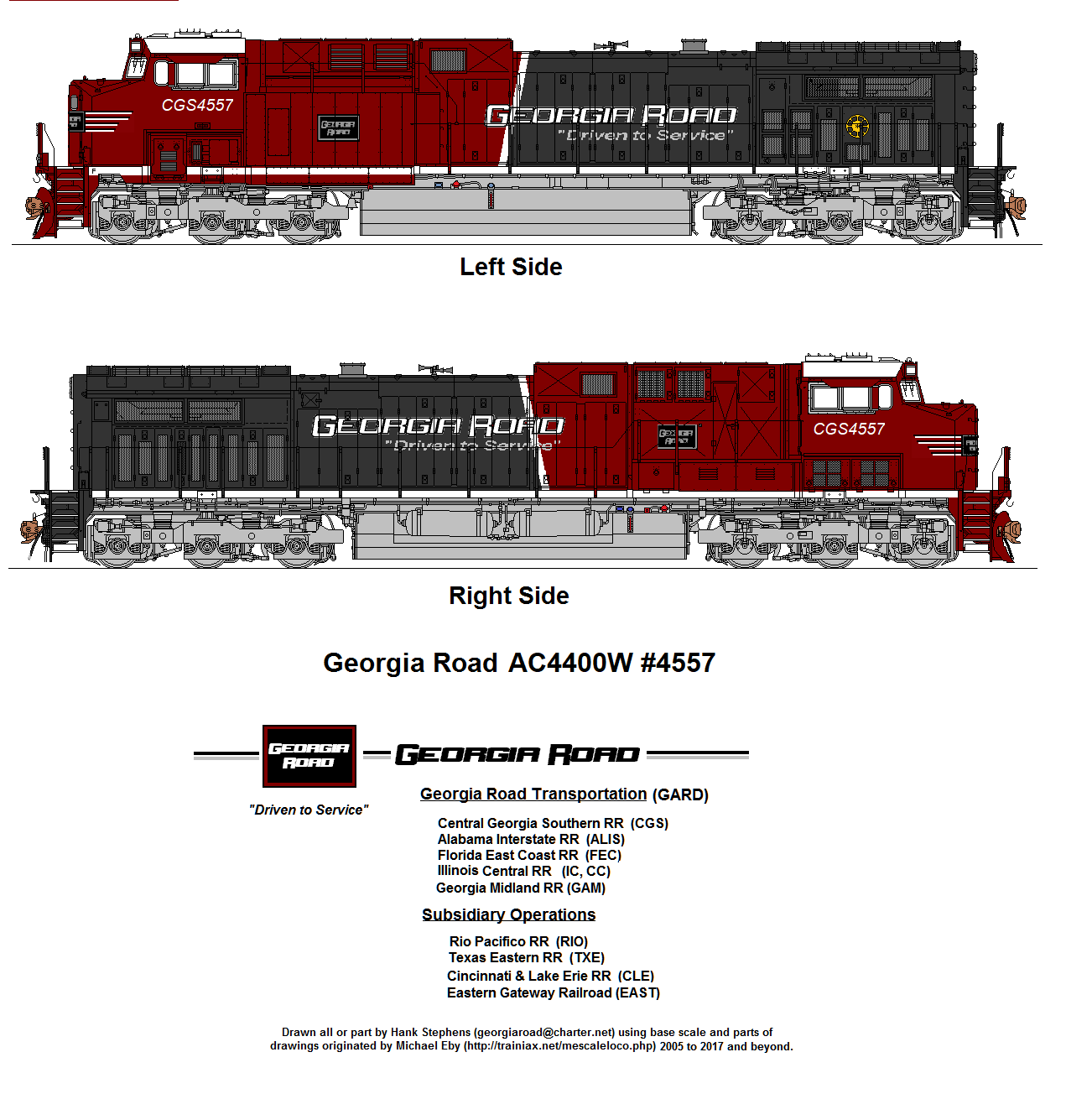
Georgia Road purchased its AC4400W fleet of builder new units during the early 2000s. These were the first General Electric units bought new by Georgia Road, with the various GE models on the roster at the time coming from the Georgia Midland RR (GAM) acquisition in 2004. These were also the first AC traction units on the Georgia Road, with preferred EMD SD70MAC and SD70ACe units following in 2006 and 2010..
The units were numbered CGS 4450-4499 andCGS 4550-4574 and were split among unit grain and unit coal service. Coal units worked primarily on Powder River Coal trains with BNSF headed to Southern Company generators in Palos, AL and Forsyth (Scherer) GA. Locomotives assigned to unit grain service worked primarily out of Commerce, GA, Gainesville, GA and Athens, GA area serving various poultry and soybean mills.
As the number of coal trains reduced in the late 2000s, some units were reassigned to manifest and general freight service. These were rebuilt in kind and repainted into the “winged nose” version, losing the as delivered scheme with the barricade striping. These units also gained PTC and DPU capability and were assigned with former AC6000W units in MexXpress Service with Georgia Road’s Mexican subsidiary, Rio Pacifico Lenas de Mexico.
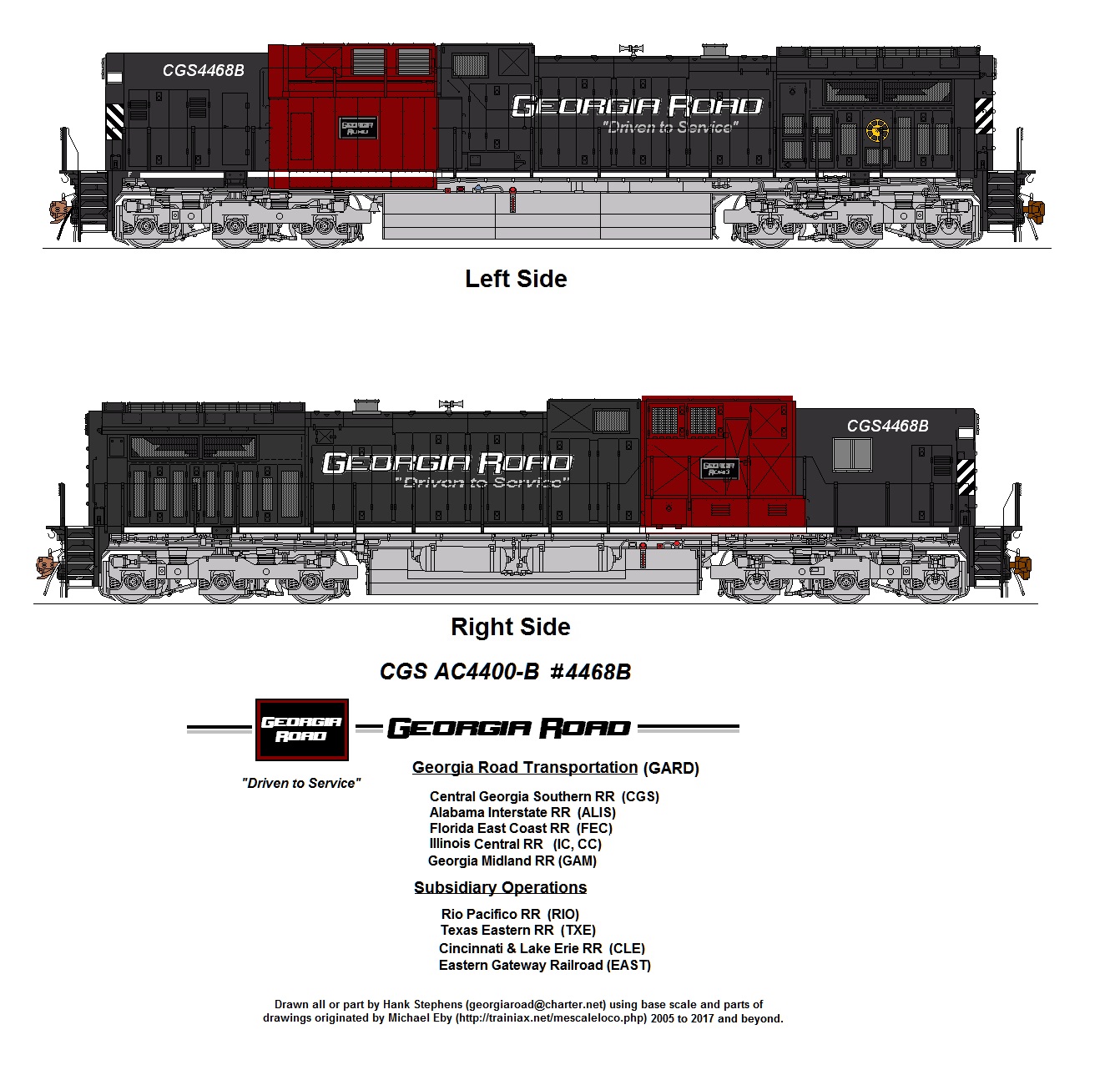
All Georgia Road booster units have what is called a “hostler cab”. This is located approximately where the cab would be. A side window and seat are placed on the left or engineer side and the access door is on the right or conductor side. This cab is cramped and only intended for use in moving the booster around while consisting or in an emergency. The HVAC is retained to keep electronics and the small cab climate controlled. There is no toilet in the nose, the space allocated for ballasting the front as well as storage for extra brake hoses and supplies.
Georgia Road was an all EMD roster until it purchased the Georgia Midland RR and its all GE stable in 2004. Most GAM units ran in GAM Blue for many years after the merger. The new AC4400Ws were the first GE units in full Georgia Road paint. The differences in hood design required changes to the typical Georgia Road paint scheme. The large unit number on the flank of the high hood under the radiator could not be added due to the extra grilles. The square herald was moved to the electrical/dynamic brake skid behind the cab so the number could be displayed on the cab. Again, HVAC grilles prevented the herald and unit number to be displayed in stacked position under the side windows of the cab, typical of EMD power.
Prior to the acquisition of the Georgia Midland RR (GAM), the Georgia Road was a stanch EMD owner and operator. Experience with General Electric power was limited to run-through and joint agency operations in Georgia and Alabama with other Class Ones and the GAM in particular. GAM was all GE in its roster and preferences, and being so close, was the ad-hoc maintenance and repair choice if GE power needed attention on the Georgia Road.
After the GAM merger, Georgia Road immediately became a minority GE owner, as GAM rostered everything from aging U-Series all the way up to builder new DASH-944CW units. The influence of GAM personnel soon manifested itself on the Georgia Road roster in the form of new AC4400CW purchased in the mid-2000s. GE provided financing and support to garner the business, and Georgia Road would eventually roster 100 units, purchased in two different orders.
Typical Assignments were manifest, grain, buik and coal segments. At the time, Georgia Road typically assigned AC traction units to these heavy trains, and reserved DC units for Intermodal and fast medium freights where short-time rating would not be a problem.
In 2021, Georgia Road sent ten units to GE-San Antonio for rebuilding into AC44Cm units as a midlife upgrade. This brought the units up to Tier 2 emissions and produced a completely recapitalized locomotive group. Plans are to continue to cycle the fleet as time and renounces permit.
AC4400B
With any large fleet of mainline locomotives, wrecked units caused by grade crossing collisions and derailments are something that occurs on occasion. Depending on the damage, the unit involved might be scrapped, repaired in kind, or repaired with modifications. Georgia Road is no stranger to booster units, and if damage is limited to the cab, in some cases the locomotive is simply put back into service as a booster to save time and money. The AC4400CW fleet has five such wreck rebuilds that were restored without full cab equipment. As with intended booster locomotives, these cab-less booster rebuilds do retain a Georgia Road standard specification holster cab. These units are mixed freely with the rest of the cab equipped fleet. Boosters are numbered in the 4459-4499 series and have the letter “B” added to the road number. Two units, 4551 and 4598 were wrecked while on BNSF in Nebraska and were written off and scrapped. At least four more units have been rebuild cab-less after incidents destroyed their cabs, including 4468B show here. The use of a GE rear hood end created a humpback appearance, with the nickname sticking in local railfan spotter communities.
 Georgia Road Transportation