DD35B
DD35B
f you happen to be an HO scale traveling railfan in the world of the Georgia Road Alabama Interstate Division, you might find a few interesting locomotives if you ever head to the Deep South to the “Steel capital of the South” known as Birmingham, AL. In the modern-day era of the Georgia Road, you will find industrial landmarks of the past such as the last BOF steel mill left in Fairfield, now shuttered but hanging on as all others pass into history. In the shadow of the old mill, the Georgia Road gets about the business of interchanging freight with area Class One connections, regionals and short lines. A quick look at either of the two major Georgia Road yards in greater Birmingham, AL that makes up Birmingham Terminal finds gaggles of the newest EMD and GE products. For the patient railfan, something more notable will usually show up as the area locals and transfers move in and out in the early morning or evening hours.
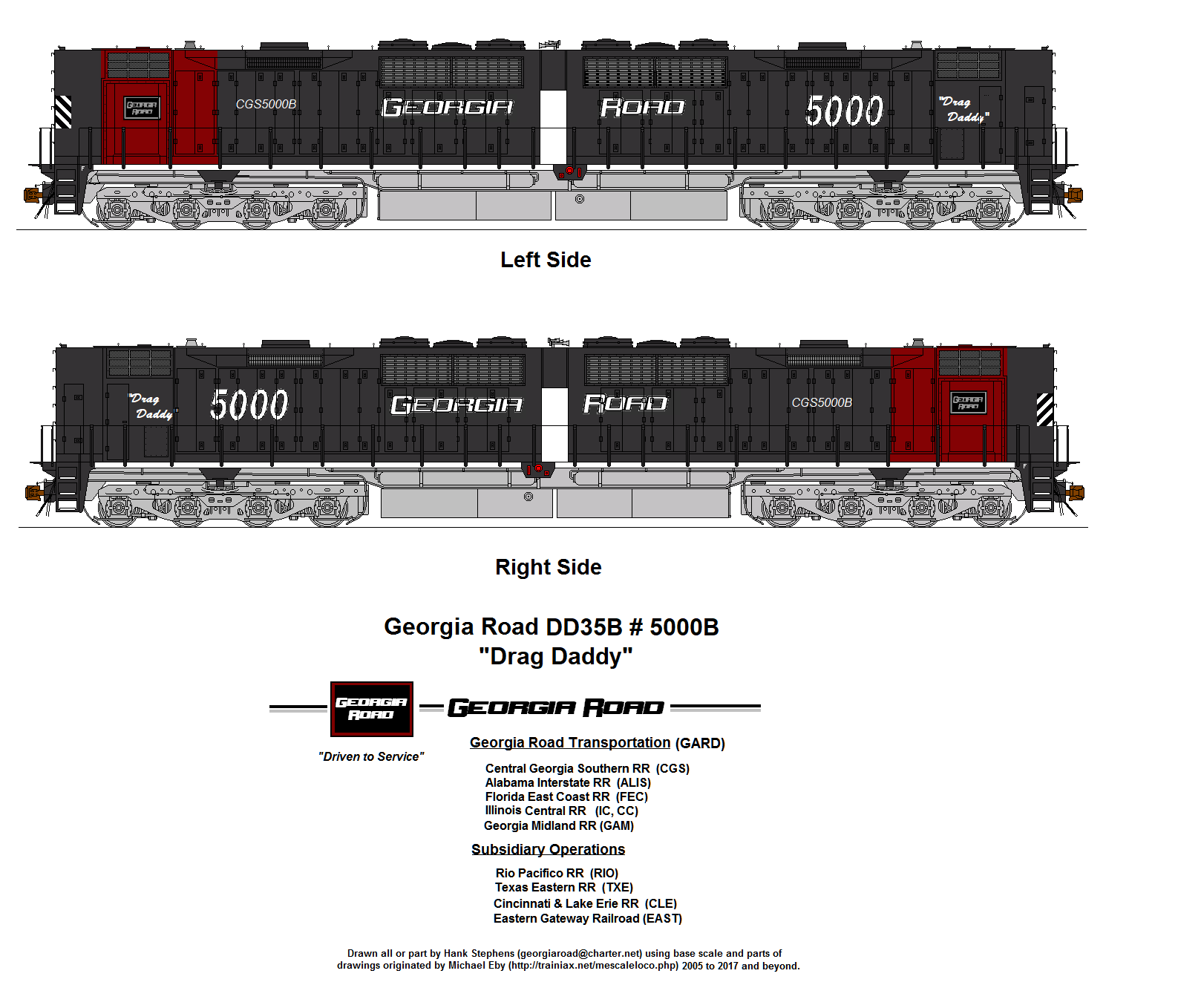
One notable unit is the last operating DD35B 5000 decked out in Georgia Road Cornell red and weathered black. It runs a permanent nocturnal assignment hauling transfers to BNSF, CSXT and NS and linking the two Georgia Road yards. It labors sandwiched between two cab equipped units comprising whatever the power desk can produce to assist it, many times the SD25M fleet (built from tired ex Southern SD24 and SD35 units during the 25M Program) The railroad behemoth earned the nickname “Drag Daddy” from local railfans as the “daddy of all transfer drag units”. It exists and works under the watchful eye of the former SP master mechanic that now hails as the Georgia Road Birmingham Terminal Service Center Superintendent. The old wrench jockey turned manager cut his teeth on the old workhorse in its glory days as an ex EMD demonstrator later in his younger days. He championed its resurrection days before it was scheduled to finally meet the scrapper’s torch in Gadsden, AL while looking for recycled parts. How it got there in the first place was a long and twisting story that has baffled most rail historians and buffs alike since it was pronounced to be scrapped and its builder plate in tucked in an anonymous collector’s cabinet. (Incidentally, if you have it, the super would love to talk to you about rejoining this dinosaur to its builder’s label). Suffice to say it did survive, and now has a new lease on life–a good one at that— if that old super keeps his way. One had better get out early to see it, as it is usually tucked into bed in that sea of new GE and EMDs mentioned earlier by the time the sun breaks hard over the Magic City.
The informed observer would think that old superintendent has a personal stake in that DD35B. It gets trips through the wash rack as regular as the locomotives that haul around the company brass (I dare say a few newer GEVOs or SD70ACe’s might be a little more dingy than usual as they had to give up their scheduled bath time…one would suppose you have to account for all that cleaning some way). Besides, those new units can always go a few extra weeks anyway since the paint is brand new. The ole’ gal does get to kick up her heels through Birmingham. Engineers like to notch her out on occasion when they are on high iron between Fred M Dale Yard and the downtown interlocking on the way to Leigh Yard on the west side of town. It is a good 20 miles or so between the two Georgia Road yards. located on either side of downtown Birmingham.
When the FRA man comes calling, 5000 “accidently” gets assigned to a manifest somewhere. The FRA man and the super have a bone of contention going time after time over the unit. When the terminal gets written up, the super usually contests the findings, and to the chagrin of the FRA inspector wins more than he loses. Since the DD35B is in transfer and switching service, the FRA man almost never misses an opportunity to write up the 5000 for “lack of proper step platforms for switching”. 5000 has her as built ladder type steps and is configured much like EMD built her decades ago. the two heads bicker on a regular basis as to the “historic nature of the unit.” The super even had the unit draw-barred to two units which had the proper steps to get around the findings at one point. During the follow-up visit, a set of findings soon followed when the drawbars were converted back with the original couplers. The super finally had the unit declared a national historic monument (don’t ask me how he did, but he did with the help of a group of rabid railfans–he knew those foamers had a use but just had to find it).
The battle continues to wage on, with everything from lack of ditch lights to truck inspections on those huge four axle trucks becoming the subject of the latest findings. The Super even once put it on display for a period of time as a signpost for the terminal entrance, in an effort to thwart the FRA man when all other recourses were exhausted. That did not last for obvious reasons. What do you do with an 80ft sign that happens to be sitting on working terminal track? The division manager was not amused, but he likes that old Super and is as much the reason for 5000 hanging on as anyone.
These days, 5000 simply takes a working vacation on a road local when the FRA shows up. The old adage, “out of sight, out of mind.” seems to work. If it happens to be accidently assigned to a manifest it might take a few days to get the dual locomotive reassigned and back home. Rumor has it the FRA man has the 5000 already written up before he ever gets to the yard. He has to see it in order to post violations and the super has become adept at moving the unit around during visits.
If you want to see it, go to bed early and rise before the sun and set up near downtown Birmingham. If traffic levels lend a hand, 5000 and its flanking lead units will pass by on its way back from Georgia Road’s Leigh Yard to the to the Irondale side of town to be tucked away in a sea of Georgia Road power at the sprawling Fred M. Dale classification yard. There it sleeps until the sunset heralds the next call to action. It probably wouldn’t hurt to check to make sure that it’s not on vacation in adjoining terminals in Atlanta or Memphis. If that’s the case– just be patient because 5000 won’t stay gone for long. Any other time it works in the Birmingham Terminal as permanent yard transfer power in the cover of darkness. There are no plans to change the status of this unit, the last surviving DD35B, former EMD 35 series demonstrator and a daily operating member of the Birmingham Terminal Yard and Transfer roster.
 Georgia Road Transportation