AC6000W
AC6000W
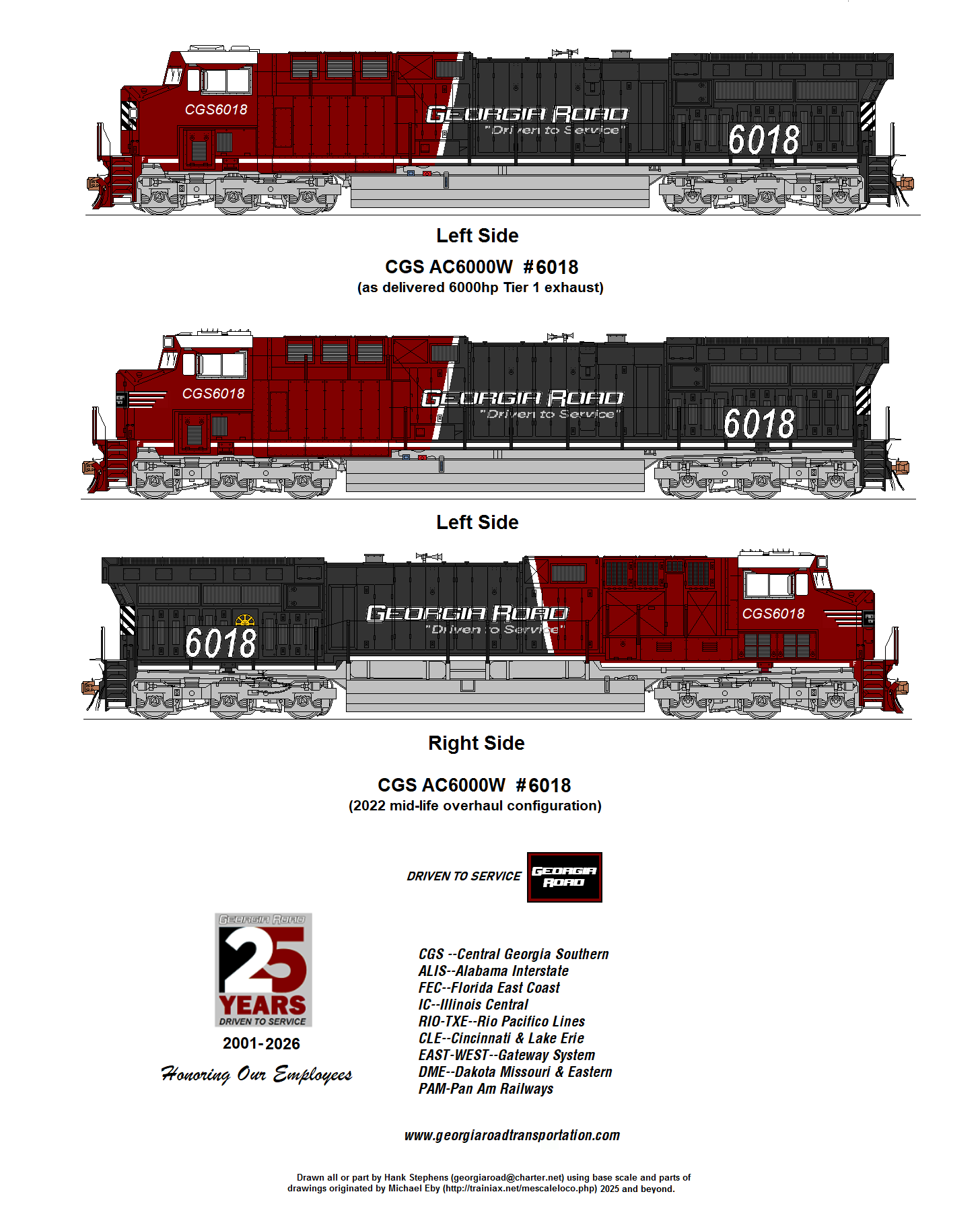
As Georgia Road increased its size with the acquisition of the former KCS Artesia Secondary and the IC system in 1996, it once again found itself in need of heavy road power to fulfill unit grain and coal train moves across the system. It purchased 20 AC6000W units numbered #6000-6019 from GE on the back of an AC4400W order which GE delivered in 1994-1995. Georgia Road already sampled high horsepower, purchasing the EMD H-engine SD90MAC unit. As with all buyers, it was attracted to unit reduction due to the higher horsepower per unit. Both OEM locomotive builders were in a race to field a high horsepower platform of 5000hp or greater and Georgia Road was open to trying these new models in road service. The SD90MAC units were plagued with constant primemover issues, and the GE AC6000W units promised the same high horsepower with a combination higher reliability and generous financing from GE.
Georgia Road found the AC6000W reliability only incrementally better in service than the EMD 90-series counterpart, but continued GE support kept the units viable for several years. GE was still committed to the newly designed 7HFL 6000hp powerplant at the time despite obvious shortcomings and wanted field service data on the AC6000W platform. GE technicians actually maintained a presence at the Georgia Road back shop location in Birmingham, AL in an effort to iron out bugs and tweak the locomotive design to address various operating issues and failures. GE continued to offset the additional maintenance and repair costs well into the 2000s in exchange for real world data. A decade after delivery, the reliability of the AC6000W was drastically improved, but still fell short of the AC4400W units that became standard in the late 1990s. It was apparent that bigger was not always better when it came to horsepower design in locomotion during the horsepower race of the mid-1990s. EMD and GE moved on from these horsepower behemoths to lower horsepower, industry standard designs in less than a decade.
Georgia Road agreed to release GE from continued liability for the AC6000Wunit 7HFL primemover design and purchased new ES44AC units with liberal financing and support from GE in 2011. At that point, the AC6000W design was left to the owner with formal support discontinued. Georgia Road was now tasked with addressing high maintenance and low availability issues as it saw fit. All twenty units were reassigned to the joint MexXpress Service between Georgia Road and subsidiary Rio Pacifico (RIO) starting in the mid 2000s. RIO assumed maintenance and repairs with hopes of lower labor and cost structures at its shops in Guadalajara, MX the answer to offsetting the extra costs of operating these under-performing units. This new cross-border US-Mexico-Canada gateway created a spike in locomotive demand, and the twenty units were a quick fix infusion relieve shortages on both the Mexican and American sides of the border. RIO made an attempt to increase reliability of the AC6000W units by downrating all twenty units to match its own AC4400W fleet, setting maximum fuel rack parameters at 4600hp. This improved the performance by reducing strain on the engine, which was prone to engine vibration failures and blown turbochargers, of which the big AC units had two turbochargers instead of the usual one. The downrated AC6000W group retained its 6000-6019 numbering and primarily worked manifest and grain moves for RIO Pacifico and its US holding, the Texas Eastern (TXE).
RIO and TXE operated the fleet without incident, though struggled at times with higher-than-normal breakdowns Out of service units were shopped and put back into service multiple times. By 2015, all twenty units were stored in deadlines on the TXE in Houston as downturns in traffic patterns reduced demand for locomotives. The leading opinion indicated the high horsepower era on Georgia Road was officially over, as the railroad had already begun remanufacturing its SD90MAC fleet through the Stephens Railcar Services TGX Program ENCORE initiative. The program produced the SD70MAX, which used SD90MAC and SD9043MAC car bodies for remanufacture into recapitalized units that matched specifications of the EMD SD70ACe units Georgia Road purchased new in 2014-2015 These SD70MAX rebuilds were considered a success and Georgia Road even began acquiring second hand EMD 90 series cores from other railroads to extend the program for SD70MAX units. In 2019, Georgia Road looked at a similar program of remanufacturing the now idle AC6000W fleet. Using OEM kits from GE-WABTEC, Georgia Road contracted Stephens Railcar to create a remanufactured version of the GE ET44AC. Stephens Railcar handled the conversions and completed fifteen units before the COVID-19 Pandemic ended the program in 2020. These units were designated ES44CM-T4 and proved a successful conversion also.
Five units not remanufactured into ES44CM-T4 units remained stored in the Stephens Railcar deadline at its JTLS shop in Birmingham, AL for several years while the fifteen remanufactured units mixed with OEM ES44AC and ET44AC units into 2023. An acute power shortage in late 2023 had Georgia Road request the five deadline AC6000W units to be repaired and repainted in the current “winged” scheme. The quintet of AC6000W units were then assigned to captive grain trains servicing feed mills in Georgia and Alabama, making loops from producers in the Midwest to consuming feed production mills in the Deep South. They also frequent general service assignments based out of Birmingham, AL. This kept them relatively close to the Georgia Road main shop in Birmingham where Stephens Railcar could address units needing repairs or service, Stephens Railcar implemented a list of modifications to address reliability issues and the quintet came close enough to meeting availability and cost requirements to keep them on the active roster. Success was moderate, but at least for the time being, units continued to turn revenue service in their original 6000hp 7HDL configuration.
All five units are currently in service with no plans to retire them in the near future..
 Georgia Road Transportation