Maintenance of Way Road Service Locomotives (MWRS)
The 9900-9999 Series block is earmarked for locomotives owned and operated specifically by the Maintenance of Way- Roadway Service Department (MWRS) of the Georgia Road. These units are restricted to operations directed solely by the MWRS to guarantee that maintenance scheduling and activities are completed in a timely fashion without delays incurred by lack of sufficient motive power. This group also includes some self-propelled radio-controlled power units, cranes and other related equipment.
As Georgia Road approached its first decade of operation in the early 2000s, rapid growth caused the railroad to struggle to maintain suitable numbers of road service locomotives for increasing numbers of train starts at terminals. Some larger terminals experienced months of chronic motive power shortages. Scores of older units in need of rebuilding or retirement were held in road service longer than intended to quell the acute issues, but the increases in road failures soon nullified the extra power boost. As a result, desperate power desk managers began “borrowing” power from Maintenance of Way trains to keep road trains moving. These MofW locomotives were assigned to various maintenance of way operations, including surfacing, rail and tie renewal on tight schedules. Delays on one project would affect the next until delays accumulated over time and completely removed any semblance of accurate program scheduling. As scheduling was pushed out further by delays due to missing motive power to run projects, program maintenance in general slipped. This in turn began affecting the ability to maintain the railroad to a set standard. These units typically worked ballast trains, moved gang equipment between work areas, and powered any construction, bridge or derailment clean-up support. When their assignments were changed without notice to support road trains, the cost of delays and deferred maintenance increased.
Constant power shortages were chronic by 2006 and it was not uncommon for units assigned to Maintenance of Way projects to be requisitioned without notice for road train service regularly. Locomotives would be sent to terminals for repairs and servicing during gaps between projects, only to be repurposed for road trains. The result was random job stoppages on current or upcoming MofW work practically stopped programmed track renewal, Slow orders and track conditions began affecting road trains. It became commonplace for large system gangs to stand and wait on material or movement support due to lack of motive power support. As a result of these chronic problems, Georgia Road reorganized its Maintenance of Way Department to the current Maintenance of Way Roadway Services (MWRS) segment, separating it completely from the Transportation Department. This move allowed the MWRS to act as its own cost/scheduling center inside the Georgia Road hierarchy. Rather than struggle with Transportation control, MWRS became an independent cost center with a budget and oversight dedicated solely to actual MofW activities. It now had the ability to acquire locomotives, rolling stock and equipment necessary to properly support system maintenance of way outside of transportation department influence, where road operations were many times prioritized over MofW activities. MWRS acquired and set aside specific power and rolling stock necessary to support the new MWRS with full and total control of the equipment. Transportation was no longer able to co-op maintenance of way to deal with its own unrelated issues as was done when MofW was part of Transportation. This effectively addressed the largest cause of program delays. Cost savings quickly added savings and vastly improved the new MWRS ability to maintain track and structure to proper levels.
Locomotives in the MWRS fleet were typically selected from older classes of locomotives set aside by Georgia Road. Many units were nearing their life expectancy and were not economically viable for remanufacturing as road or heavy yard duty. MWRS service typically reduced the strain on older units. “Latest and greatest” requirements of the transportation side were unnecessary where older dependable locomotives in good repair could power MWRS trains effectively at less cost. MWRS had money set aside for maintaining these units at reliable operation standards as well as modifications needed to better suit the MWRS units to maintenance of way train operations.
The MWRS locomotives were given the 9900-9999 series to block all of them together under the “99” series which historically indicated non-interchange company maintenance of way. Units were painted in a modified Georgia Road maintenance of way yellow scheme. Standard Georgia Road graphics were used to simplify painting, but color shifted to match the yellow base color adopted by MWRS. This scheme included large “Maintenance of Way” lettering under the logo on the long hood to alert hostlers and terminal managers that these units were “owned” by and only to be assigned for MWRS operations. The 9900-9999 series numbers were earmarked solely for MWRS and power desk managers knew by the number series these were not for road service use.
The 9900-9999 series locomotives roster changes on a regular basis as units are allocated, used and eventually retired when no longer suitable for MofW train work. As Georgia Road replaces and downgrades classes of units for whatever reason, MWRS is given first choice. Because most are from storage and retirement lines, models tend to be considered unsuitable for road service, transfer or yard switching assignments. due to age or non-standard configuration based on road locomotive requirements of the time. If Georgia Road has no available candidate locomotives at a given time, MWRS is able to look for outside acquisition for additions to the fleet.
SD50-3
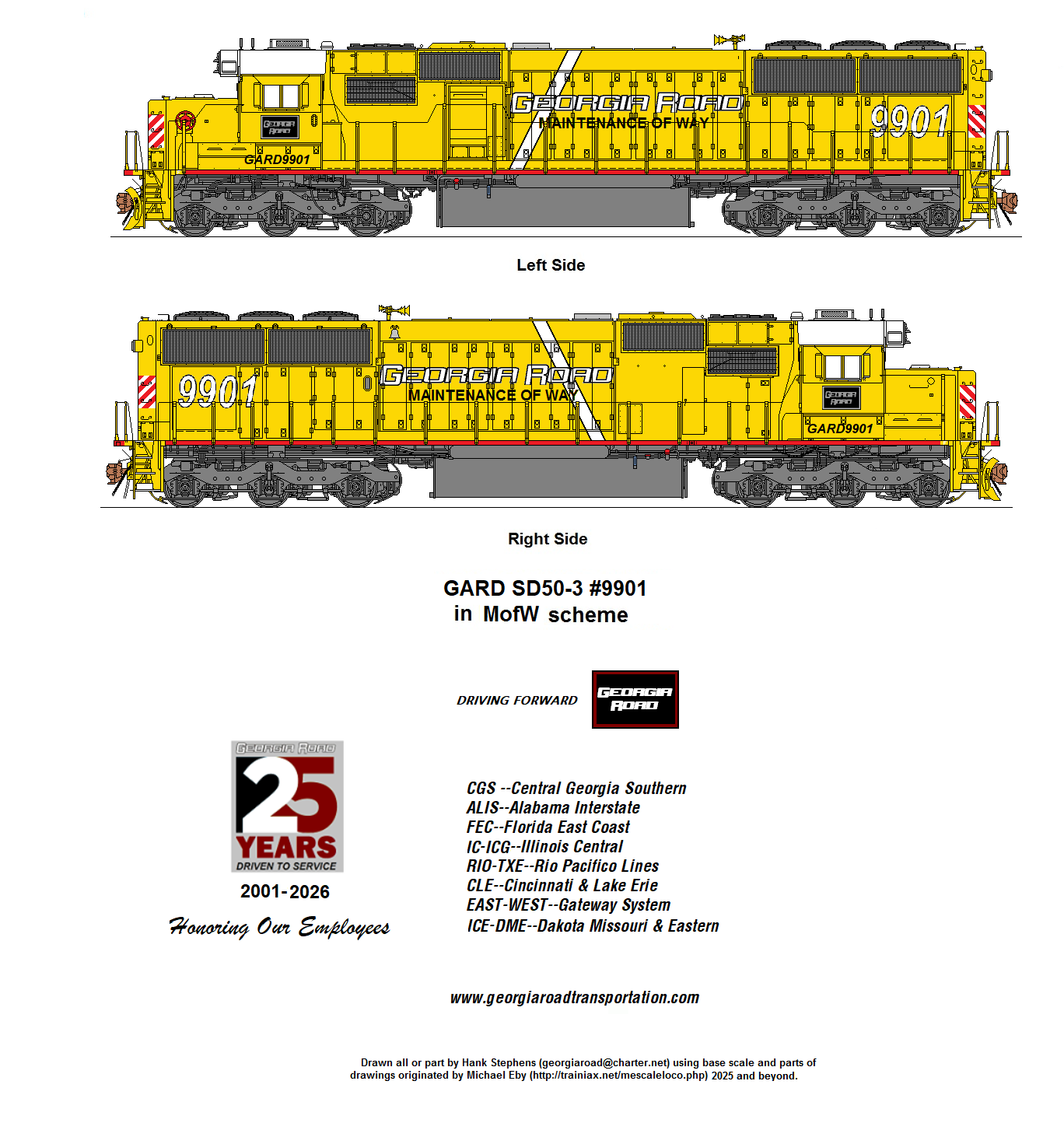
Georgia Road inherited a substantial fleet of 30 builder new SD50 locomotives from the bankrupt Central Alabama & Southern RR (CA&S) which were bought builder new from EMD. Design flaws and shortcomings were prevalent with the model, primarily due to the EMD 645 being stretched well beyond its operational limits. Georgia Road inherited a group of 50 series units bereft of proper maintenance and immediately sent ten units to Stephens Railcar for downrating and rebuild to increase reliability. These units exited the shop designated SD50-3 units, rated at 3000hp (down from 3500hp) with a new microprocessor control system similar to the typical SD40-3MP units of the time. The plan was to eventually shop the whole group, but Stephens Railcar convinced Georgia Road to use the remaining units as cores for the brand new TGX Program to produce a rebuilder equivalent to the SD70 using a purpose designed Caterpillar primemover.. Thes ten SD50-3s completed would run in general service until the establishment of the MWS fleet. At that point, Georgia Road retired the units from road service and transferred the lot to MWS along with all remaining older former Georgia Midland locomotives.
To date the MWS SD450-3 locomotives seem to be operationally successful in MWRS service. These units are typically assigned to CWR rail trains or Georgia Road ballast trains.
T18C
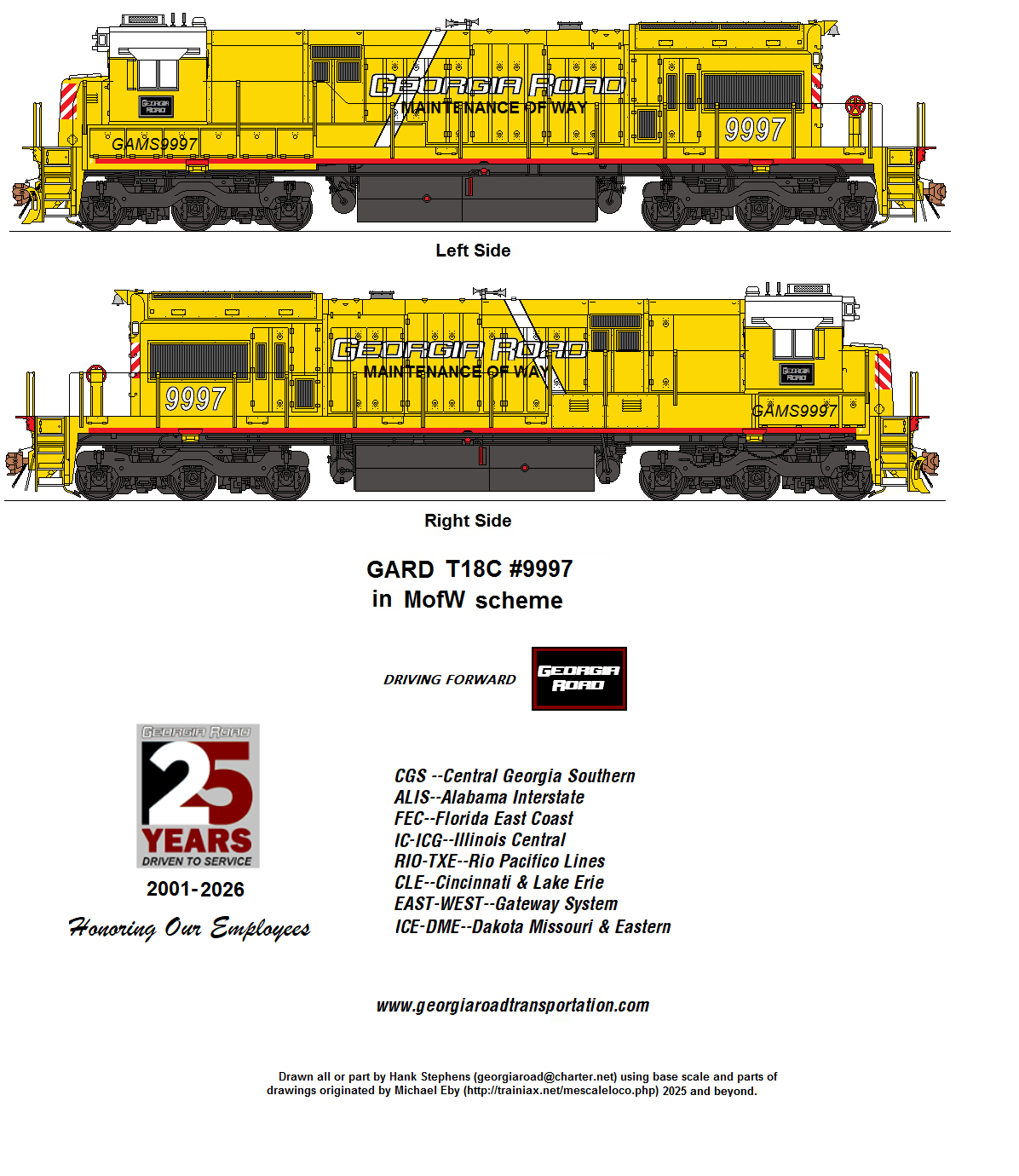
The T18C was one of the last rebuilding projects taken on by the independent Georgia Midland System (GAM) before Georgia Road acquired the line following the death of the road’s owner in 2004. GAM was known for its all-GE roster, relying on a group of new and older rebuilt units to power its grain-heavy operations in Georgia and Alabama. The GAM Cedartown Shops was adept in not only maintaining various older model GE units in good operation but produced several remanufactured variants using older U-Boat series cores units. The most notable program involved converting older U-series to various Dash 7 and Dash 8 configurations. It also pulled older U33C and U36B cores for the creation of a low horsepower unit to work large feed mills in its corporate home around Gainesville and Athens, GA. The units had their primemover replaced with a 12-cylinder modern FDL powerplant and upgraded Dash 7 cooling. These units were effectively U18B units in a six-axle form. The U18B model was a favorite of the GAM due to its relatively light weight to medium horsepower design. Adding a six-axle variant increased adhesion and lugging ability where GAM needed it. A total of 12 units were created from various cores resulting in various hood and radiator configurations. The model was called the T18C, (Transfer-1800hp-6 axle “C” trucks” and were built between 2002 and 2004. These were purpose built to work in pairs while switching long, heavy cuts of grain hoppers on the old Gainesville Midland trackage between Athens and Gainesville, GA. The design proved so successful that GAM built the final two pairs for train building and transfer use at its old Howell Yard in Atlanta and the Georgia Road Joint Agency at 32ndST Yard in Birmingham, AL .
At the Georgia Road takeover in 2004, the GAM Cedartown Shops were closed and finally razed in 2005. All personnel GAM were moved to Birmingham to the large shop at the former surplus NS classification yard in Birmingham, AL, Georgia Road acquired and renamed it as the Fred M Dale Yard in 2004. All GAM locomotives were assigned to the shop there, and by 2006 Georgia Road was quickly replacing much of the older GAM power with modern units. The T18C units were stored as roster odd-ball designs, replaced by sets of Dash 9-40C,, SD38-2 and SD40-2 road and yard slug sets. The newly formed MWS fleet designated its heavy maintenance point at Birmingham, AL. Tt was no wonder the nearly brand new T18C units were quickly acquired and restored to service for MWRS operations. These six axle units proved quite adept at working material distribution trains including new tie set-out trains and CWR rail trains which valued slow lugging over speed and horsepower. The long rear pilot left open by the shortened hood provided a good vantage point for monitoring worksite train operations and storing tools and personal equipment made them a favorite for MofW personnel. With only 2-4 years of service out of the Rebuild program, the T18C units were practically new and known for reliable operation.
To date, all units are in operation working in singles or pairs on various material distribution trains.
GP38M
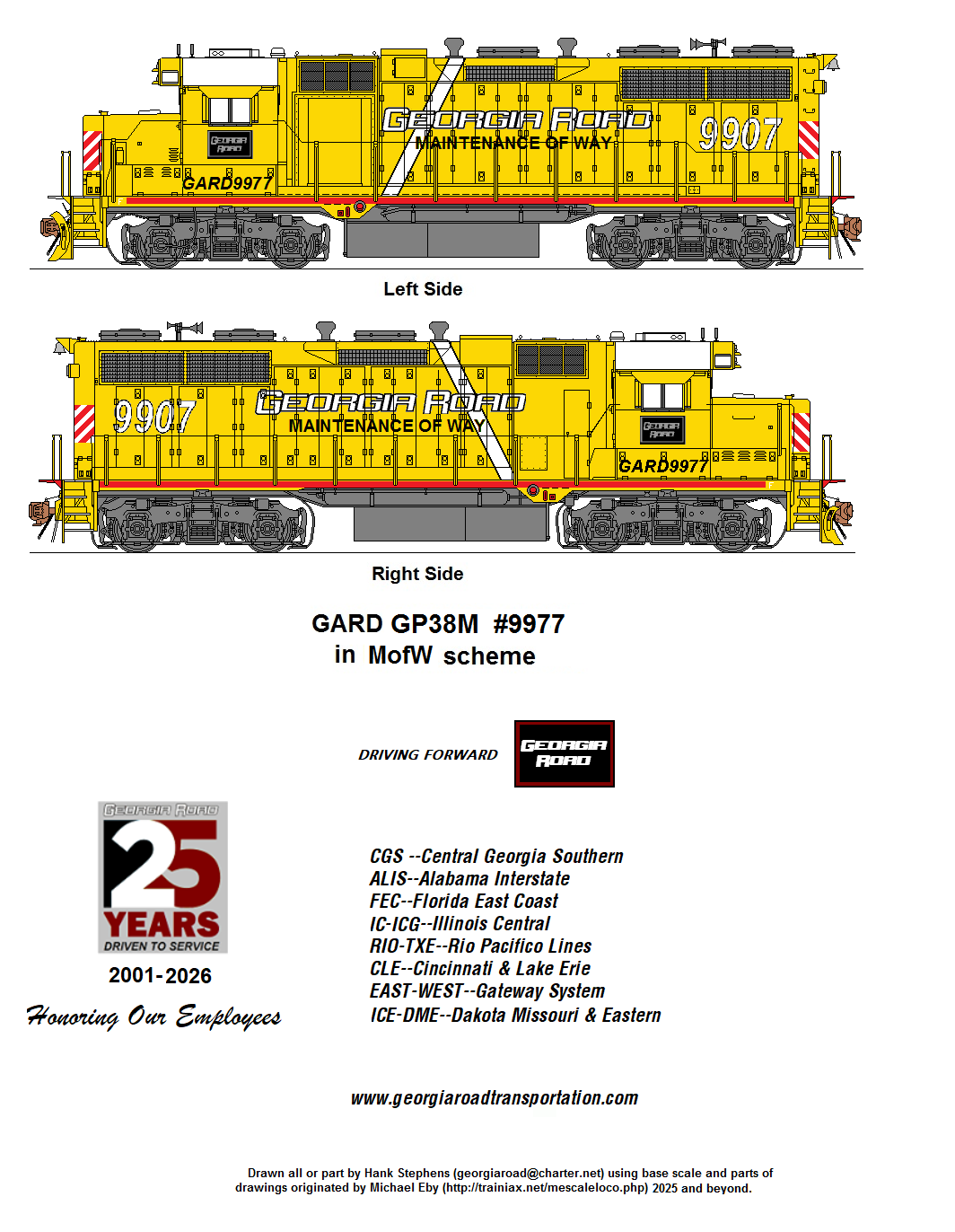
The GP38M class of Maintenance of Way Roadway Service (MWRS) locomotives that did not originate from cast-off power on the Georgia Road roster. Instead, these units came by way of lease as MWRS power for the Powder River Coal Expansion Project of 2010. In 2008, Georgia Road acquired the Dakota, Minnesota and Eastern RR (DME) railroad. DME was a spin-off railroad from the old CN&W western lines and aspired in 1999 to build a 281mile connection into the Wyoming Powder River Coal region from its Colony WY to Chicago main line. The project was bogged down in legal battles until 2007, when it was cleared to begin construction. in 2008, DME combined with IC&E and attempted to raise financing for the multi-billion-dollar project. After failing to garner needed financial support, the road sought out help from connecting Class One railroads. Georgia Road and Canadian Pacific both showed interest as both railroads had substantial joint contracts with BNSF and UP to move coal from the Wyoming mines to their respective connections for delivery to generating plants on both the Georgia Road and CP systems. After three way negotiations with DME-ICE,, Georgia Road and Canadian Pacific, the DME-ICE road became a subsidiary of Georgia Road in 2008. Georgia Road enlisted the help of CP to start the Powder River expansion project in 2010 and completed it along with upgrades to the existing DME route to Chicago in 2014 nearly a year ahead of schedule.
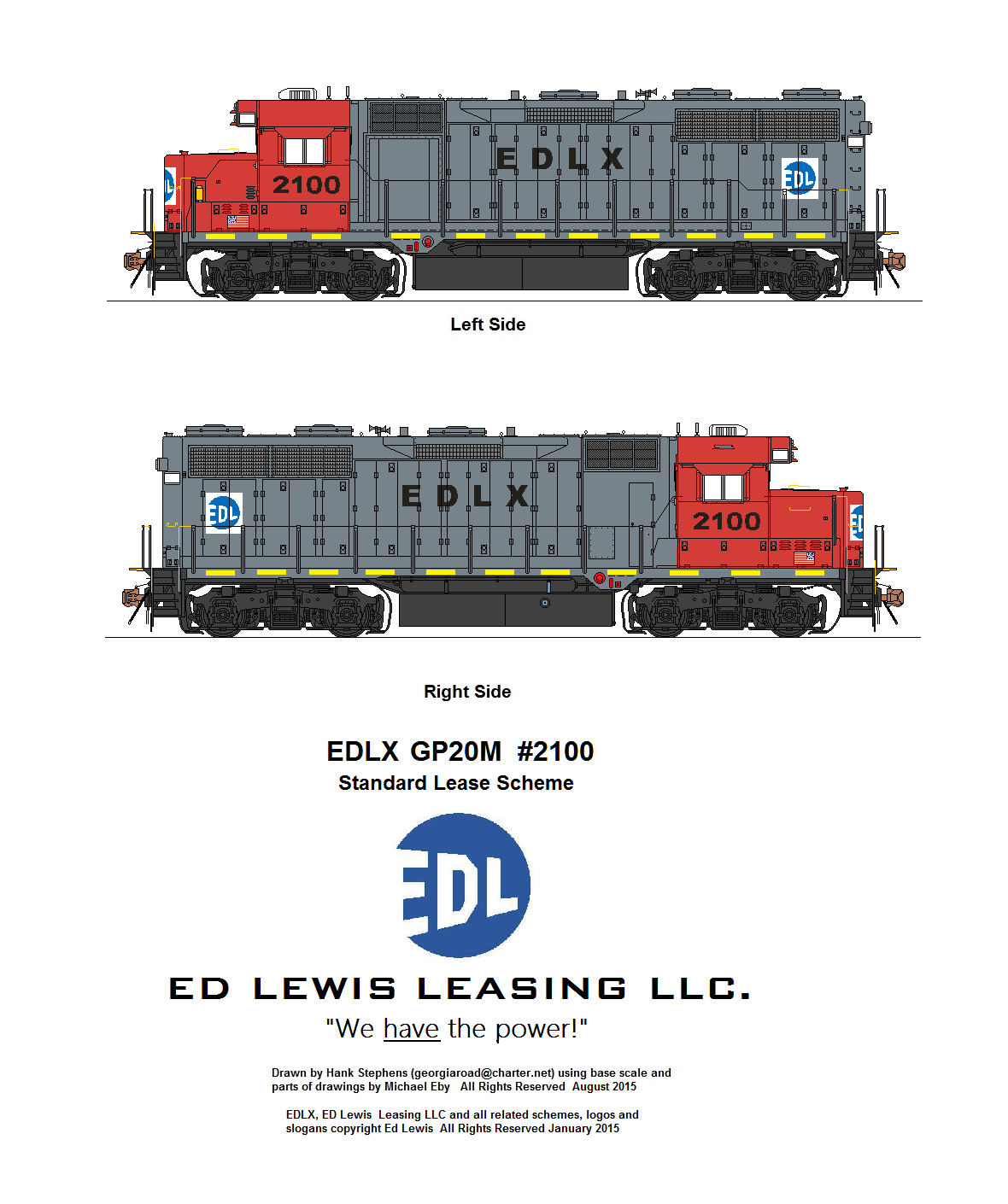
During the construction project, Georgia Road MWRS was tasked with the existing mainline upgrade during construction and needed a large contingent of locomotives to power construction trains stretched over four states on the DME system. With its current fleet completely allocated, MWRS had to look at short term lease options to acquire needed power. MWS settled on leasing 15 GP20M, and 20 SD40M units from ED LEWIS Leasing (EDLX). These went to work on the DME lines in the New Haven orange and NYC light gray EDLX lease scheme. These units soldiered on into 2014 when the first Georgia Road Powder River Coal trains began making the full round trip from mine to generator and back. CP initiated its own trains shortly after, looping coal from Wyoming to several Midwestern and Northeastern generators.
With the Powder River Coal Expansion project now complete ahead of schedule, EDLX, six axle units transitioned to power Georgia Road manifest trains as it scrambled to add more power to its coal and grain pools which doubled in size with the addition of DME-ICE operations. The remaining fourteen GP20M units (one was destroyed in a collision during the project) worked South to Birmingham, AL and massed for lease return. While EDLX six axle power could still find work on the Georgia Road, the diminutive but reliable Cumberland, Utica and Toledo RR (CUT) KateEllen Shops rebuilds were not in high demand as Georgia Road still possessed scores of four axle GP units from its ICG subsidiary. Only one GP20M found work at the time, joining a single EDLX MP15AC at the Warrior RASC intermodal terminal in Birmingham, AL as contract switching power for ramp switching contractor Modal Management Services.
The remaining baker’s dozen of EDLX GP20M units sat out all of 2014 and into 2015 waiting on lease expiration and eventual return to EDLX. As the stored units were cycled through the Georgia Road service shops for return, MWRS struck a deal with EDLX and bought the units for use in its fleet. All 13 units were shopped and repainted into MWRS colors and assigned to the original Georgia Road and IC lines. The GP20M model designation was changed to GP38M, better reflecting the fact these were EMD 38 series equivalent due the updated 645 primemover installed by the CUT KateEllen Shops. The addition of the former EDLX units allowed MWRS to purge the remaining old U series GAM units from the original MWRS roster.
All units were repainted in the yellow and red Georgia Road maintenance of way scheme and are in service.

 Georgia Road Transportation