SD70M-2/ SD65S-CAT/ SD75R-CAT/ SD75P-CAT/ SD75P-CAT
The 7300-7399 series represents the numbering block set aside for third generation EMD six axle DC locomotives, including Stephens Railcar TGX Program remanufactured units. This group of units meet either Tier 2 or 3 EPA emissions at the time of unit production. Most of the SD70M-2 and some SD75R-CAT units and are currently favored in the Eagle Flyer Land Bridge Intermodal Service due to DC configuration and relative newer age. The TGX Program CAT rebuilds were the first remanufactured units to be assigned to the Eagle Flyer Service, added between SD70M-2 purchases to maintain adequate motive power levels. As more and more SD70M-2 units came online, most of the SD65S-CATs were pushed into general service, mostly due to their standard cab configurations.
The Eagle Flyer Land-Bridge Intermodal Service dated back to the early days of predecessor Central Alabama & Southern RR (CA&S) when CA&S landed the last leg of a transcontinental American Presidential Lines (APL) early double-stack contract trains running from the Port of Long Beach, CA to the Sea Path One facility at the former Charleston Navy Base in Charleston, SC. It referred to the service as the APL contract and was so valued that the contract garnered its own fleet of modern locomotives and rolling stock to support the very lucrative business. CA&S went so far as to make a highly leveraged purchase of the old Charleston Port and refit it completely as the new Sea Path container port for APL with the idea of filling excess capacity with other container line business. APL realized that it could move containers faster through North America by train than via the Panama Canal by ship and the new Sea Path One facility at Charleston was perfect. for its long term land-bridge intentions.
UP moved trains of containers off- loaded from APL ocean-going ships and moved them through the Southwest into Shreveport, LA. MidSouth Rail Corp and later suitor Natchez Trace & Orient moved traffic to the CA&S connection at Meridian, MS. CA&S then moved the trains through Montgomery, AL and Atlanta into Charleston to the railroad’s newly opened Sea Path One container port facility. Containers were then reloaded to APL ships to make the Atlantic Ocean crossing to destinations in Europe and Africa. APL also sold this route to domestic traffic and its APC subsidiary quickly utilized this route between the West and East, in newly established Inland container ports in Dallas TX and Atlanta, GA. APC domestic long-distance business increased train frequency and size, benefitting both lAPCand parent APL..
Exponential growth and increasing traffic could not hide the fact that CA&S was faltering and trying hard to hide that fact. The highly leveraged debt of the Sea Path One container facility construction as well as necessary rail system upgrades to support it the APL/APC contract became a financial albatross around the neck of the CA&S. Competition with other Class Ones pushed the railroad to reduce rates and revenue per unit, The end result was a financial house of cards that collapsed in 1996 as Wall Street realized the railroad had no real plan to find long term viability and had in fact been falsifying financials to prop up its eroding profitability. The CA&S grew to fast too soon with expenditures and debt far out-weighing profitability. Bankruptcy soon followed after a series of derailments exposed how CA&S was neglecting track, locomotive and rolling stock maintenance to pay the interest on the highly leveraged debt, hiding its dwindling cash flow. Bankruptcy followed and the APL and other principal shippers looked for a solution in the form of a new railroad built from the ashes of the old. By the time Georgia Road acquired the CA&S estate, service had deteriorated to the point that APL was considering pulling the plug on the APL contract and going to another Eastern railroad. Georgia Road set about restoring the premium quality demanded by APL by spending money to restore its physical plant and assets. The Sea Path One facility was sold off along with some non-core branches to pay for the rebuilding, and by the third year of operation Georgia Road was pulling out of the darkness of the CA&S debacle. Roadway was repaired and upgraded, and the newest and most reliable power was pooled for the service, with generous horsepower per ton ratings and extra guaranty power not typical in most Georgia Road freight market segments. In the early years, these earmarked locomotives carried various APL Contract logos. but Georgia Road rebranded the service as the Eagle Flyer Land-Bridge Service. it also expanded the service past the APL customer base by establishing new routes out of Seattle and Portland, WA with partner railroads such as Kansas Pacific RR (KP) and the Chinook Lines (CHNK). This new business restored growth potential and profitability in a business that was now highly competitive and mature. in the early 2000s. New SD70M-2 and TGX Program units introduced the “Eagle Flyer” Scheme, though the service greatly expanded with several shipping customers. Ironically, Georgia Road re-acquired the Sea Path One container port with its takeover of the Georgia Midland in 2004. (GAM bought the facility and some trackage in the Carolinas from the Georgia Road in 1998.) The envisioned SEAPATH 2 facility was completed in the 2020s , more than doubling the demand for land bridge and domestic container trains into the Eastern Seaboard
SD70M-2
As far back as the early APL Contract of the CA&S, modern 4 axle power was the favored power due to high speed and fast acceleration. By the early 2000s, double stack well cars were the standard and trains were getting longer and heavier. High horsepower four axles struggled with wheel-slip and truck hunting on worn track, so Georgia Road began replacing six axle power with SD40-3 “fast forty” rebuilds and new GE DASH9-44CW and EMD SD70 series units.
By the mid 2000s, the Eagle Flyer pool once again needed updating. SD70M-2 units came to the Georgia Road in three groups of 20 units, The first group of 20 was purchased new from EMD in 2010 and second group of 20 units came at the end of 2011 when production of the model ceased due to looming EPA Tier 4 emissions standards that the model could not meet. The third group came in 2018 from PRLX out of its stock of ex NS units since EMD had ended production of the unit. At the time, Georgia Road was fully implementing the MexXpress Service which linked manufacturing centers around Guadalajara and Mexico City, MX to US and Canadian customers in the Southeast and Midwest.
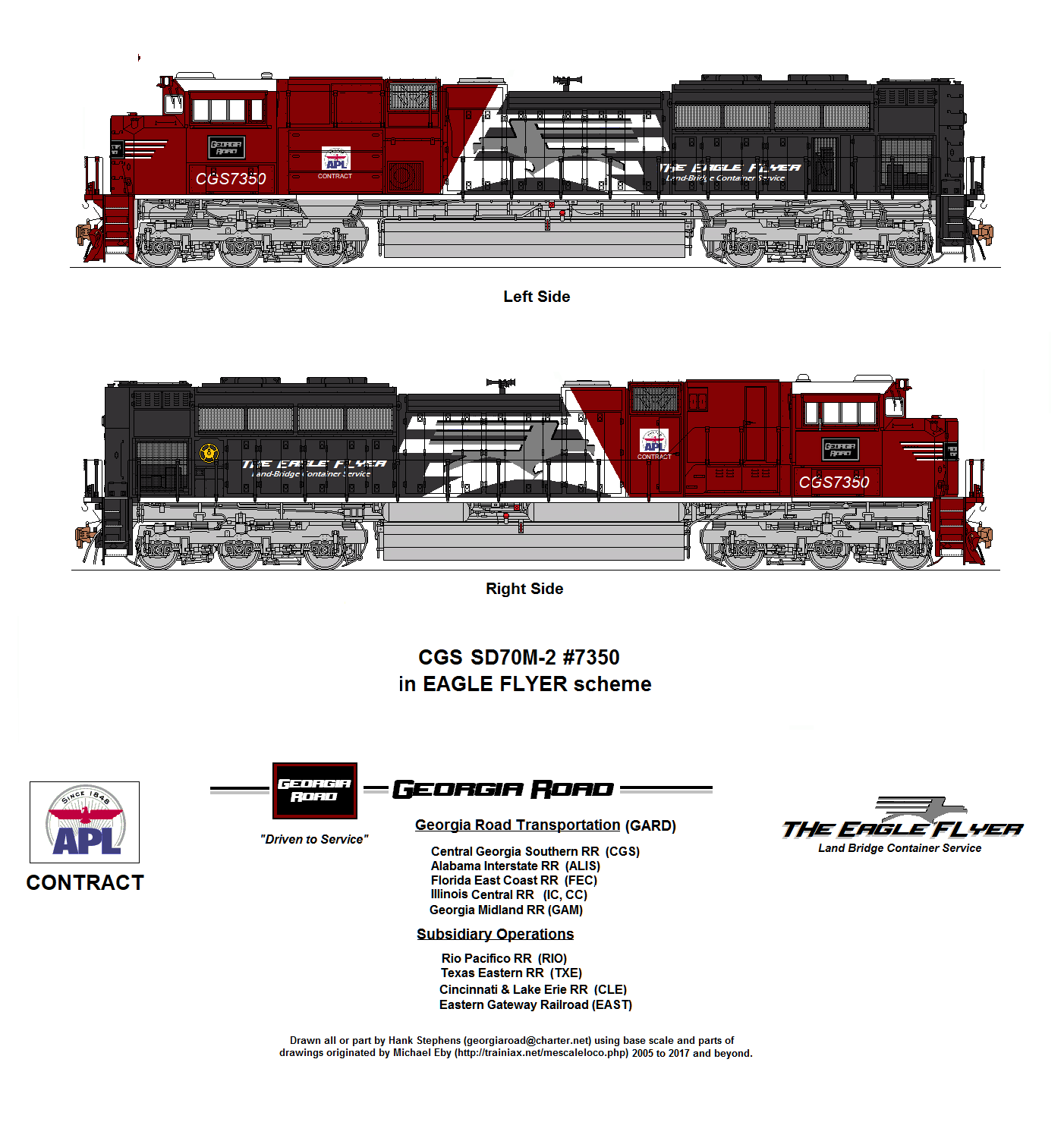
The first batch of 20 units entered service in an effort to modernize and reduce average age of locomotives in the crack Eagle Flyer pool. Georgia Road opted for output to be limited to 4000hp as opposed to the maximum 4300hp similar to NS and CN. This specification reduced long-term stress on the platform, potentially saving maintenance costs over time. The Eagle Flyer pool valued reliability over maximum horsepower and tractive effort. These units were “heir-apparent” power for the pool and all 20 units were delivered in the brand-new Eagle Flyer Scheme and were sub lettered for the Central Georgia Southern RR (CGS).
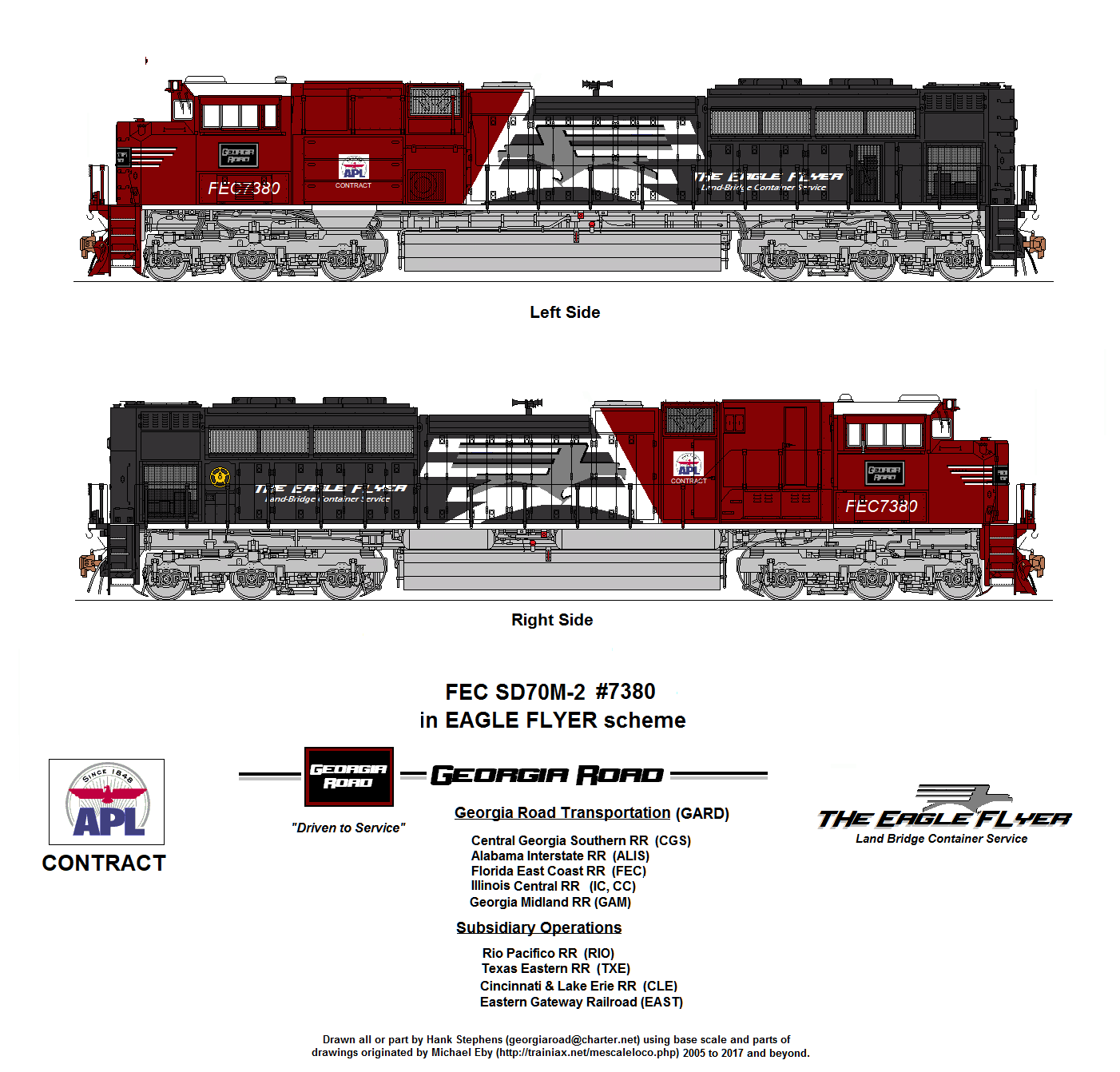
The second order of 20 units would be some of the last SD70M-2 units built by EMD. These were also specified at the lower 4000hp and pushed the remaining four axle units out of the Eagle Flyer pool. Georgia Road considered both the first and second batches of these locomotives a success and would eventually acquire more units. The second batch was lettered for the Florida East Coast with all the units placed in the pool.
The second order of 20 units would be some of the last SD70M-2 units built by EMD. These were also specified at the lower 4000hp and pushed the remaining four axle units out of the Eagle Flyer pool. Georgia Road considered both the first and second batches of these locomotives a success and would eventually acquire more units. The second batch was lettered for the Florida East Coast with all the units placed in the pool.
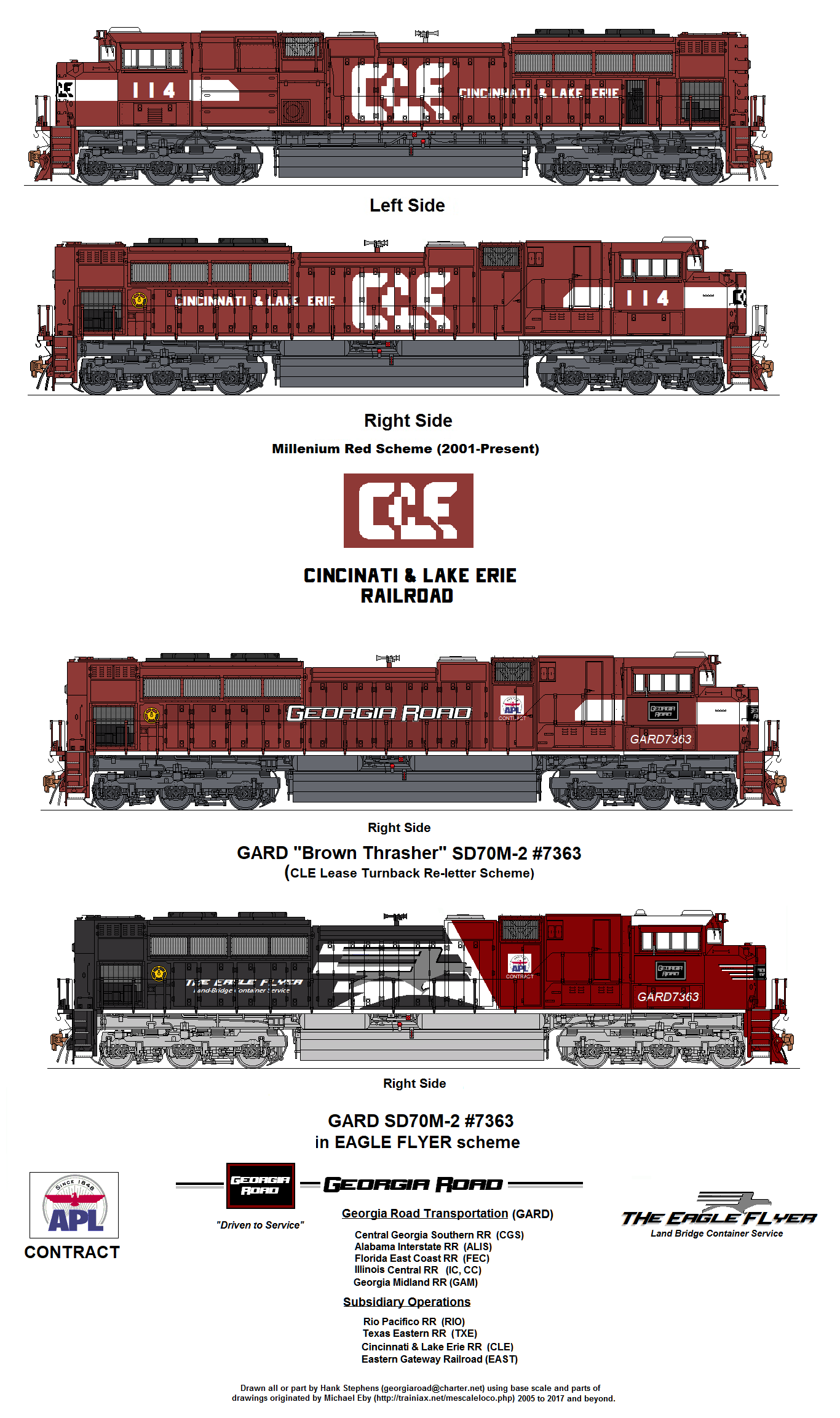
The last group of twenty units were purchased from CITX and PRLX after a lease period. With EMD no longer producing new SD70M-2 units, secondhand units were the only option. At the time, Georgia Road was cementing business with subsidiary Cincinnati & Lake Erie Railroad (CLE) after acquiring joint ownership of the road with the CUT. CLE was a perfect bridge route for the Georgia Road and CUT and became an outlet for automotive traffic from foreign OEM factories in the South as well as crude oil from the Marcellus and Utica coal shale regions served by the CUT. Crude moved south from the CUT over the CLE and automotive traffic moved from the Georgia Road north to the CUT. Motive power and track conditions were dire at the joint acquisition, and both the CUT and Georgia Road set about modernizing and upgrading motive power to support growing overhead business. Georgia Road directed fourteen of the last group of SD70M-2 units to the CLE composed of CITX and ex NS PRLX units. Six CITX units went to work in CITX Leasing blue, eventually re-lettered into full CLE paint. Fourteen PRLX units were painted into full CLE Millennium Brown though Georgia Road would retain ownership. As CLE found long term locomotives for its roster, ten of the ex PRLX units painted in CLE colors were returned to the Georgia Road in 2023. These units were quickly patched and given Georgia Road numbers and became known as the Georgia Road “Brown Thrasher” units. The Brown Thrasher was the Georgia state bird, and the oxide red/brown mottled paint earned the nickname and it stuck. Eventually, most of the units were shopped, upgraded and painted into Eagle Flyer colors for assignment around East St. Louis. Those deemed not suitable for Eagle Flyer service were shopped in 2025 and given the new Driving Forward scheme.
SD765S-CAT
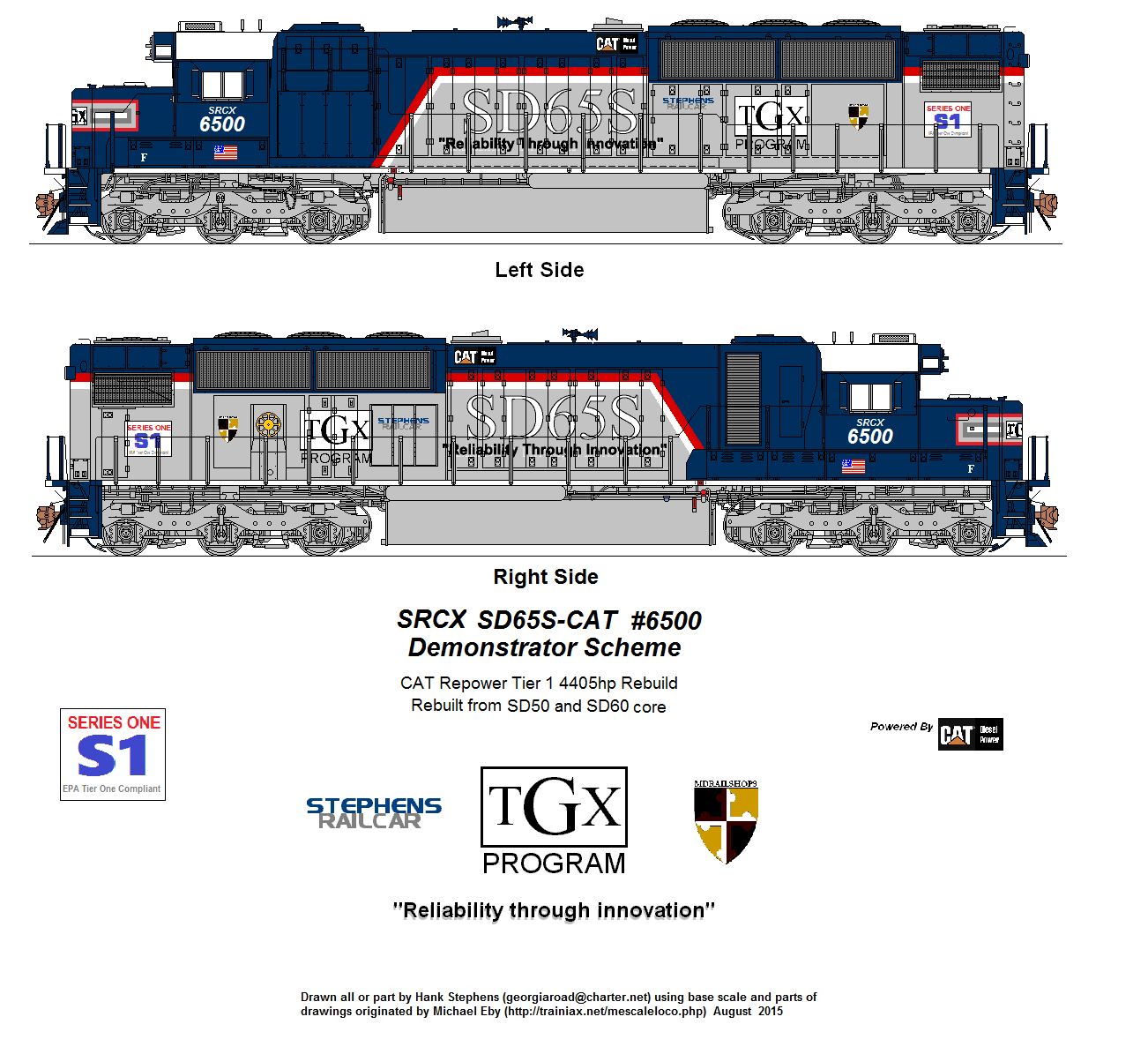
The remaining fleet of four axle units and the numbers of SD70 and SD70M and SD75i units were approaching their first decade of operation in the Eagle Flyer Service by 2008. Georgia Road wanted the four-axle fleet removed from the service, as a combination of age and larger trains made them less opportune at the second decade of the 2000s approached. Georgia Road quickly added SD70M-2 units to the Eagle Flyer pool, but reduced production capacity spread the delivery out over two years. Georgia Road needed a temporary solution, and commissioned Stephens Railcar to supply 30 units from its new TGX program, or Third Generation eXtreme remanufacturing program. TGX was designed to remanufacture second and third generation EMD locomotive cores into recapitalized modern units that could meet increasingly stringent EPA locomotive emission standards. This would be done using a purpose-built Caterpillar primemover and as much of the original locomotive ve as economically viable. Cores came from a combination of Georgia Road SD50s, SD4%T-2 and SD60 cores along with similar cores already in the Stephens Railcar deadlines These first graduates of the program were known as the ” Series One “production variant of Stephens Railcar’s TGX Program, The SD65S-CAT was a 4405hp locomotive created as a remanufactured locomotive equivalent to the EMD SD70M phase two built in the early 2000s. , The rebuild utilized retired “long frame” second generation and SD50 and SD60 frames to create a hood configuration similar to the EMD unit. A Caterpillar 16-cylinder primemover replaced the EMD 645, mated to an EMD DC generator. The cooling was upgraded to EPA Teir One as a selling point and the dynamics moved to the rear of the unit similar to all the 70 series units in the EMD catalog.
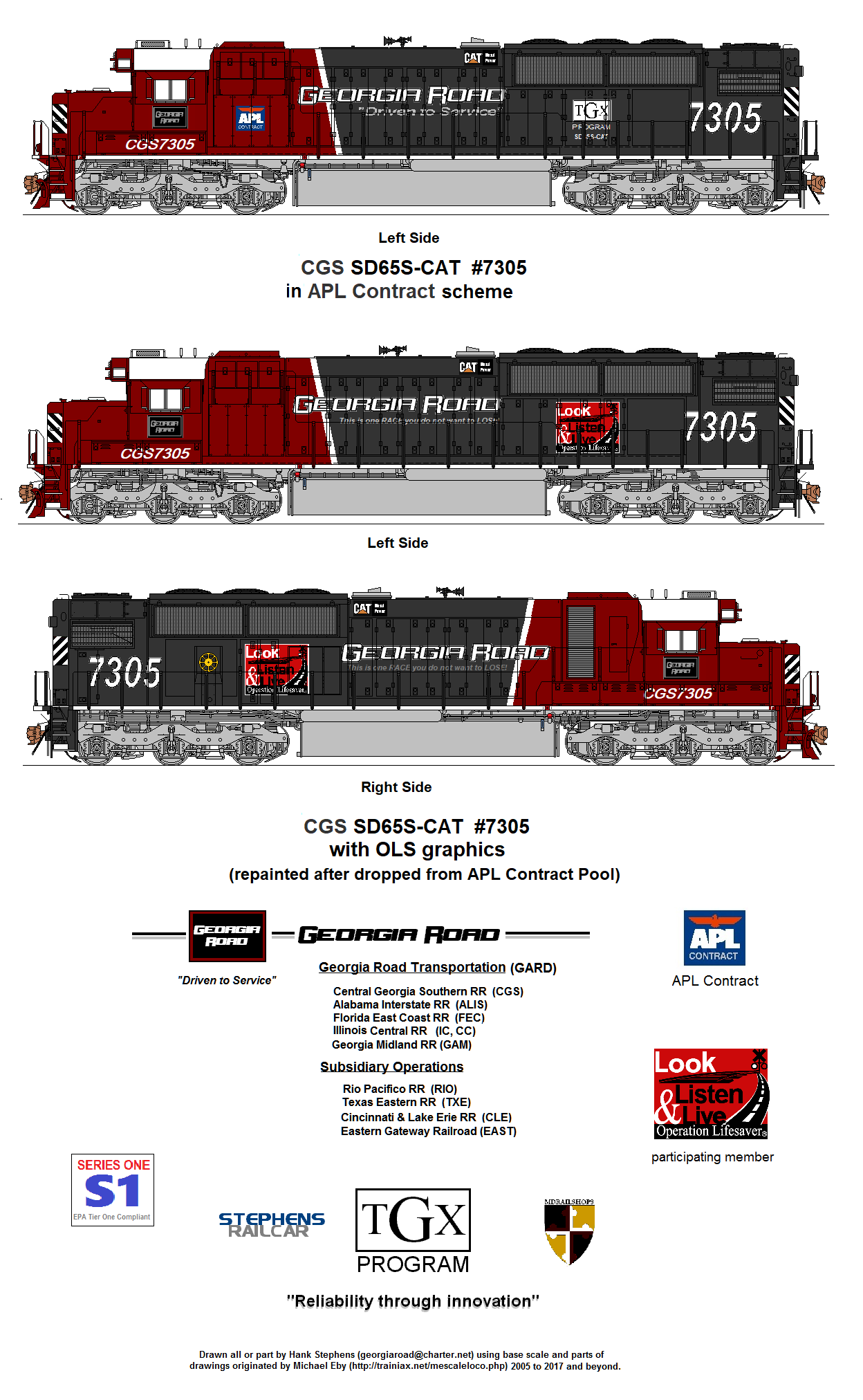
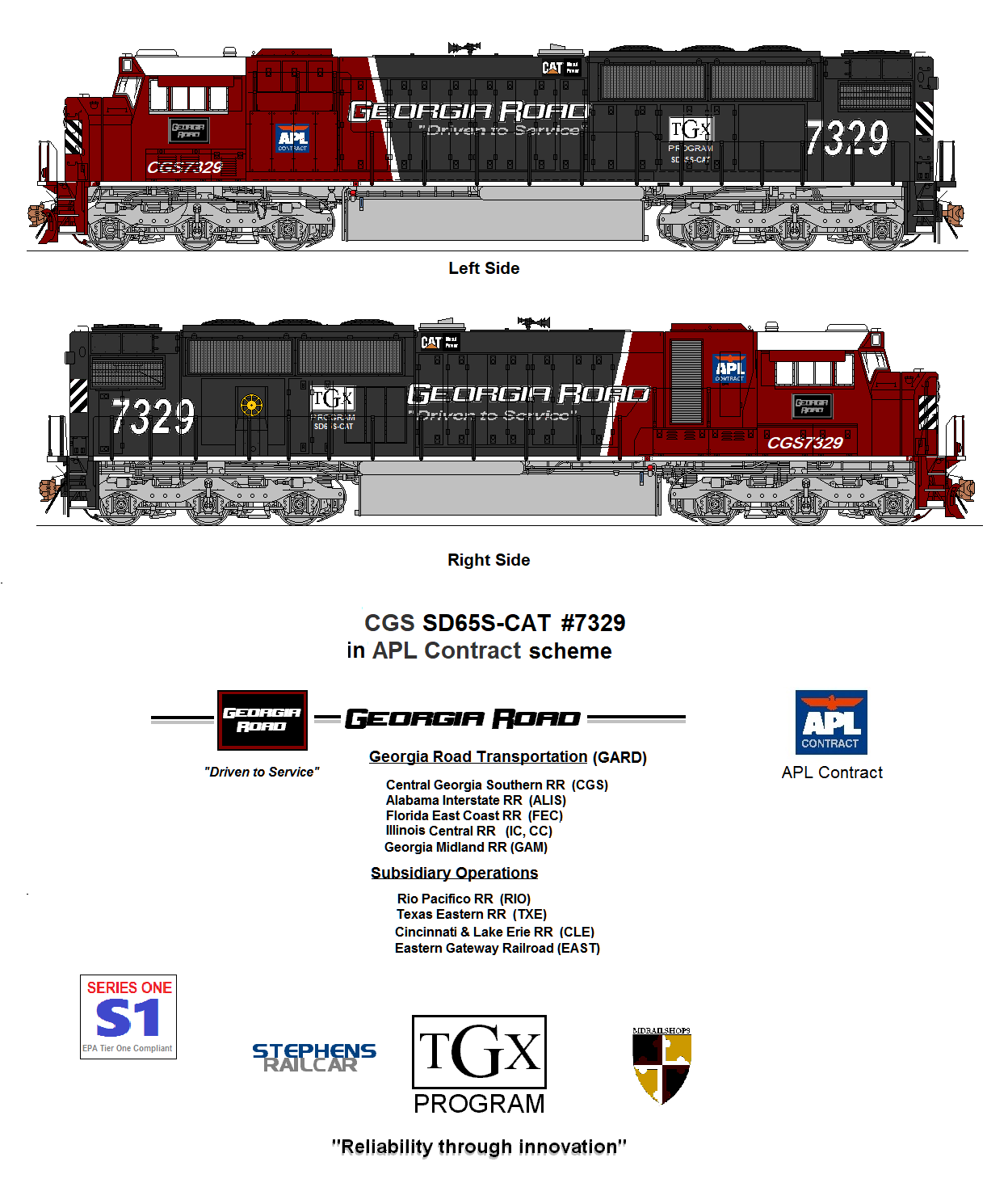
The first twenty units were built with standard cabs due to the core configuration, but the last ten introduced the EMD wide cab as Stephens Railcar worked through ex NS/CR and UP SD60Ms. TGX Program test bed units and the early demonstrators tested heavily on the Georgia Road. The result was a very reliable and successful rebuild that worked interchangeably with SD70M and later SD70M-2 units. Most of these units would be pushed out of the Eagle Flyer Service as the builder new SD70M-2 units were delivered and the EPA standard moved to Tier 2 and Tier 3. Several of the ten wide cab variants remain in Eagle Flyer Service and carry the Eagle Flyer Paint Scheme. All others ran in standard Georgia Road colors. The 20 standard cab units remain in general service, with two scrapped after a derailment and fire in Alabama.
SD75R-CAT
As EPA Emissions Standards moved to Tier 2 and shortly Tier 3 at the end of the first decade of the 2000s, Stephens Railcar replaced its TGX Program SD65S-CAT “Series One” with a new configuration that could meet the upgraded standards. EMD was producing the SD70M-2 as its compliant offering and Stephens Railcar fielded the TGX Program “Revolution Series” SD75R-CAT model. The Revolution Series settled on SD60 and SD70 cores for rebuilding the new model, holding second generation long frames and SD50 cores for the 3005hp SD44R-CAT, also introduced in the Revolution Series catalog to address medium horsepower general purpose locomotive needs.
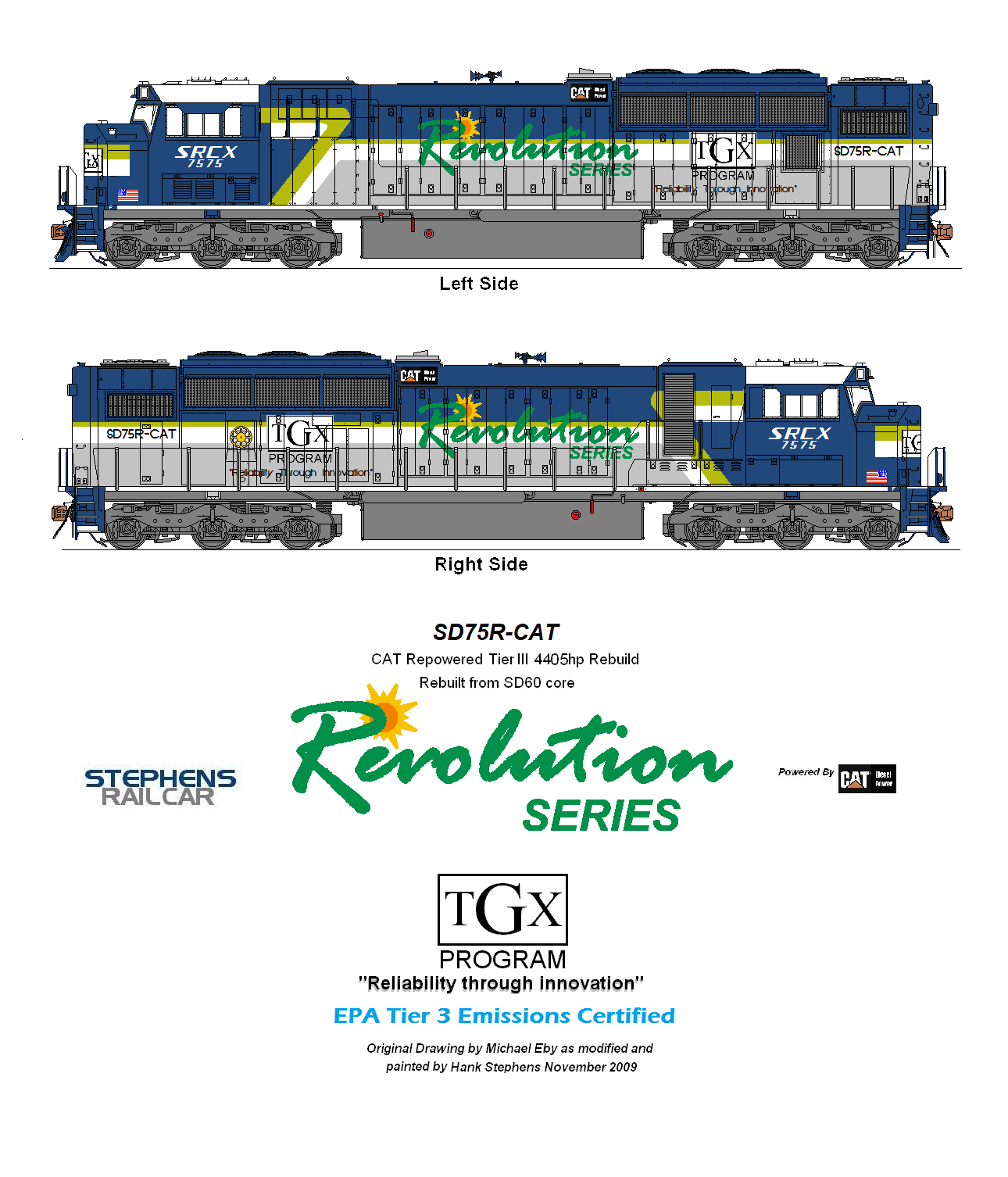
The Revolution Series was by far the most popular iteration due to the incremental cost savings of using a donor second or third generation core locomotive. The first production unit was placed in service on the Georgia Road in pseudo-Georgia Road paint as SRCX7500. Only the addition of program specific logos for marketing and the SRCX sub lettering revealed its true owner. After substantial testing and real-world service, a second unit was produced in full TGX Program Revolution Series Demonstrator paint. This unit used SD60M cores retired from BNSF and UP and became the first wide cab application which would become the standard configuration of the Revolution series model SD75R-CAT. Georgia Road would order 60 units over four production runs before the Pandemic of 2020 stymied the US and World economy and ended industry growth for several years.
About half of the TGX Program SD75R-CAT locomotives went into service in Eagle Flyer Service colors. The rest were painted in Georgia Road Standard colors. Stephens Railcar began using radial truck equipped SD70M cores for the final twenty units built. These were specifically built for the Eagle Flyer Service and were delivered in the Eagle Flyer paint scheme where they work to this day.
Only General Electric suitor WABTEC managed to field a standard and widely accepted EPA Teir 4 Emission design. The stringent requirements of the Teir 4 units required both intercooling and reburn and/or chemical abatement to reach the standard. EMD, now owned by CAT had long settled on the 710 series primemover the heart of its Teir 4 production, with massive radiators and a big bore block to get horsepower and emissions to match instead of trade off each other. By the time the EPA Tier 4 standards went into effect, AC power had eclipsed DC power as the preferred platform. The AC traction motors were not limited by short-time ratings and seemed to be less maintenance intensive as their DC counterparts even with more complicated electrical control system needed for AC propulsion units. Georgia Road agreed to test a DC powered TGX Program “Pinnacle Series'” unit but was more interested in modern AC traction. No orders were garnered due to the glut of relatively new locomotives in the secondary market, retired in droves as most Class One railroads embraced Precision Scheduled Railroading (PSR). Georgia Road could buy good DC general freight units without spending extra on upgrades through rebuilding. Another disturbing fact for new or remanufactured power at the time was rail traffic recovered at a slow rate during 2021 and 2022. There was no demand for new power, much less DC traction remanufactured alternatives. When demand for locomotives did rebound, standardization through upgrades of the lines of surplus locomotives idled by PSR seemed to be the work around solution to the ongoing Tier 4 design drawbacks of EMD offerings. As of 2023, interest by Georgia Road is focused around new TGX Program ENCORE Initiative using upgraded existing EMD AC power or Battery Electric Locomotives (BEL) intended to reduce emissions and fuel use. Stephens Railcar shifted its focus on AC traction fourth generation rebuilds using the EMD 710ECO primemover that is the current EMD industry standard due to its renewed availability as a kit engine for remanufacturing programs.
 Georgia Road Transportation