C30-7/C36-7/C40-8/CW40-8 DASH9-44CW
THE GEORGIA MIDLAND RAILROAD
The Georgia Road was a stanch EMD railroad from its inception in the early 1990s for the first ten years, purchasing the newest EMD models or utilizing the second hand market to find GM built models to grow its roster. That is not to say it did not look at GE offerings during the late 1990s to the early 2000s, but Georgia Road felt the addition of a second builder would simply require a second set costly repair parts and processes. Even when GE approached with very good deals on its new locomotives, Georgia Road tested the units and balked. This would change in 2004 when the privately owned regional the Georgia Midland System would lose its owner and founder in a freak car accident. This event would eventually be the cause of the Georgia Road to not only maintain a GE roster but add new units over the years.
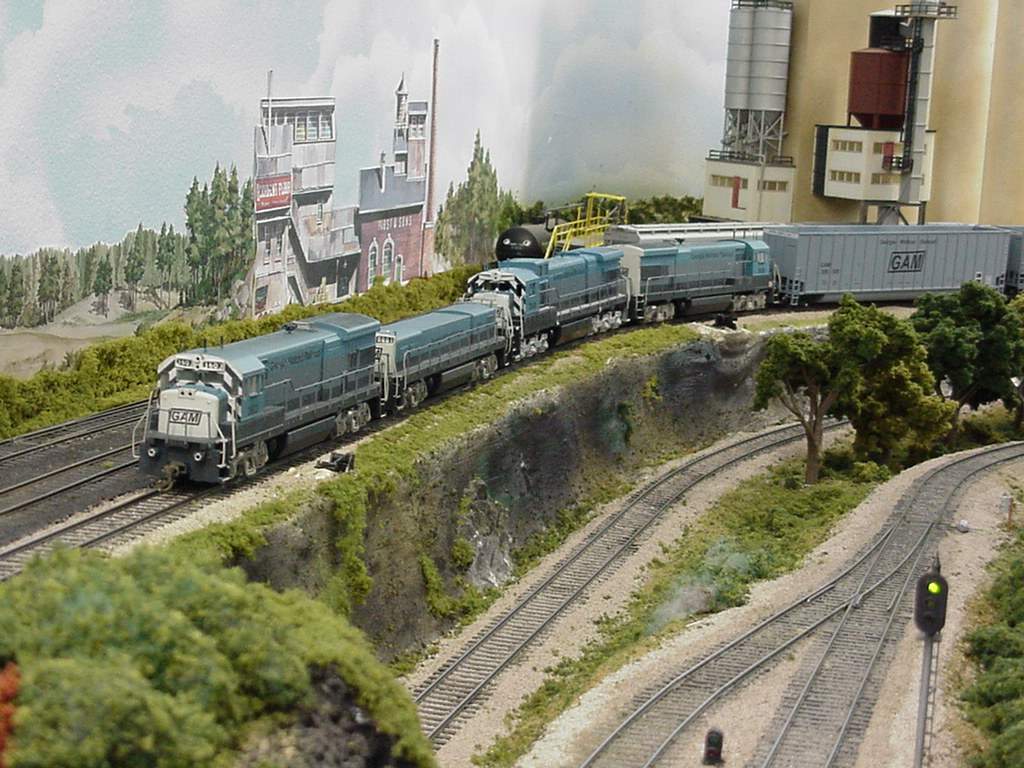
Georgia Road and the Georgia Midland System maintained a close relationship from the beginning. While both were located in the Deep South, Georgia Road focused on growing intermodal and overhead traffic between the Midwest and Southeast. Georgia Road was tied to first and last mile operations in North and Central Georgia, hauling grain, clay, and timber products. GAM needed and outlet for all this traffic, and Georgia Road was a natural extension to move it from the GAM western connection at Birmingham, AL to its interchange partners in Meridian, MS and Memphis, TN. When Georgia Road purchased the IC in 1998, it further extended its reach and in turn that of the GAM. Operations between the Georgia Road and Georgia Midland System were so close in fact that that traded trackage rights between Atlanta and operated a joint yard and classification yard in Birmingham, AL. Operations were so intertwined around Birmingham, AL that observers would find it hard to determine which of the two railroads actually owned and who was exercising tenant rights. At any rate, the cooperation was lucrative for both railroads as they brought not only customer focused service, but had enough combined reach to give customers interchange options with all the Western connections of the day.
With the untimely death of the GAM owner in 2004, the fate of the Georgia Road and Georgia Midland System joint operations were threatened. If a hostile competitor gained control of the GAM, Georgia Road could see a hard shock to its operations and bottom line. As a result, Georgia Road exercised a “poison pill” clause in its cooperative agreement with the GAM estate and acquired the railroad as an operating subsidiary, much as it did a few years earlier with the Illinois Central. While overall operations changed little at first, literally overnight the Georgia Road found itself with mixed EMD -GE roster, two major shops and two separate motive power philosophies. Georgia Midland was a purely General Electric railroad in the same way that Georgia Road held to its EMD only roster. The bulk of the GAM fleet was new and financed via GE Capital, and there was no way in the tight locomotive market that Georgia Road could hope to replace the GAM fleet of GE units. As a result, motive power operations and shop forces were slowly integrated. The new GE units proved a shot in the arm for Georgia Road as EMD struggled to deliver anything due to a historic order from Union Pacific for over 2000 SD70M and later SD70ACe units. Georgia Road managed to glean retired SP, MP and CNW units from UP, but this only answered the growing business and allowed some of the oldest GE units on the GAM to be stored pending disposition.
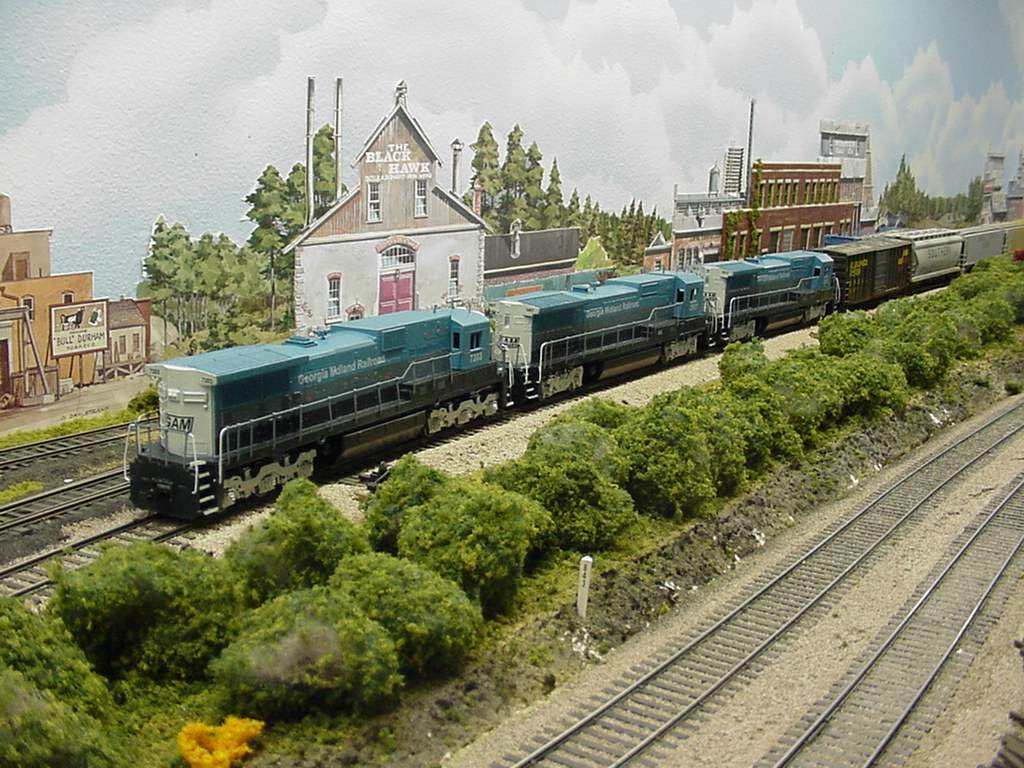
Georgia Midland and GE Locomotive were pushing to upgrade the GAM motive power and operations. Relatively new C40-8 and C44-8W units mixed with freshly rebuild C36-7 and various GAM inhouse rebuilds of older U series into Dash 8 and Dash 9 units. Brand new orders of Dash9-44CWs were also being delivered at the time Georgia Road took over, and many of the delivered units had less than two years in service. In the first two years after the Georgia Road consolidated the GAM into it system, Georgia Road found GE service and support to far surpass EMD, who reduced its capacity after years of losing orders to the upstart GE. Now GE was poised to take the lead in locomotive manufacturing and sales support, and Georgia Road broke its EMD only tradition by embracing the ex GAM GE fleet and adding new AC4400W units of its own. While Georgia Road would also place orders with EMD on an equally divided basis, GE could deliver new units faster and service and support rarely wavered.
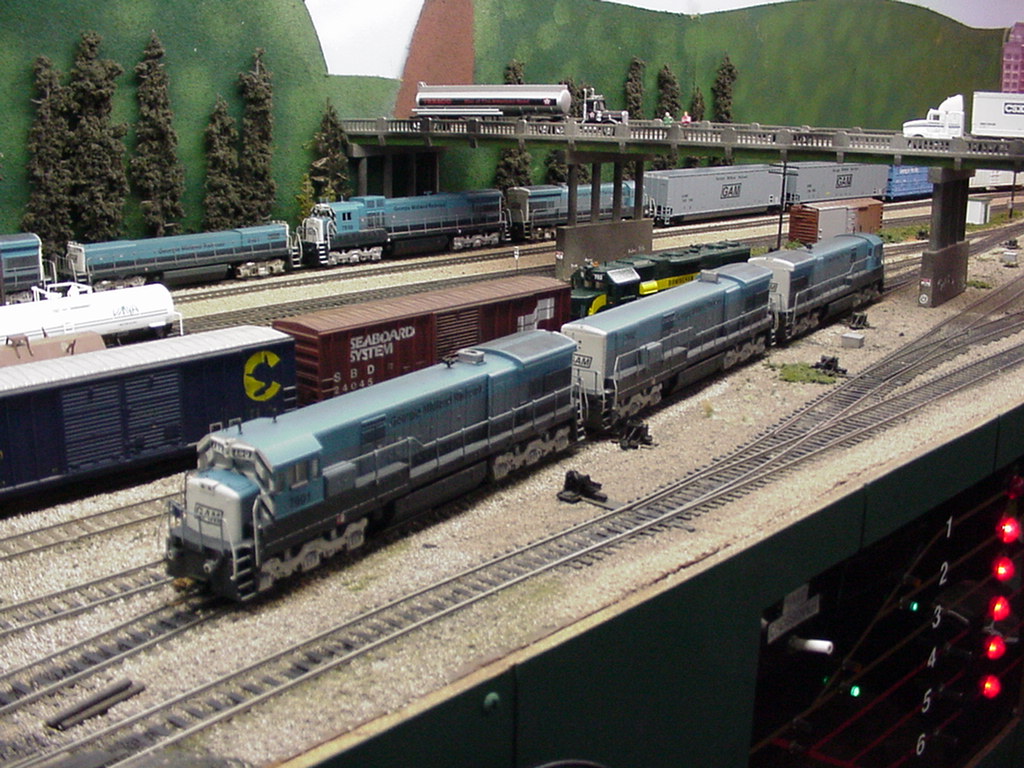
DASH9-44CW
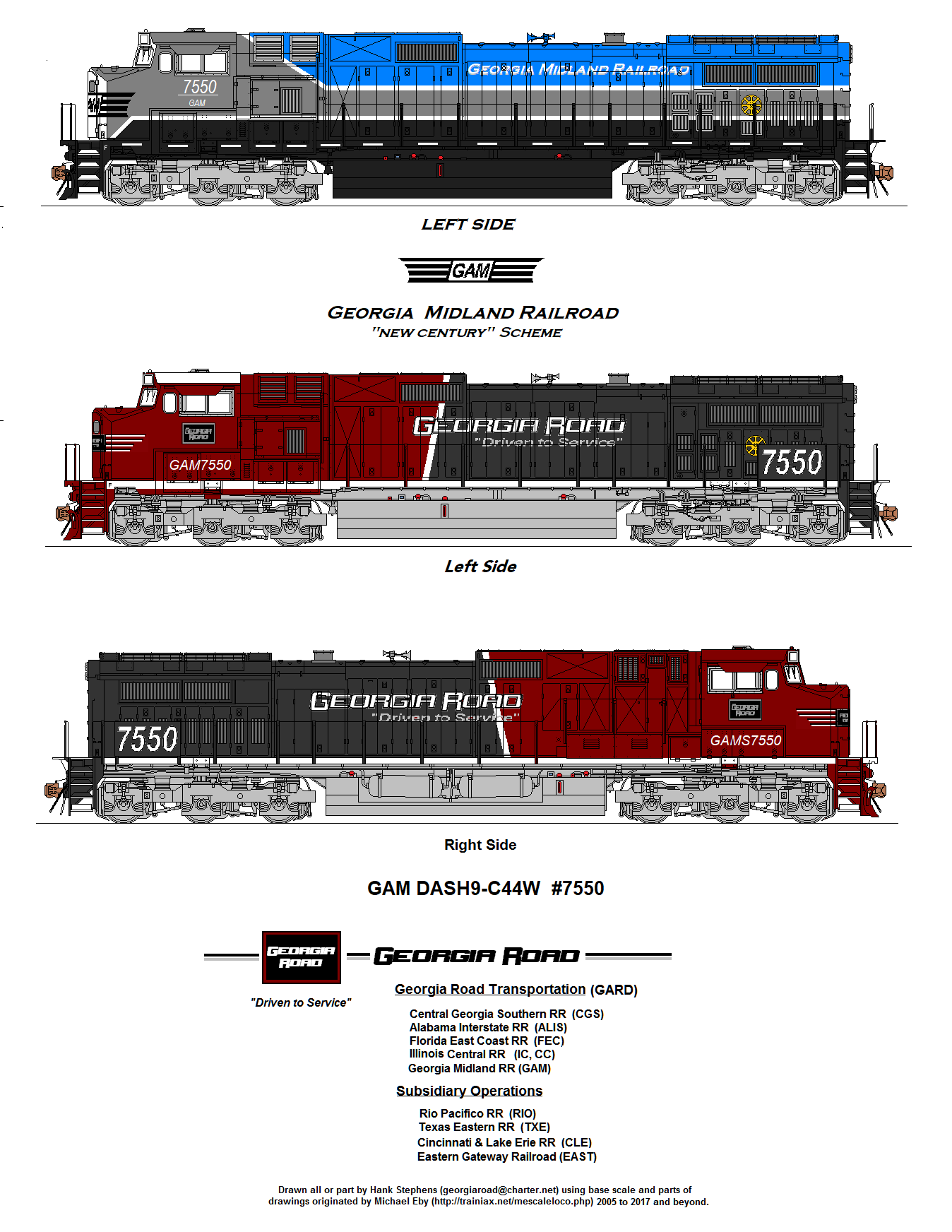
The DASH9-44CW units would be the last locomotives delivered to the independent Georgia Midland Railroad and the last ones to bear the blue independent paint scheme of the Georgia Midland System. A total of 30 units of this model would be delivered between 1999 and 2005. Georgia Road continued taking delivery of the final units in after its takeover of GAM operations after the death of the GAM owner and founder. Georgia Midland purchased these units to replace aging U-boats and worn out Dash Seven units in intermodal and manifest movements on its Birmingham-Atlanta-Augusta-Charleston mainline route.
After the Georgia Road takeover of the Georgia Midland in late 2004, the GAM D9-44CW units continued in the service GAM intended, though they now regularly strayed off the old GAM lines and onto Georgia Road trains connecting with the IC in Memphis, TN by way of Fulton, KY. These units sported factory fresh paint, so Georgia Road only repainted units requiring heavy shopping or wreck repair. As of 2025, only seven units have been repainted, all due to wreck repair or primemover failure and subsequent rebuild in kind. These units fell out of favor on the intermodal trains in the 2020s, with many reassigned to yard and local train service. The earliest units are pushing over twenty years in service and Georgia Road began sending them to GE-Wabtec in Fort Worth , TX for rebuilding and conversion to AC440OWm units. To date, fifteen units are scheduled to cycle through the AC conversion rebuild with delivery in third quarter 2025.
 Georgia Road Transportation