.
A job-related conference found me in Montgomery, Alabama on a late summer week in September of 2025. The subject was forgettable, and the seminars were dry to the point of mind-numbing weariness. The only saving grace was it was over by Thursday, leaving me a long Friday to make my way back to my home in Greater Birmingham, just a few hours up I-65 from Montogomery and the conference. This was a boon for the railfan in me, as I had practically a whole day to take in local train movements as I made my way home.
Of particular interest was a local shortline called the Alabama Central Railroad with reporting marks ACRR. I was familiar with it but never managed to catch any power or operations. Multiple visits over three years were made as I attempted to catch the ACRR at Prattville. I only found an empty three track yard with a few staged cars on every visit. On one trip I, did manage to see a few cars stored and waiting to be switched out, but still no power or operation. Out of frustration I snapped a photo of the unassuming metal signage at the crew office just to have something with ACRR logos to prove I was there. These visits were usually spur of the moment, lacking any real information that might help me locate the elusive short line. I usually passed through on a whim as an aside to an otherwise well-planned day of railfanning. The result was I always came up short and frustrated with no real time to search it out.
After seeing some posts about the ACRR on social media from Mongomery native and railfan Radisson McGuire about power and operations, I contacted him directly looking to plan a visit with tangible results at the end of a company endorsed conference. My job required me to attend a week-long seminar in downtown Montgomery, and I felt like I would have time to explore the ACRR in detail on my way home once it ended. Armed with a treasure-trove of information provided by Radisson, I set out to finally see and photograph the elusive ACRR as I returned home.
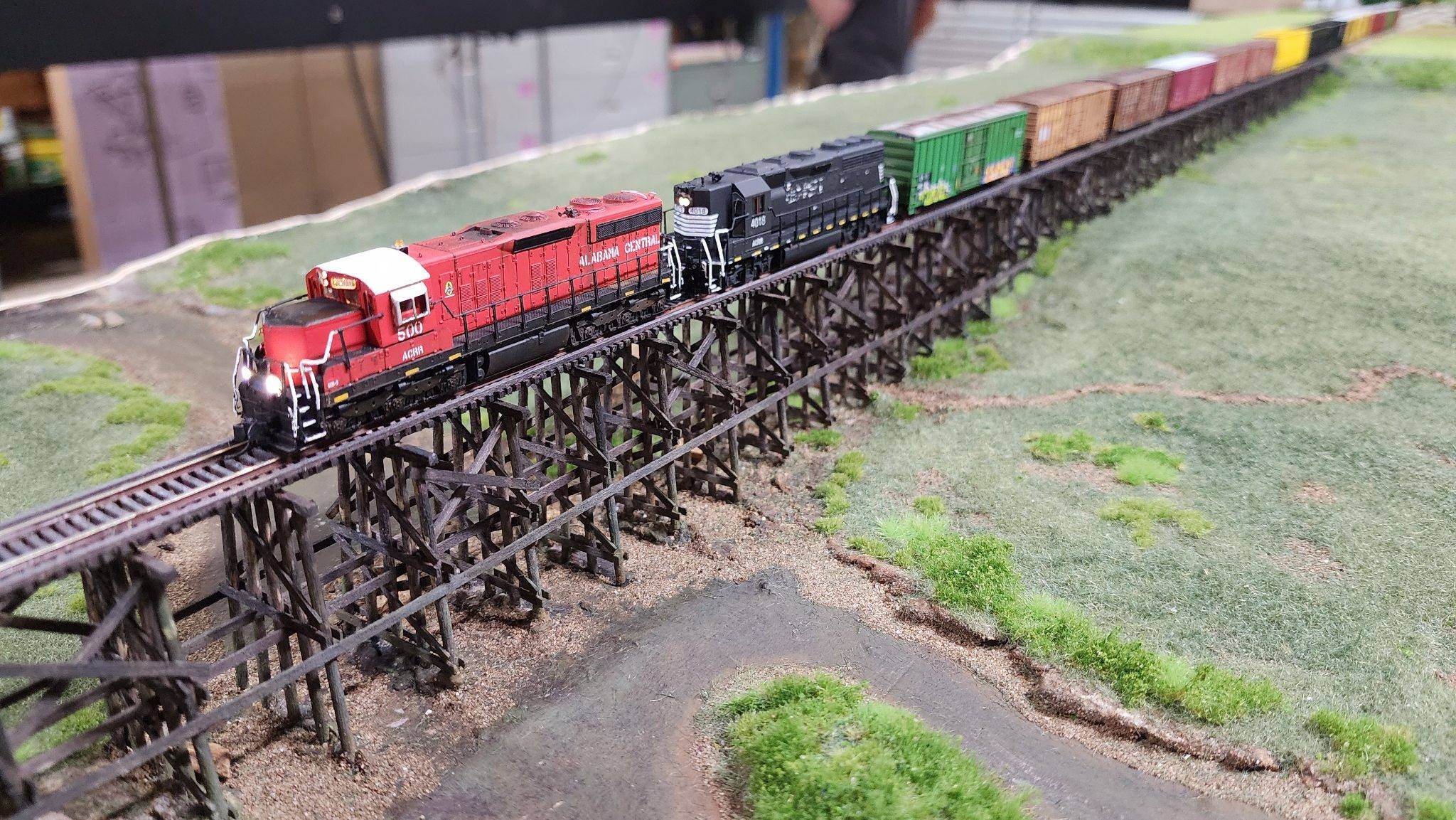
Radisson explained that the ACRR was the culmination of two separate operations in Montgomery. The southwest side consisted of the old Seaboard Air Line (SAL) route from Savannah to Montgomery, known originally at the Savannah and Montogomery Railroad (SAM). SAL got control of the SAM in the 1960s and turned it into a heavy mainline link with parts upgraded with CTC signaling near Montgomery. With the SAL and ACL merger, the new SCL kept mainline trains running into the early 1980s. With SCL gaining control of the West Point Route and L&N in the 1980s under brand Family Lines System, the old SAM route found its days numbered. Family Lines would fully merge into Seaboard System. The Savannah to Montgomery line that once boasted heavy manifest trains, concrete ties and crack passenger runs was relegated into branch line operation with some parts without traffic and subject to abandonment.
Were it not for a group of shippers lead by Royce Kershaw, the line would be forgotten right of way as Seaboard System and later CSX Transportation actively worked to shut down the now disconnected line that ran from Pike Road and an industrial park near US Interstate 85 to the old L&N yard in downtown Montgomery that CSX now called its main terminal in the city. Royce owned Kershaw Industries, a well know builder of on track railroad maintenance machines including its patented ballast regulator. With some legal and political wrangling, he and a group of local of shippers wrestled the branch from CSX Transportation and re-kindled it as the Montgomery & Mytilene Railroad in the 1980s. Along with the trickle of freight traffic, Royce Kershaw attempted to run excursion service for a short time centering around the City of Montgomery Lagoon Park and nearby Montgomery Zoo as part of a tourism initiative enacted by the city in 1983. Unfortunately, his excursion vision was ahead of its time and by late 1988, the excursion was discontinued due to lack of ridership. The excursions ran at odd times and with no regular schedules due to mounting costs. Start-up power was an ex- GE 70 tonner and SW1200 and some rebuilt steam era heavy weight coaches. These would give way to ex ATSF CF-7s and several rebuilt Geeps when the line was reconstituted under Alabama Central Railroad (ACRR) ownership. Getting pictures of the early power was hard, as locomotives usually spent their off time safely tucked in behind the gates of the Kershaw Industries plant at the end of the old SAM line away from prying eyes. Freight moves were on an as needed basis only. Under ACRR ownership the SAL branch became known as the Lagoon Park Line.
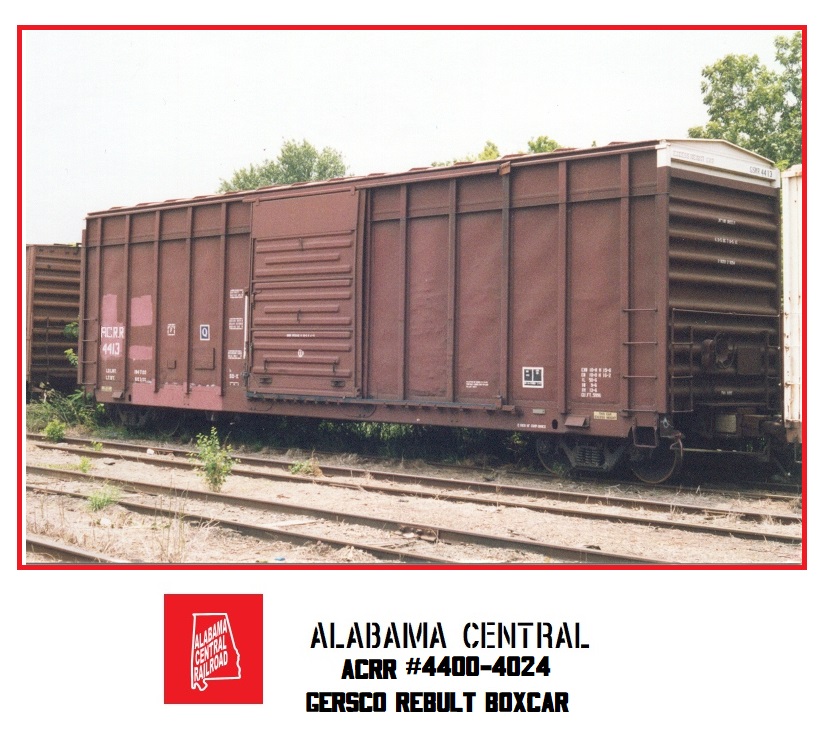
A few short years later saw the ACRR acquiring the lease of the old GM&O line out of Montgomery to Maplesville, known as the Prattville line. Original owner ICG shed nearly half of its rail system through sale and abandonment to revitalize a new profitable “IC” without the “G” in 1985-86. Part of the “rationalization” saw the ICG pull out of Alabama completely, allowing the ACRR to buy the line from Bell Street junction with CSX in Montgomery as far as Maplesville, AL. IC abandoned the rest of the original mainline route to the old GM&O terminal at Tuscaloosa, Alabama. It then sold its remaining GM&O lines to Gulf & Mississippi Railroad (GMSR). ACRR established its operational headquarters at Prattville, close ot its principal customer on the line, a sprawling Union Camp paper mill. A hand full of industrial park customers rounded out traffic source at the Prattville Industrial Park and Maxwell AFB near the junction with CSX at Bell Street. ACRR used three jobs based out of Prattville to switch the mill, move primarily mill traffic to CSX in Montgomery and Georgia Road in Maplesville. A fourth job worked the original Lagoon Park line in Montgomery as needed.
ACRR acquired trackage rights from its Prattville line at Bell Street through downtown Montgomery from CSX. This trackage was used to physically link the ACRR to the CSX Interchange at the old WofA Chester Yard. It was known by local railroad crew as the former GM&O “dummy” main and linked the Prattville operation to the original SAL Lagoon Park line also. The dummy main was little more than a left-over weed grown running track going from Bell Street Interlocking as far as the old CofGA -SAL connection behind the old WofA freight house in downtown Montgomery. This was the original ICG connection to SAL, CofGA, L&N, WPR and ACL and somehow remained in place as CSX realigned and improved track layout between Bell Street and S&N Yard. Movements between Bell Street and the old SAL were few and far between, save for power swapping and storage moves which became the Lagoon Park line specialty. ACRR had to physically cross from one side of the CSX mains through downtown to the other. With advent of PTC signal control, ACRR rarely appeared in downtown as it lacked PTC equipped locomotives. The shoestring operation felt moneys needed for PTC installation were best spent elsewhere.
After securing breakfast at the hotel in Downtown I was treated to the usual CSX parade behind Montgomery Union Station as I made my way to Gunter Industrial Park east of town. Radisson tipped me off that there might be a storage move on the Lagoon Park line. I followed the old SAL branch to the remains of the SAL yard hoping to see the storage move of boxcars from Pike Road to CSX at the interchange at Court Street. Sure enough, I found the train, waiting patiently for permission from the CSX Yardmaster to cross the diamond grade crossing over the CSX West Point Route main and enter S&N Yard. I waited for nearly an hour for movement, only managing two still shots. I gave up and headed north toward the Prattville line only to hear the CSX dispatcher give them permission to move on my scanner. Unfortunately, they would disappear into the confines of S&N Yard obscured from view before I could circle back. The waiting train gave me my first taste of the rather spartan red scheme that started up the ACRR. It was first introduced on a gaggle of hand-me-down Geeps, retired and cast away by the various Class One rebuild programs of the 1980s acquired for the Prattville line. The #400 was Conrail heritage, part of a rebuilding campaign where CR repaired and rebuild GP-7 and GP-9 units to produce reliable local power from the rainbow of units it inherited. The GP35M was an ex-SP GP35 de-turbocharged during rebuilding.
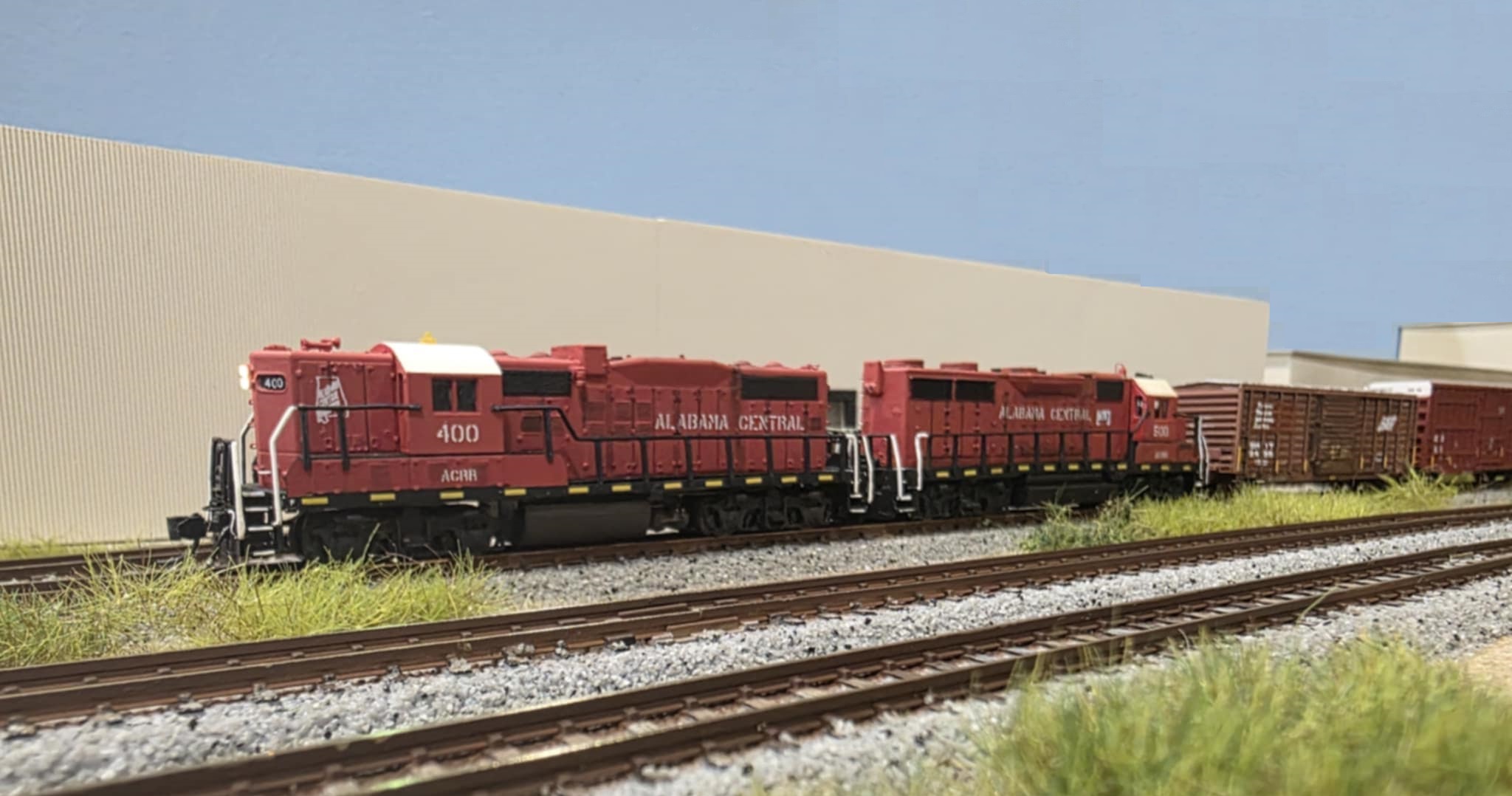
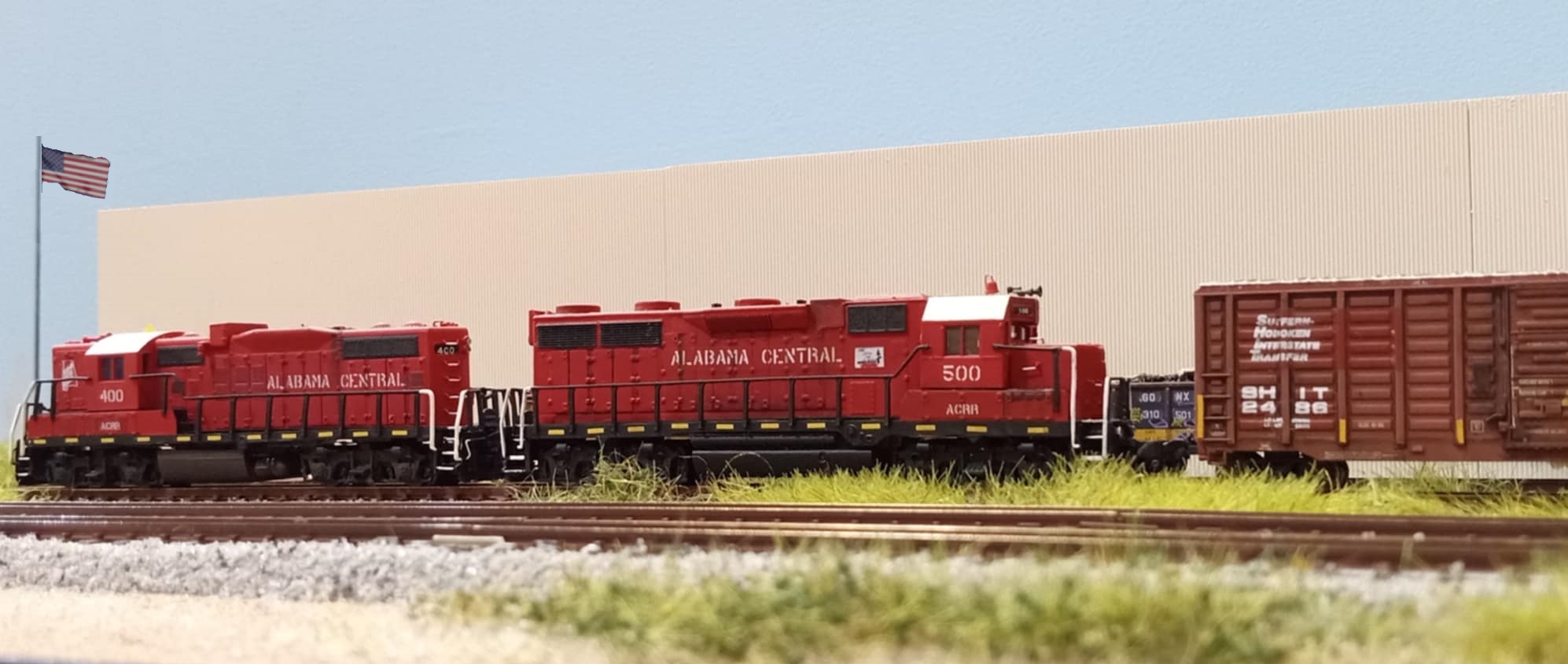
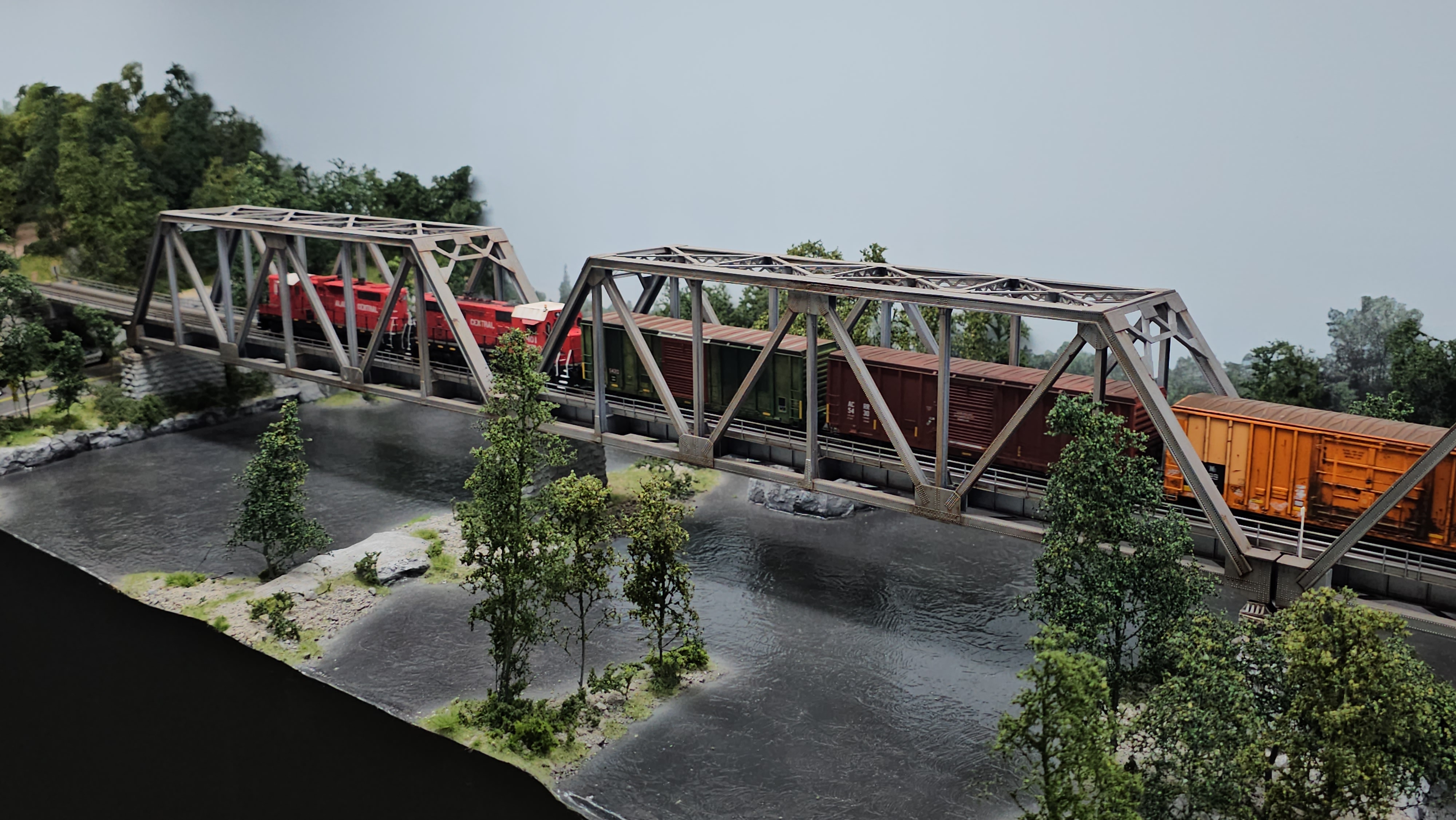
As I followed the Prattville line from Bell Street through Maxwell toward Prattville, my scanner erupted again as I approached the Alabama River bridge. To my surprise, the ACRR Montgomery job was pulling a brace of boxcars over the bridge headed for the CSX interchange. The two diminutive Geeps struggled to keep its train moving but this allowed me to find a relatively clear point on the Prattville side of the river to catch going away.
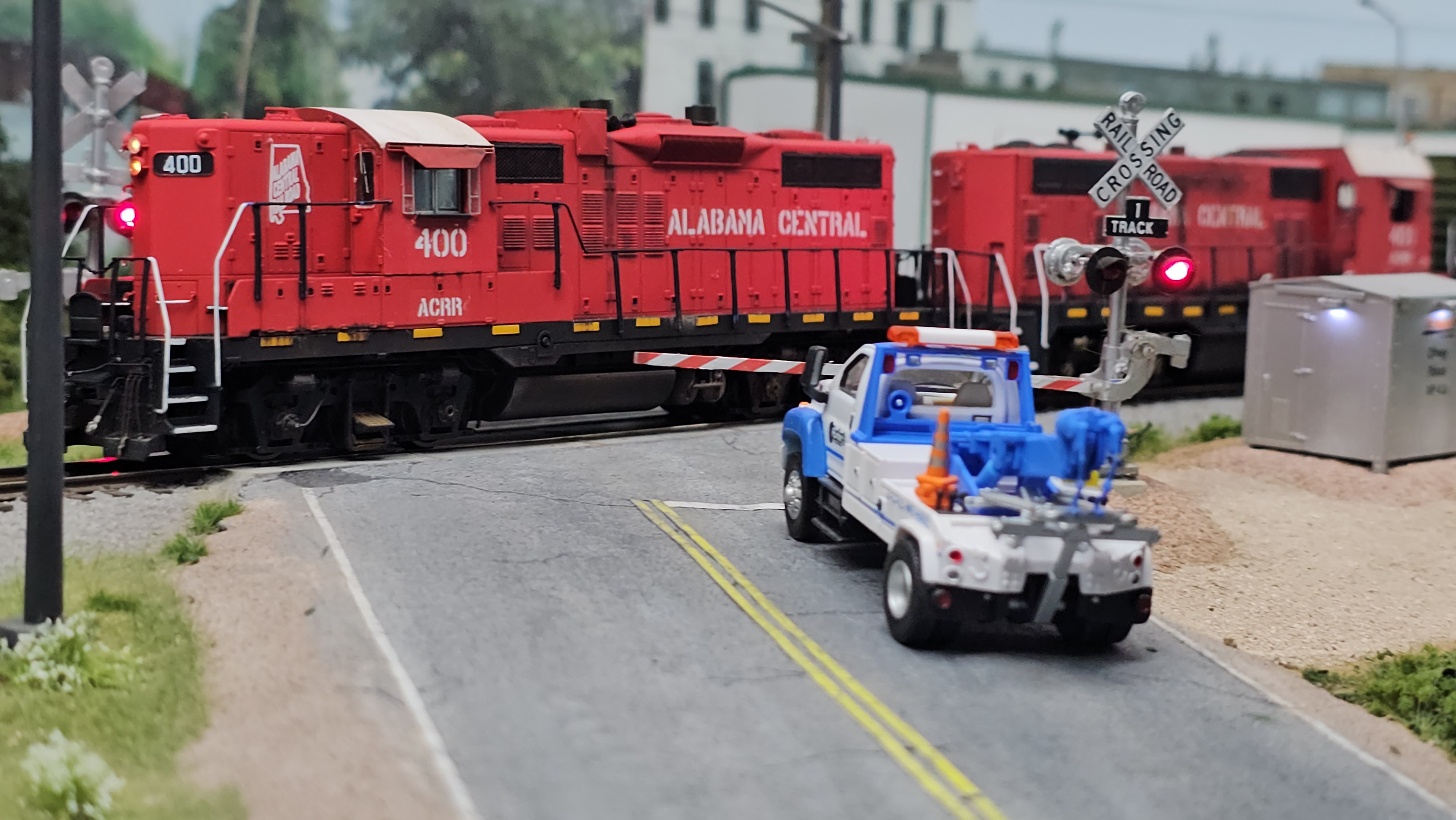
I decided to double back and follow the train back into Montgomery. After crossing the bridge, I caught the train working the small yard at Maxwell. A tow truck driver waits impatiently for the two locomotives to switch out a few cars at the team track.
The train finished its set-out at Maxwell and continued on to Bell Street. to my surprise the crew called the CSX Yardmaster in Montgomery and discussed an apparent move to get the train all the way into S&N yard via the old GM&O “dummy” main. To my disappointment, CSX had several of its own moves to run and held the train at the junction at Bell Street. A backwoods short line had little standing against several hot manifests and a Mobile bound coal train. The wait would spiral into over two hours. It was already after lunch and I decided to go into downtown and catch a lunch at the regionally famous Dreamland Barbeque. As I finished a half rack of short ribs and all the fixings, I heard the several trains pass by about three blocks away as the CSX manifests rolled through downtown. by the time got back on the road and headed over to the CSX yard, the ACRR train was already done with its interchange and was preparing to head back to the Prattville Line. A last-minute change of plans saw the ACRR train slip into downtown and interchange its cars at the CSX S&N yard in record time to the delight of the ACRR crew.
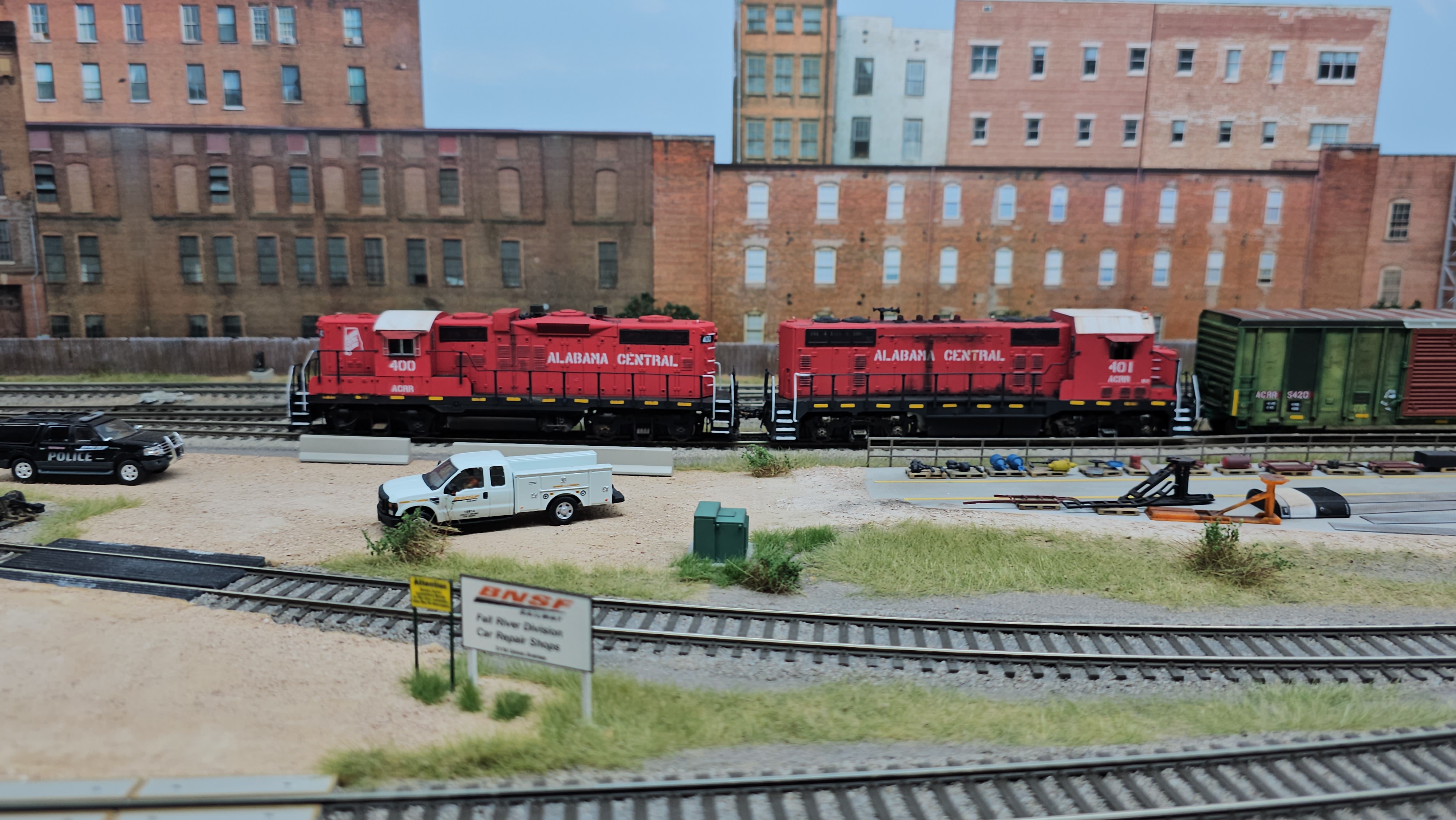
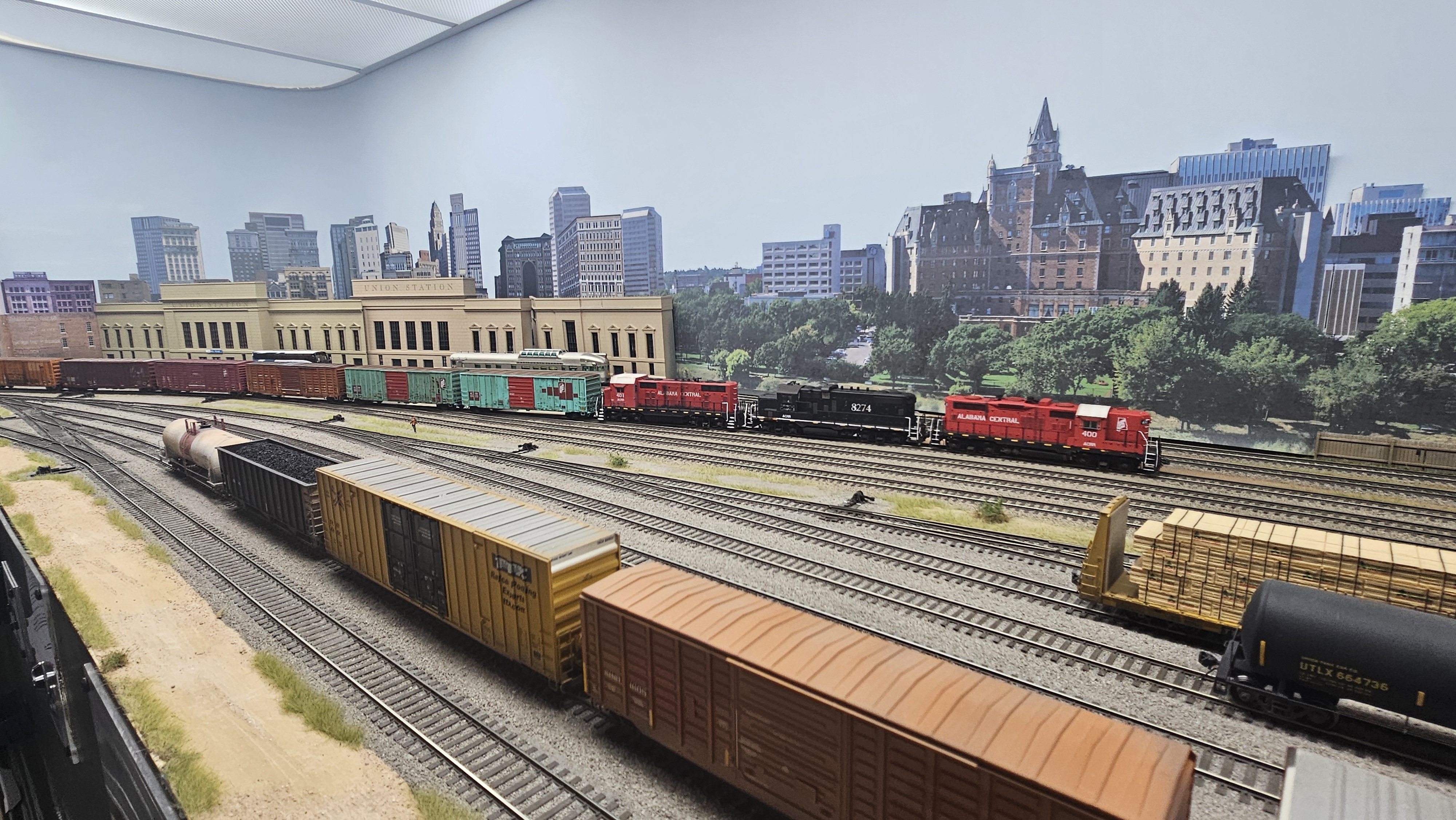
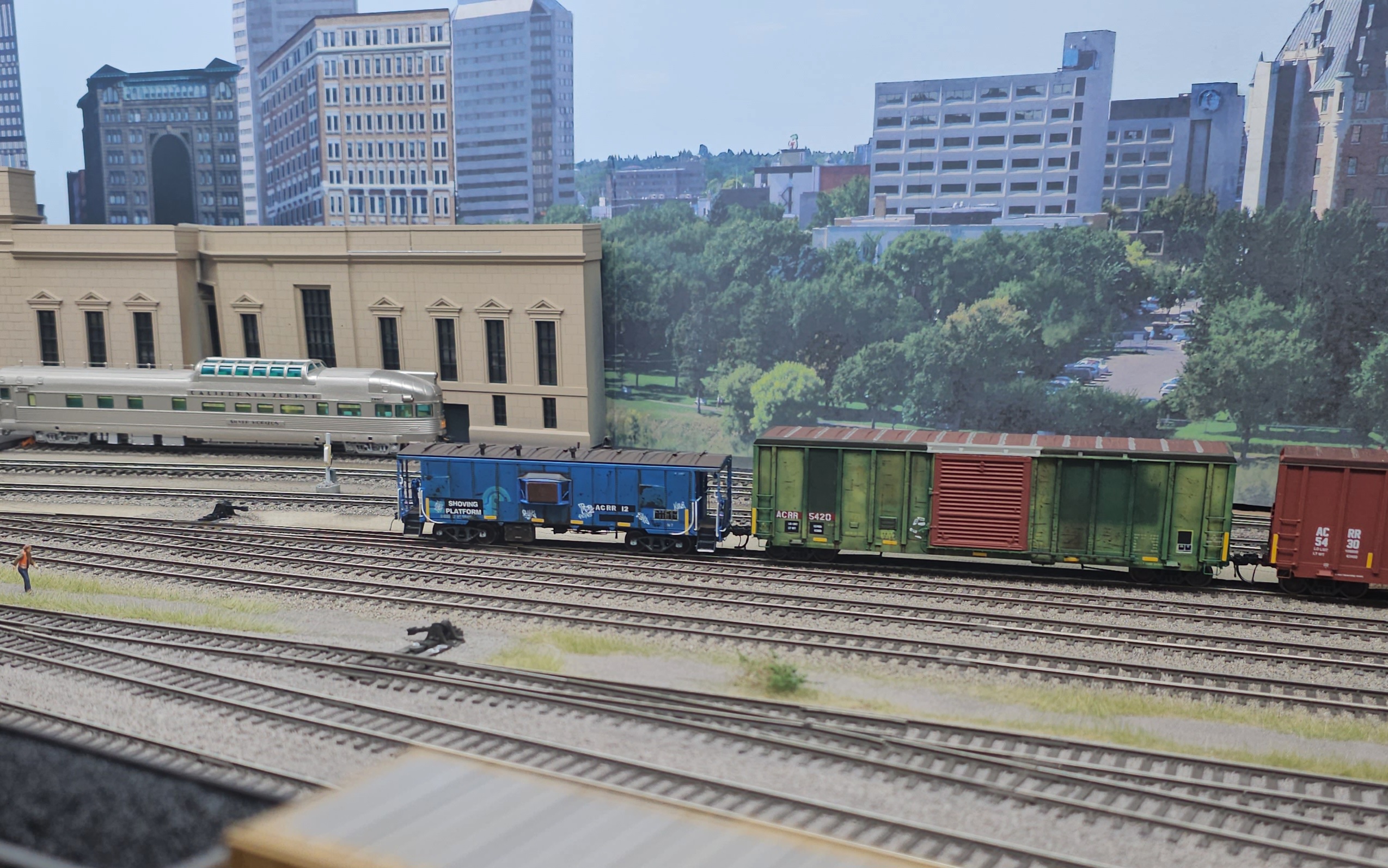
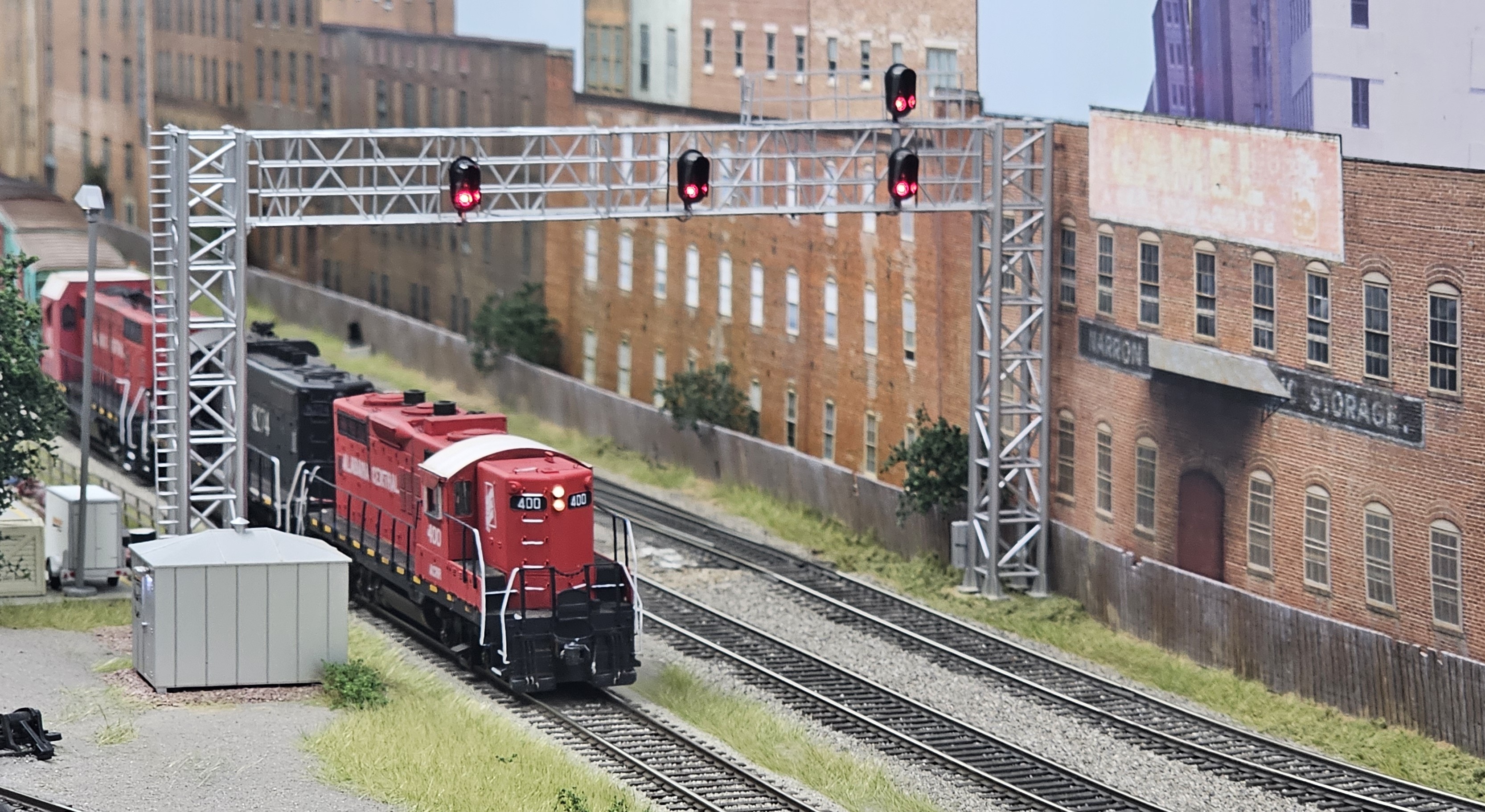
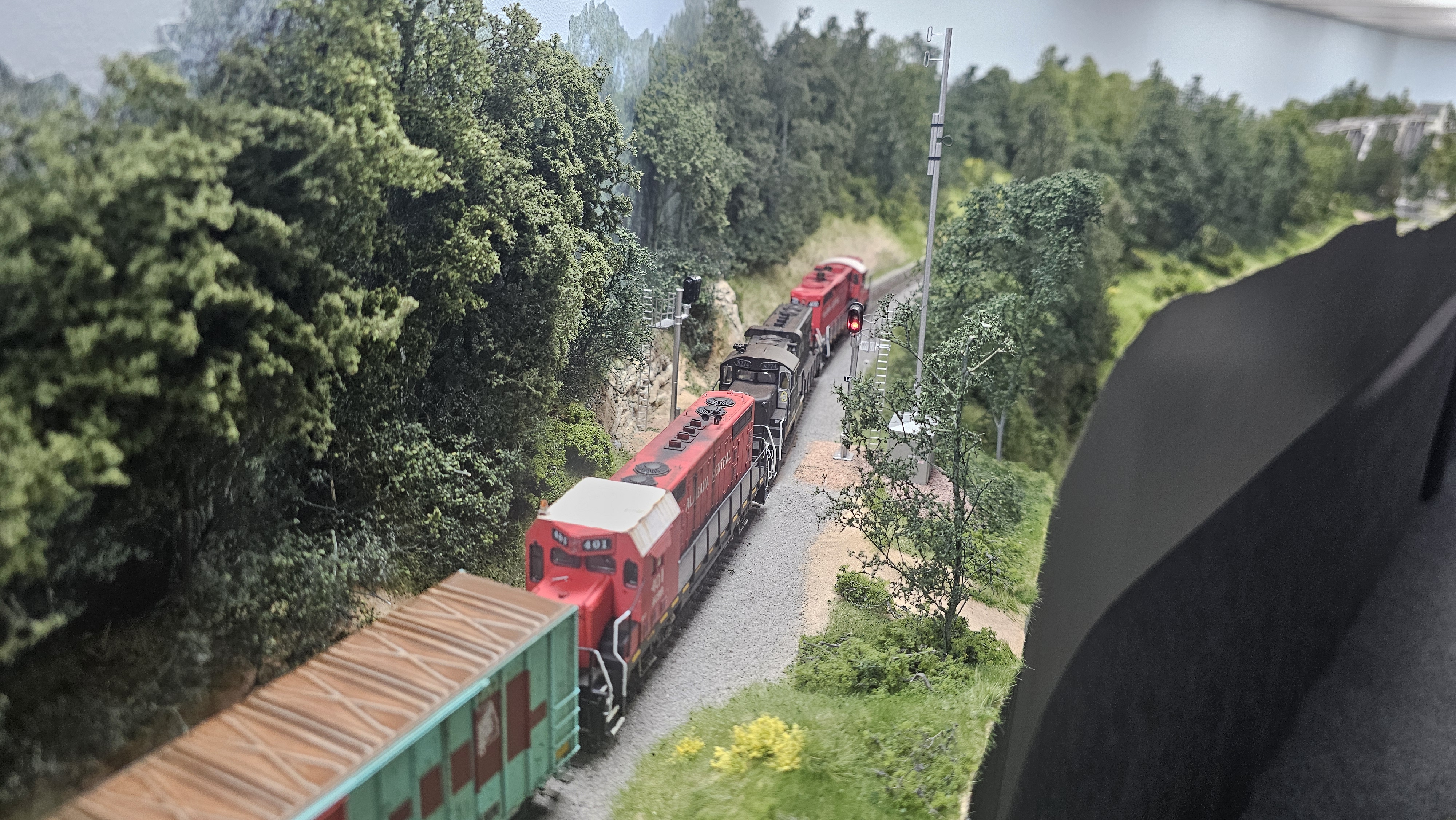
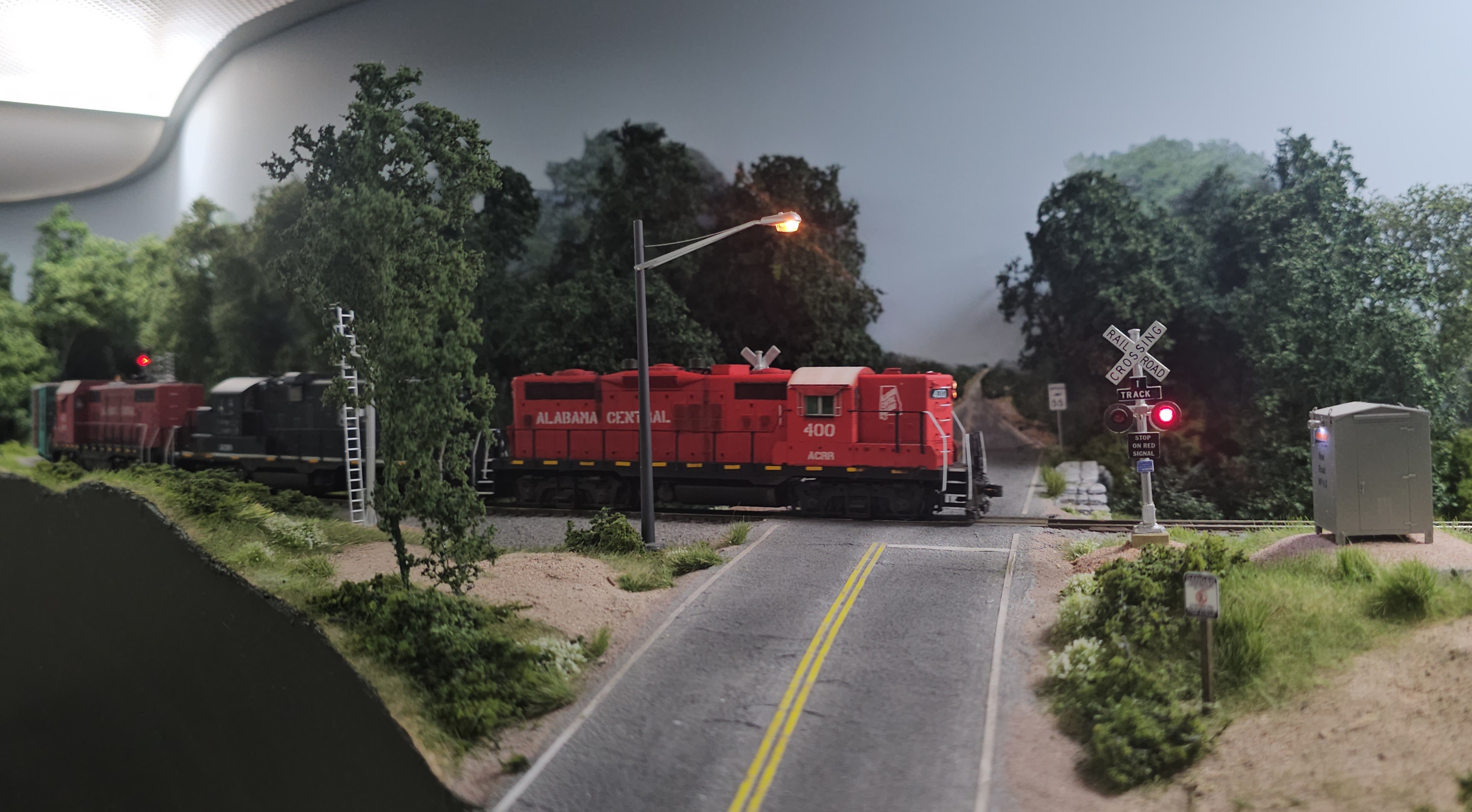
I left ahead of the train at Maxwell so I could set up another shot of the north bound ACRR Montgomery train at the Alabama River bridge. The crew added a third unto to the consist at S&N Yard, a very rough looking ex-IC GP10. There was irony here as the former ICG Paducah rebuild probably operated on this line in ICG days in its original Orange and White “Split Rail” scheme in the early 1980s. Since then, it had gotten a coat of the slimmed down IC “Death star” scheme and after being retired by IC somehow made its way in worn paint to the ACRR. I caught the train coming into the Prattville Industrial Park and shot a few roster shots.
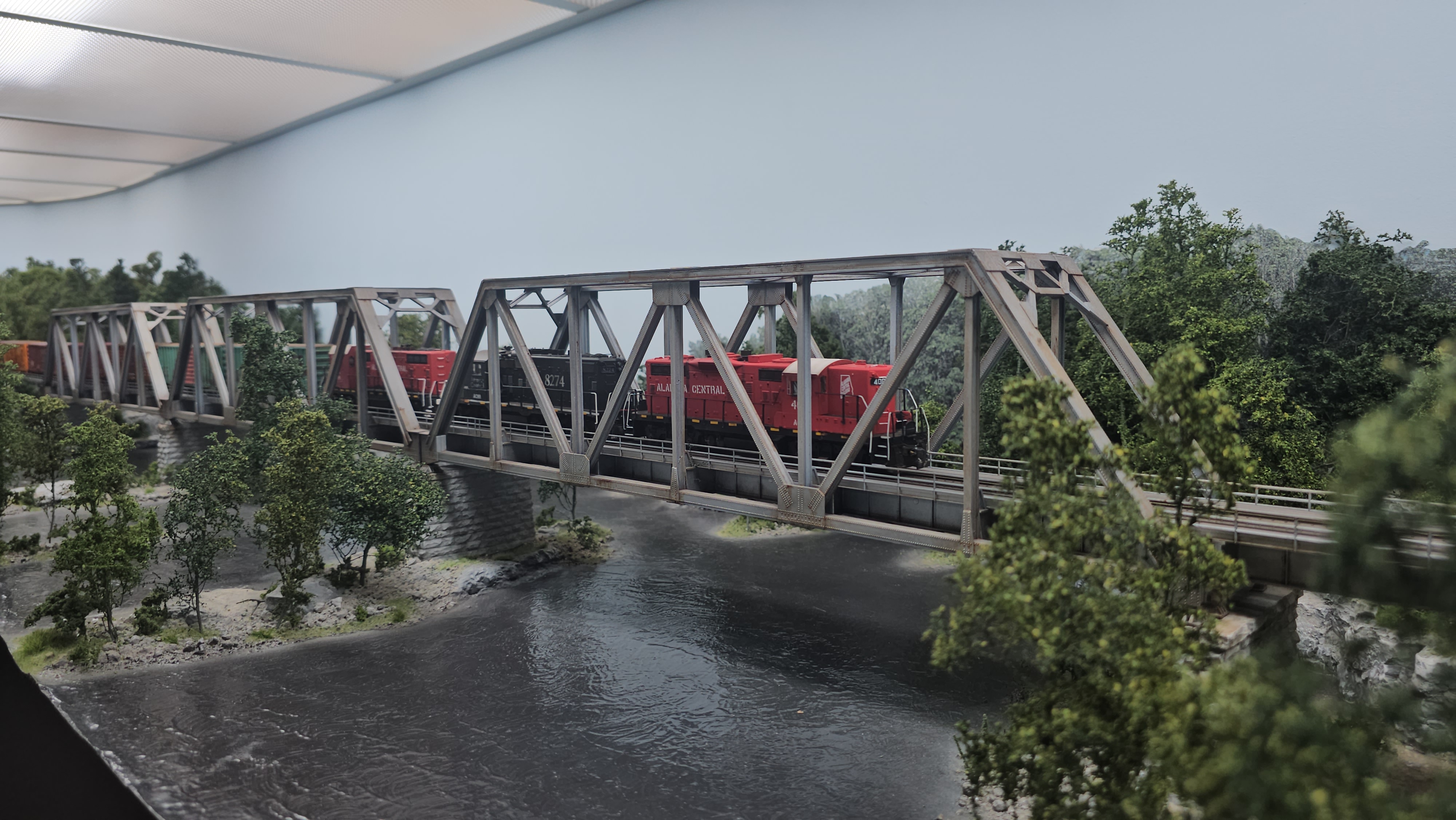
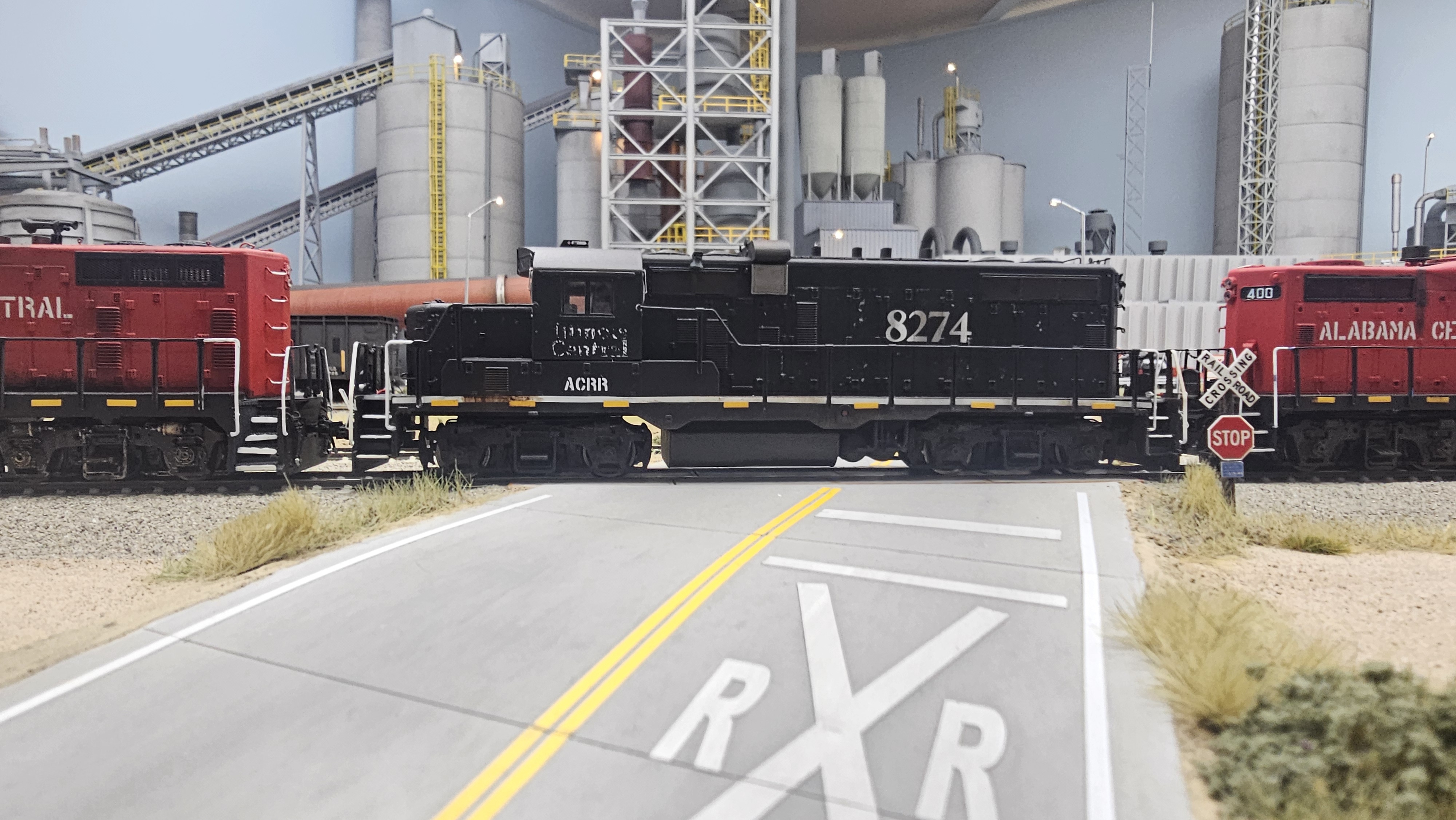
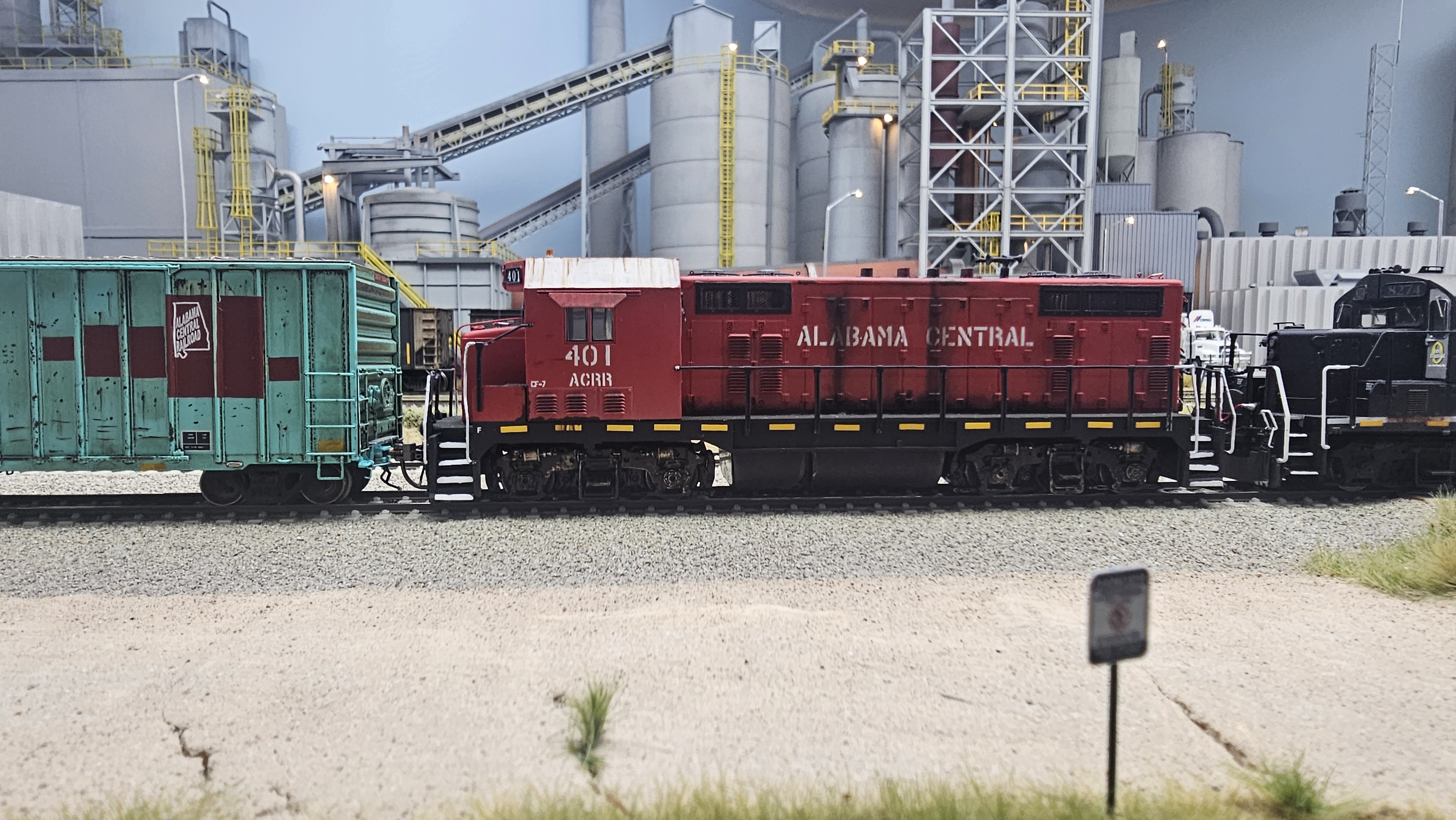
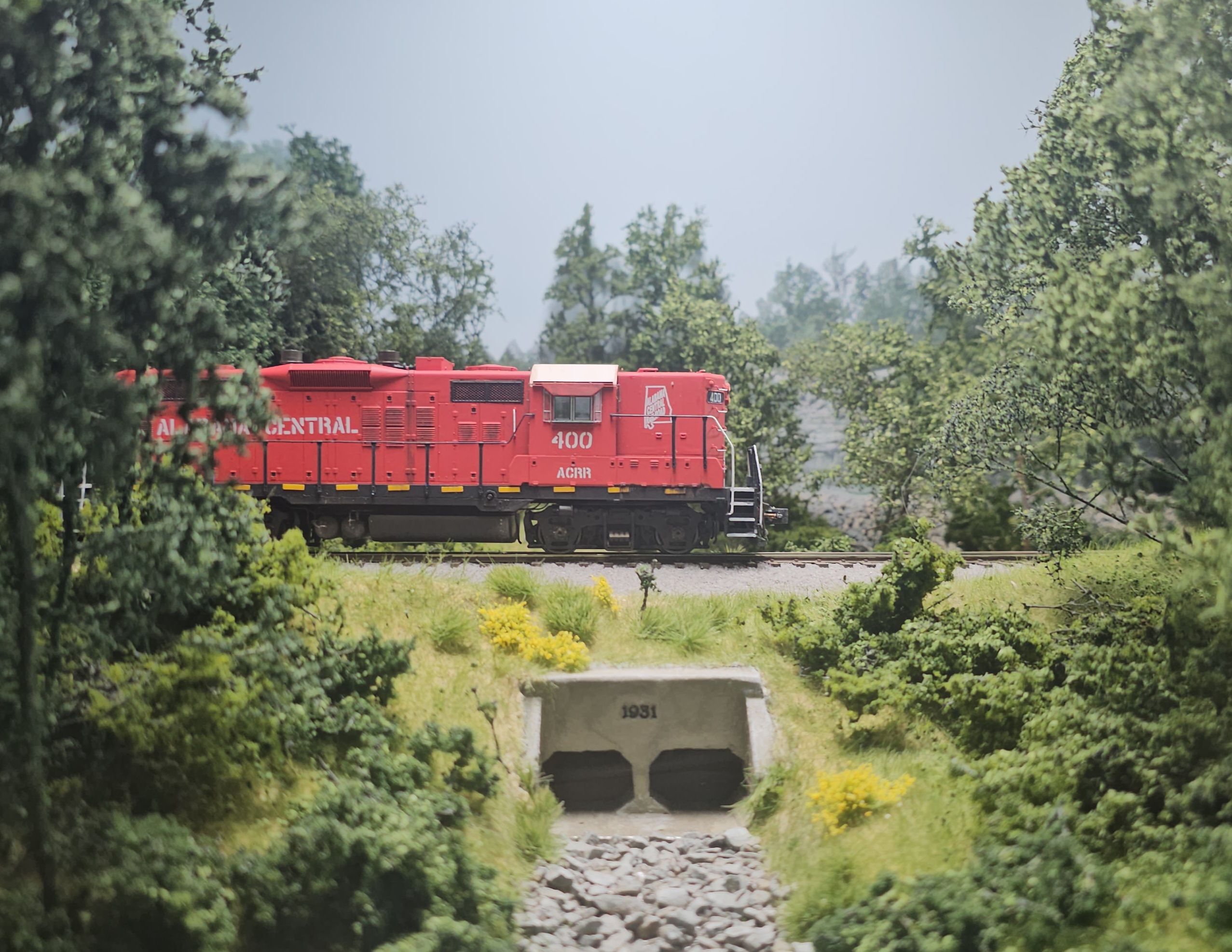
The class three track limited the ACRR returning train to 25 miles per hours with a ten mile an hour speed restriction on the Alabama River Bridge. As a result, limited track speed and delays at Bell Street due to CSX made the 40-mile trip from Prattville to Montgomery and back to Prattville last a full day. While I would have loved to hang around and see the Maplesville Job power coming back to Prattville, the need to get moving toward home was growing. My last shot of the day would be the Montgomery Job entering its very basic yard at Prattville…or so I thought. I shot the train entering Prattville from the south then decided to leap-frog to the yard and finally get that elusive shot of locomotives in the ACRR Prattville Yard.
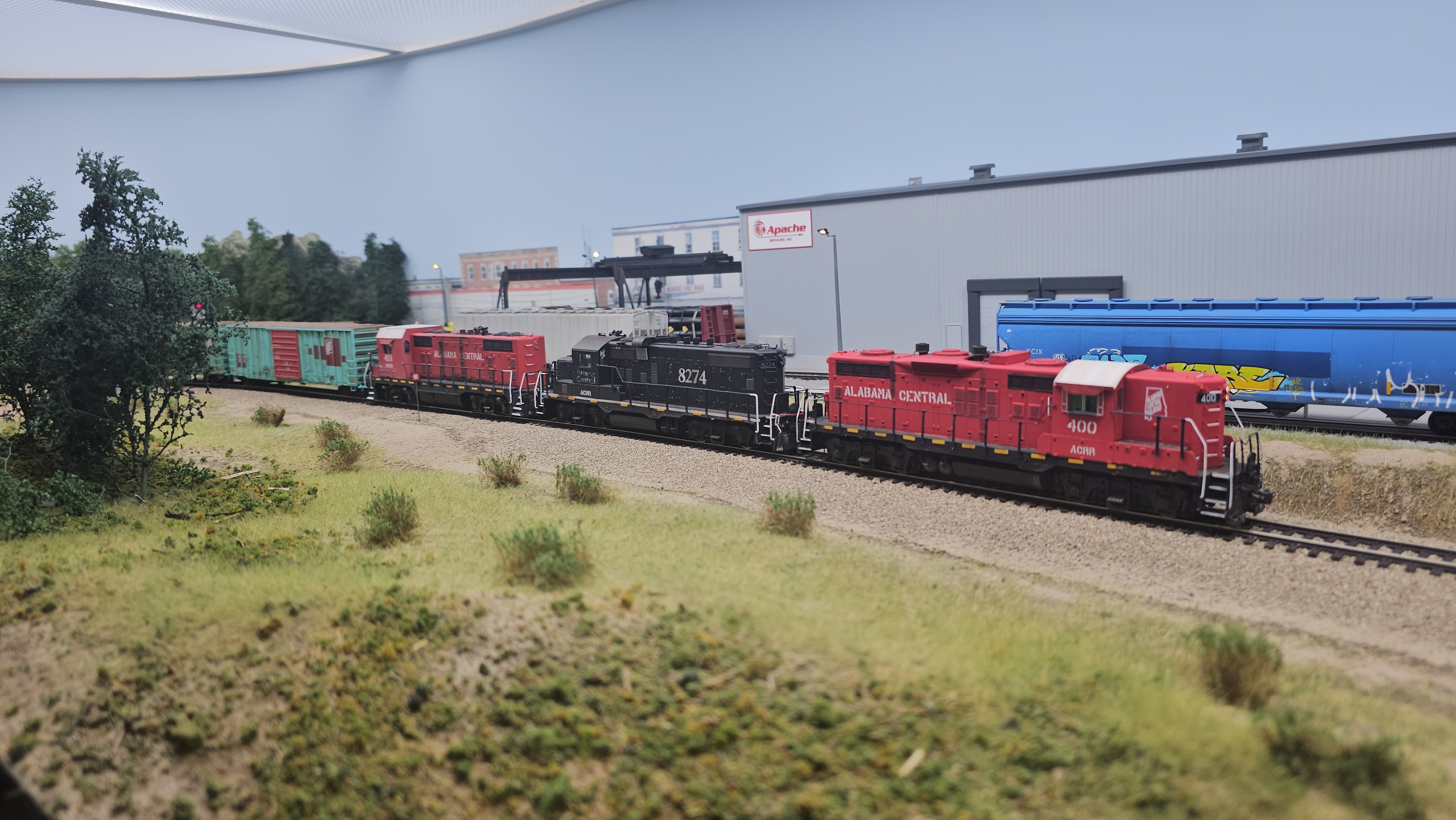
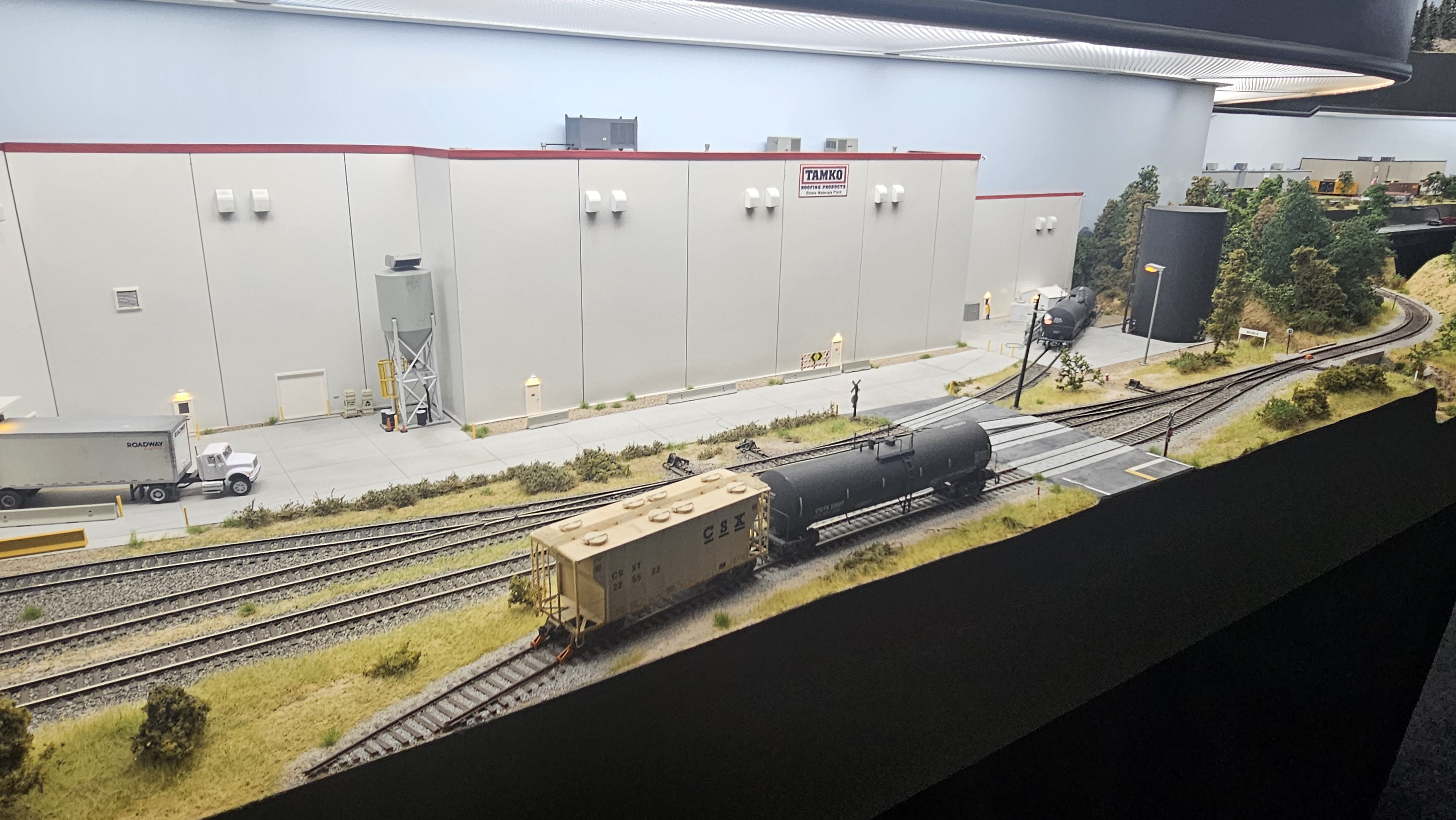
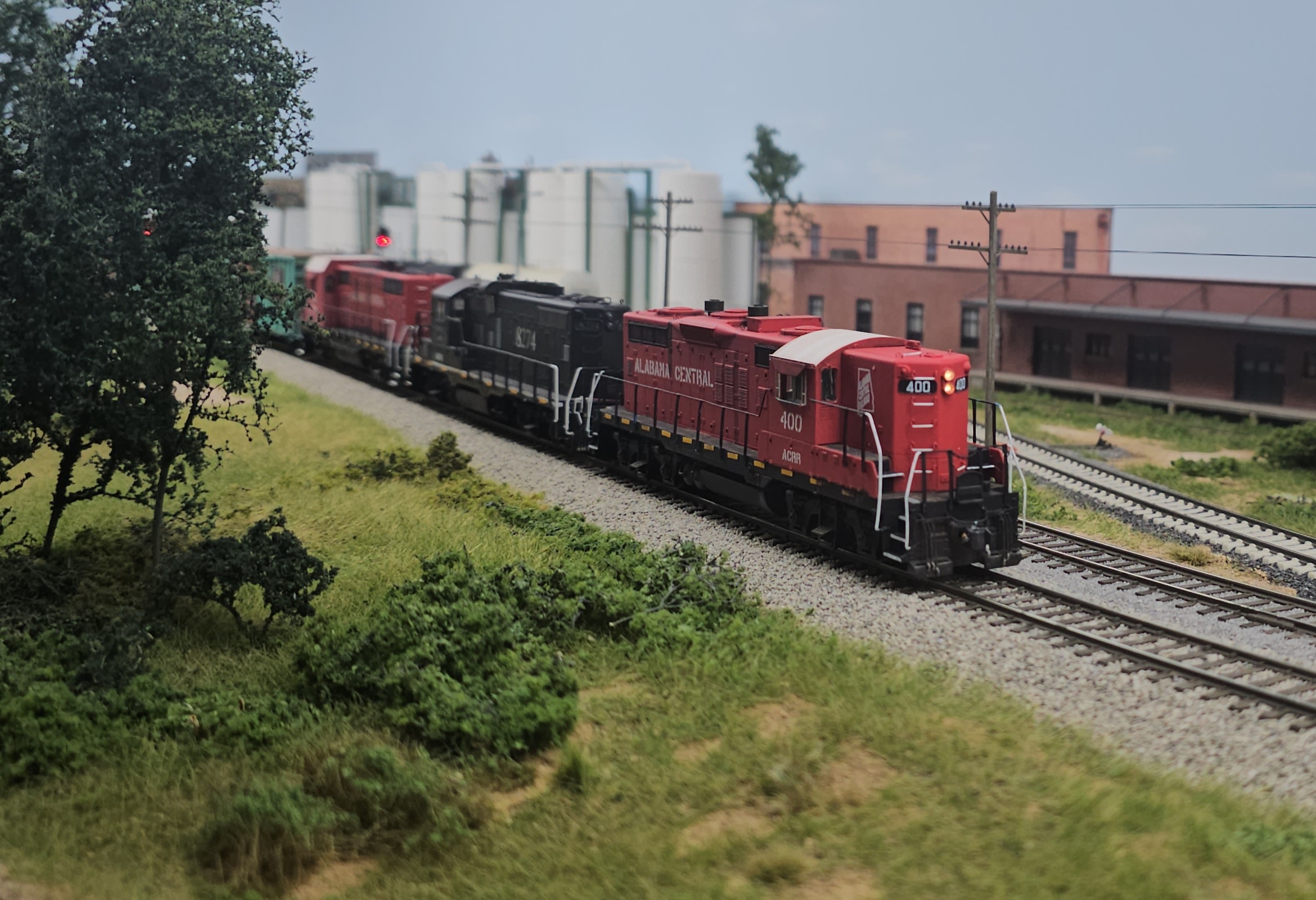
Not to be outdone, I circled back to find the Prattville train tied down south of the yard and waiting for a crew taxi to take them up to the Prattville yard office trailer. Well, you get what you can when you can!
With an anti-climactic finish and another empty yard shot in camera, I headed to the vehicle to begin my journey home. It was still a two-hour drive in evening traffic, and I wanted to get started. I hung around the yard for a few more minutes, hoping against hope when one of the crew members from the now off duty Montgomery Job noticed me. He patiently filled me in on the evening operations. The mill had its own switcher that rarely stuck its head out of the paper mill plant. The Maplesville Job was just leaving the Georgia Road interchange and was several hours travel from arrival at Prattville. My ACRR chase was over. I thanked him for the information and pulled out of the gravel drive near the office. In a moment of spite, I circled back and found the train burbling to itself tied down south of the yard and mill lead. I took one last rather good shot of the train. I could leave now with my head held high. while I never got the shot I tried so many times to get, I reminded myself I saw parts of the operation that tended to be rare sites. I saw the train actually interchanging in the CSX yard and caught a rare move on the Lagoon Park line. Railfanning has its ups and downs, but I was thankful I finally got to see the reclusive Alabama Central Railroad!
Special thanks to Mr. John Parker for allowing Raddison McGuire, Joe Bohannon and myself full access to his BNSF Fall River Subdivision in HO Scale to operate the Alabama Central train and take hundreds of pictures. As for myself it was the culmination of a trip of a lifetime and left me in absolute awe! Thanks also to Radisson McGuire for allowing me to take pictures and produce this article. Last but definitely not least, a huge thank you to Joe Bohannon and his expert truck driving skills for driving me around for over four days and taking me to see the Fall River layout in person!
Radisson McGuire is the owner and purveyor of all things Alabama Central Railroad. For more information about his prototype freelance concept follow this link to the Alabama Central Facebook page:
 Georgia Road Transportation