OVERVIEW
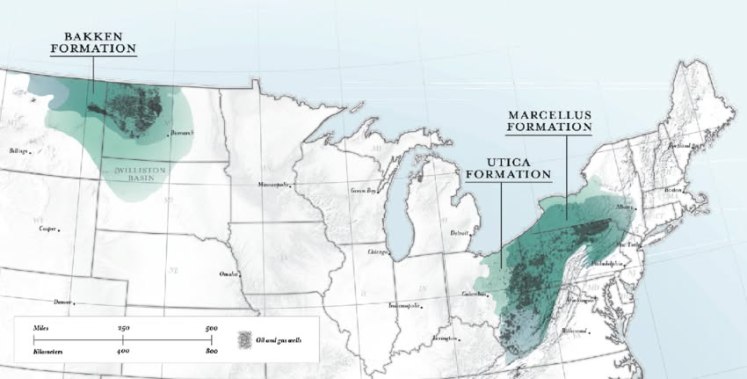
The railroad revival for the Cincinnati & Lake Erie Railroad (CLE) started with the practical exploitation of the Bakken, Utica and Marcellus fossil fuel reserves. The Bakken region was situated west of the Great Lakes, taking up the Dakotas and into the western middle of Canada. Utica was located in east Ohio and Pennsylvania, adjacent to the US side of the Marcellus Region. (see map) Technological advancements in fracking these shale and sand deposits accessed astounding amounts of oil and natural gas. Bakken was more oil, while the Utica and Marcellus were known for dry gas deposits, though crude was not uncommon in areas also. (See Map). The size of the reserves and the boom they created in the oil and gas industry quickly overwhelmed the transportation capabilities. Construction of pipelines to move product in bulk were environmentally and politically sensitive, adding indeterminate delays to a unified network serving the area, such as the Trans-Canada and Keystone pipeline initiatives. Producers quickly created a work-around , using regional and Class One rail carriers to move both the crude and the gas in unit trains from the production fields in all three regions to refineries and existing pipeline heads on both the Eastern Seaboard and Gulf States region. See picture one.
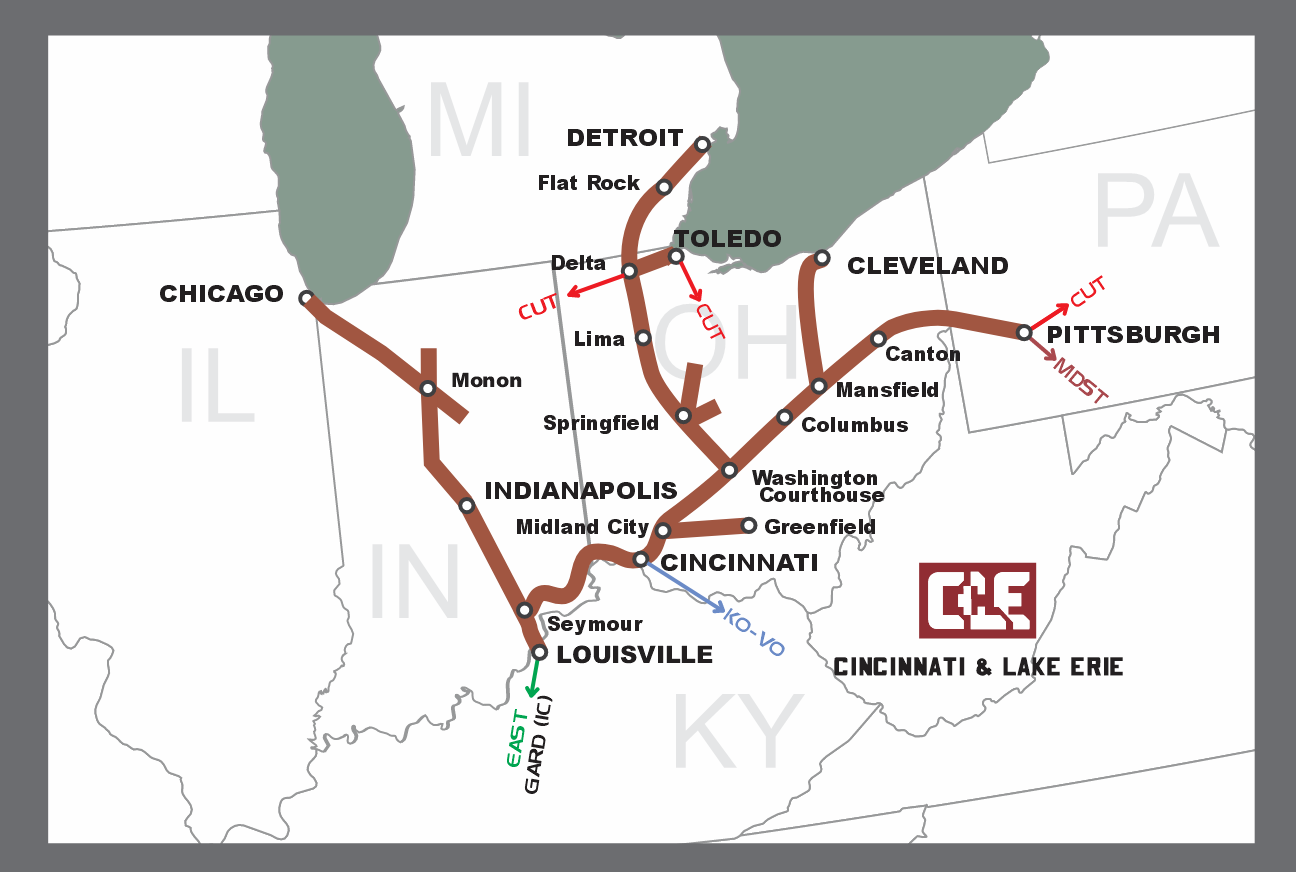
The CLE along with its access to EAST terminal facilities occupied a strategic physical position in these new oil and gas trains. The massive metroplex of Chicagoland was already waft with delays due to congestion, and this new business quickly increased to the point that it only added to issues moving trains out of Bakken in Canada to US markets in the Gulf. CLE-EAST provided a roundabout link through the EAST terminal in East St. Louis where trains could by-pass Chicago and interchange with US roads where capacity was available. Trains could then move south over the Georgia Road former IC lines or travel eastward and southward across the CLE and reach eastern connections such as CUT and MDRail. From these connections, trains could flow to refineries and pipelines along the Atlantic Coast.
The Marcellus and Utica regions were perched directly north of the CLE Ohio Division. LPG could move westward on an all CUT routing to Chicago, or turn south on the CLE and access the Gulf or Western US using GARD or Gateway System (EAST-WEST) connections at East St. Louis. These new trains taxed the CLE and its EAST partner. Eventually, the CLE sold interest in its operation to its primary interchange partners, CUT and GARD. This move tapped resources to rebuild the CLE system, expand and streamline yards and terminals, and procure adequate locomotives and rolling stock to maintain expected levels of service.
The Cincinnati and Lake Erie Railroad was positioned in a unique area of the Midwest particular for automotive and petroleum sectors typically moving by rail. The railroad regularly moved Bakken oil trains from its interchange with Canadian railroads in the greater Chicago area as well as Marcellus Oil trains moving interchange partner and part owner Cumberland, Utica and Toledo Railroad. Much of this traffic moves southward toward refineries on the Chemical Coast refineries and pipelines around the Gulf of Mexico through Georgia Road connections.
Most class ones require the shipper to lease or provide a minimum of two buffer cars, one on each side of the unit train. In addition, a number of cars are required to be loaded with non-combustible material or held empty to provide the six car minimum non-hazardous separation between the loaded train and the locomotive power. The buffer cars are required to be a substantial car with some type of ballasted lading such as sand or rock to provide extraneous buffering action and reduce the potential hazards of slack between locomotives and the loaded train. Most railroads employ covered grain hoppers or open aggregate cars loaded with sand or a crusher-run ballast. In recent years, the use of otherwise obsolete air slide covered hoppers has become the rule for regularly assigned buffer cars as they can be easily loaded with sand and generate revenue from a car that would otherwise be useful only as scrap. CLE actually began rebuilding its fleet of buffer cars for open lease.
HISTORY
In 2008, MDrail decided to divest the FGC, using sale proceeds to solidify its Capital Bypass routes around Washington DC and the beltway. AF&G immediately purchased the railroad through a new holding company, Florida Gulf Industries (FGI). The FGI holding company would purchase the FGC and also contain the original AF&G properties under one corporate umbrella. FGI adopted the “Sunburst” logo as its corporate trademark. The plan was to keep the railroads locally managed, but to consolidate overhead rates into major interchanges, simplify billing and combine asset maintenance functions with greater purchasing power. While the AF&G maintained its L&N style locomotive and rolling stock livery since it began in the 1980s, the decision was made to repaint all locomotives in a similar basic paint with only reporting marks and railroad names changed to suit.
The new FGC-AF&G combination proved a smart move as overhead traffic could now be moved under the consolidated banner. FGC solidified its designated operator status for SunRail, and extended the service into Jacksonville via CSXT trackage rights from the eastern-most contiguous location of Baldwin to Jacksonville. The new corporate FGC system also worked with the Alabama Midland System (AMRR) to build its primary western interchange in Birmingham, AL. FGC trains would move across Florida, up the AF&G and over to Montgomery, AL were AMRR ex GM&O lines linked into the Georgia Road near Birmingham, AL AMRR bought the US Steel Birmingham Southern RR (BS) from Transtar in the mid 2000s as USX closed its Fairfield Steel mill. AMRR quickly ressurected the new AMRR controlled BS as a terminal road to facilitate easier interchange of both AMRR and FGC traffic coming from the Gulf region.
 Georgia Road Transportation