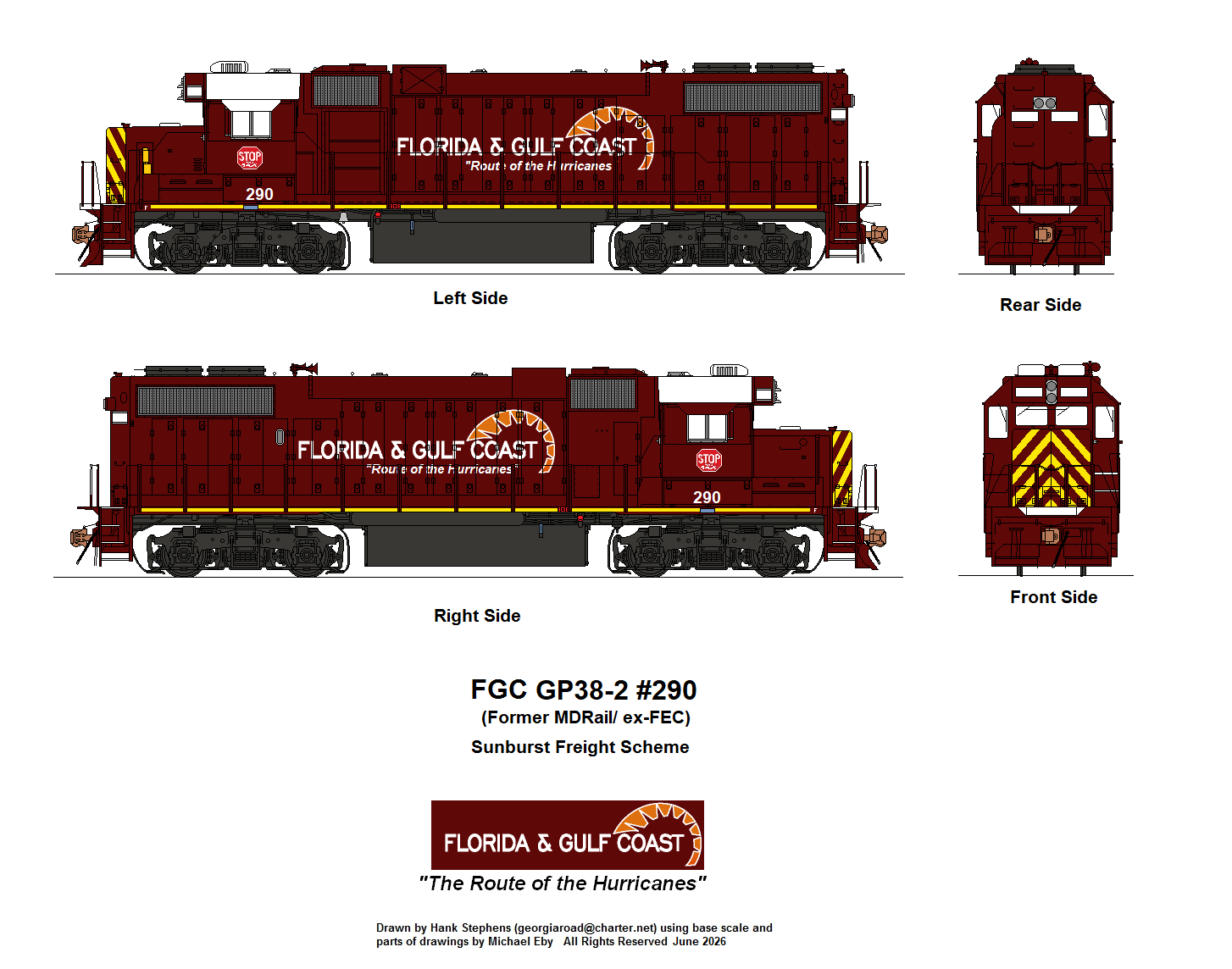
GP38-2
In the early 2000s, Maryland Rail Transportation (MDST) opted to divest itself of the Florida &Gulf Coast Railroad (FGC) after several hurricanes including Katrina did extensive damage to the panhandle section of the railroad. After extensive negotiations with Alabama, Florida and Gulf Railroad, an agreement was reached so that AF&G Industries would take over majority ownership in the FGC. AF&G Industries merged with the MDRail FGC holding company and became Florida & Gulf Industries (FGI). FGI in turn purchased both the AFG and FGC and merged them into the Florida & Gulf Coast Railroads. While the name change was subtle, it reflected a new corporate entity based in Tallahassee, FL that controlled both the AF&G and FGC holdings. The new FGI adopted a variant of the FGC Sunburst Scheme which it would retain as its corporate scheme for all owned railroads (only the name was altered to reflect the actual railroad). MDRail removed much of the original FGC power, moving back to Maryland to supplant its growing Maryland operations.
Ten GP38-2 units were left with the new FGC to allow the new FGI controlled company to maintain operations as it sought out its own replacement power. These units were mostly former FEC and ex IC, exx-ICG units and lacked dynamic braking, atypical of FGC locomotive specifications. These units formed the backbone of the general road switcher fleet in the Florida Peninsula and Panhandle until FGC began acquiring new GP and SD power with extended dynamic braking being the preferred standard. By this time, the FGC was developing mainline operations over the Panhandle and into Dothan. After the acquisition of the Alabama Midland RR (AMRR), manifest trains and heavy train operations developed from Tampa through Dothan, Montgomery and Birmingham, AL. These original GP38-2s were odd men out on the FGC main line, so they typically worked the former Apalachicola Northern (AN) branches in South Florida where their lack of dynamic braking was not an issue. After the AMRR take-over, the non-dynamic brake FGC GP38-2s found a home among the AMRR roster which tended to shy away from both turbocharged and dynamic brake equipped locomotives as a cost and maintenance savings. These GP38-2s found assignments working with AMRR brethren on the Georgia branch lines and even the Conecuh Valley Southern Railroad (CVSR) subsidiary in Alabama. Two units were lost in a bridge collapse derailment near Florala, AL following the floods caused by Katrina and were scrapped on site. A third unit suffered a primemover failure and was eventually rebuilt into a GP38-3 complete with a Wabtec replacement cab and addition of dynamic braking as part of the FGI late 2000s Roster Upgrade and Standardization Initiative. The remaining seven units continue to work in secondary assignments across the system.
| Road Number | Number of Units | Paint scheme | Notes |
| FGC 290-295 | 4 | Sunburst Standard Scheme | Ex-FEC unit purchased originally by MDRail owned FGC and lack dynamic braking. 291 wrecked in bridge washout and scrapped. 295 suffered failed primemover and rebuilt as GP38-3 with new cab and dynamic brake upgrades in 2024 |
| FGC 296-299 | 3 | Sunburst Standard Scheme | Ex-IC , exx-ICG purchased originally by MDRail owned FGC and lack dynamic braking. 298 wrecked in bridge washout and scrapped. |