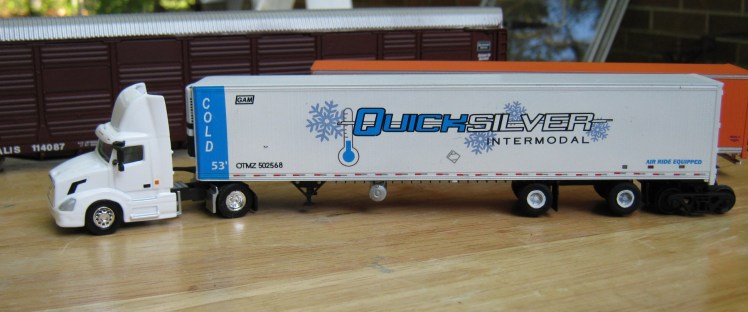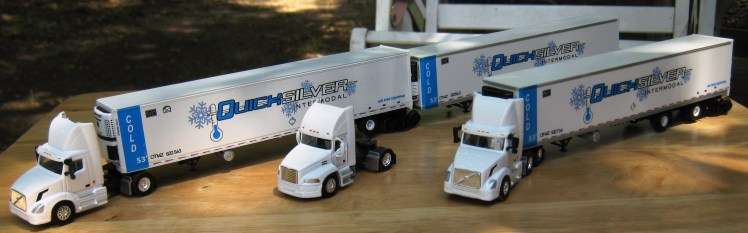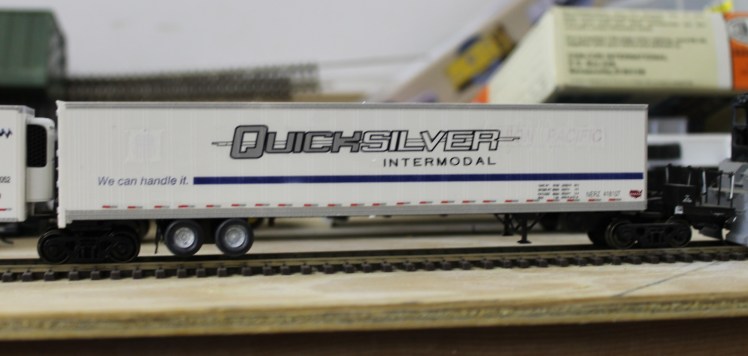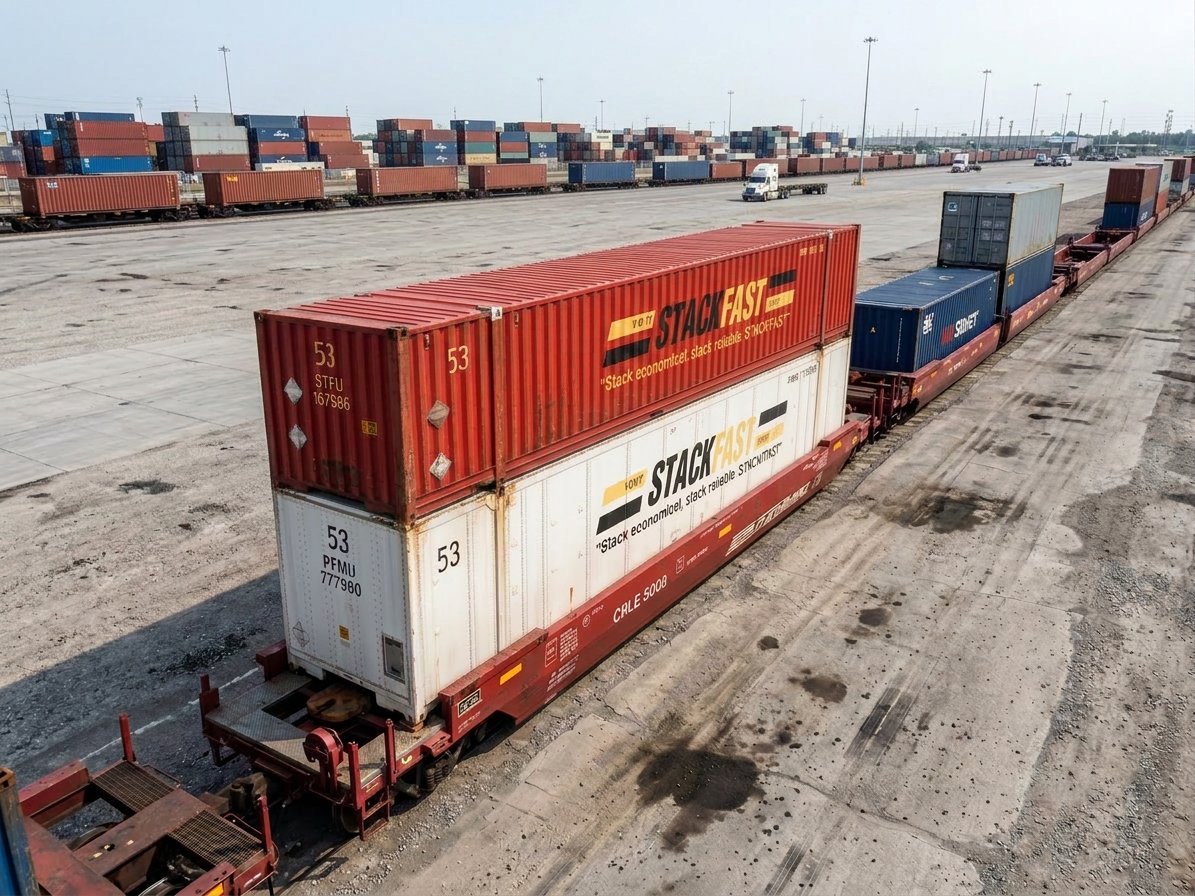
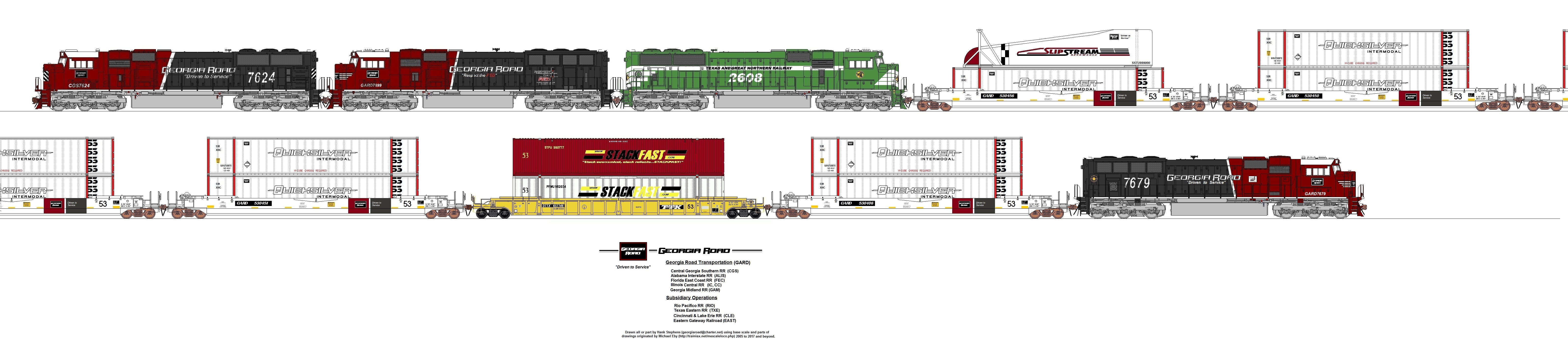
Georgia Road Transportation offers a complete line of intermodal services including transportation, ramp services, customs clearance, fleet leasing and logistics support through its branded stand-alone subsidiary QuickSilver Intermodal Services (QSI). QSI operates the Georgia Road fleet of railcars and owns its own specialized pool of highway trailers, containers and supporting equipment. It also acts as a broker for its inhouse suppliers such as the STACKFAST pool of domestic containers, RAIL ROAD LEASING PARTNERS (RRX) autorack, well car and general service freight car fleets and its MODAL MANAGEMENT SERVICES (MMS) intermodal ramp service provider.
QuickSilver Intermodal Services was formed in 1996 to operate the intermodal operations of the newly formed regional Georgia Road Transportation (GARD) inherited from GARD bankrupt predecessor Central Alabama & Southern System (CA&S). The mission of QSI was to restore confidence in former CA&S intermodal shippers, and create a cohesive, organized system offering cutting edge products and grow business over the Georgia Road service lanes. The premiere service of the newly formed QSI was the APL CONTRACT North American Land-Bridge Service linking American Presidential Lines (APL) overland stack trains from Western Connections to its Sea Path One containerport in the closed and converted former Charleston, SC Naval Yard. Georgia Road regularly handed these highest priority, lucrative container trains on their final Southeastern leg of a cross-country journey between the Port of Los Angeles Long Beach container port and the Sea Path One container port in Charleston, SC. These containers originated in Southeast Asia and moved via APL ocean-going container ships at Long Beach. From Long Beach these containers switched from ship to rail to make the trek overland in the US to Charleston. Here a waiting APL ship reloaded the containers and moved them across the Atlantic to customers in Western Europe. European goods took the reverse routing to move to customers across the Pacific.
In addition to the APL CONTRACT, QSI was responsible for the existing TOFC traffic and the growing domestic container traffic throughout the Georgia Road system and its partner railroads. To handle this traffic efficiently and effectively, QSI took a page from the parcel service providers such as FEDEX and UPS to create a “hub and Spoke” series of large and small intermodal ramps to move highway trailer traffic over its system. Each container was treated as a single “parcel” in the system with specific routing that flowed each load through predetermined routes, trains and ramps aimed at increasing flexibility and quick turnaround. Fast “slingshot” trains moved containers from smaller regional terminals referred to as “spokes” in and out of large terminals known as “hubs” where they were compiled, sorted and placed on Link trains connecting strategically placed hub locations. The design relied on specific time windows, both tightly and regularly scheduled trains and ramp accessibility. The design was pitched as an economical and realistic alternative to single and fleet load long and medium distance over-the-road trucking. These hubs became inland port facilities as domestic containerism grew into the 2000s.
As more foreign automotive OEM manufacturers settled into the Deep South with automotive assembly plants, QSI aggressively sought the business by restructuring its hubs. Typical Intermodal hubs were called RISC facilities, short for Regional Intermodal Service Center. Those aimed specifically for automobile sorting, mixing and distribution were referred to as RASC facilities, or Regional Automotive Service Centers. Some hub terminals had both, particularly in the Southeast where no less than five assembly plants located in Mississippi, Alabama, Georgia and South Carolina. Logistic supports chains for these automotive manufacturers had to be built up from scratch and the effort was made to tailor services to meet their specific needs which included marshalling, transporting, mixing and distributing cars for each individual OEM. In many cases, these chains did not integrate with existing domestic OEMs, giving QSI a unique opportunity to establish and grow novel new business never seen before,
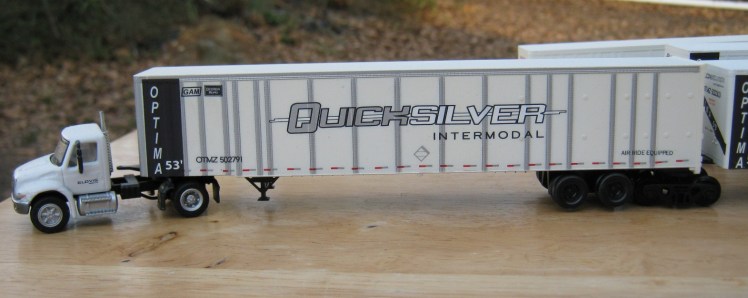
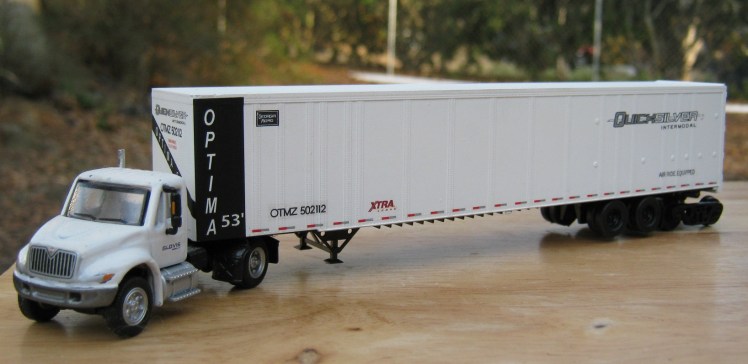
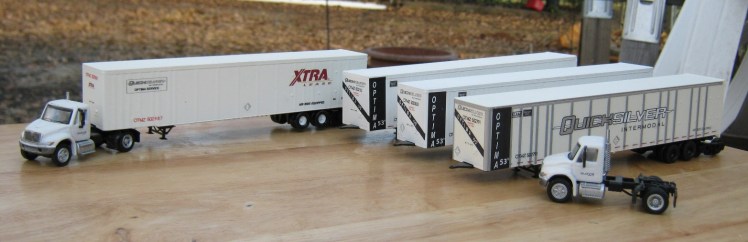
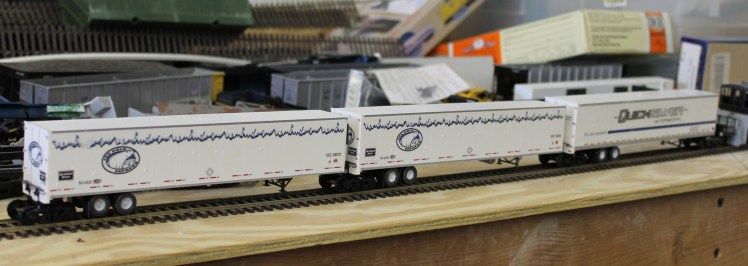
In 1996, QuickSilver Intermodal Services introduced its QuickSilver OPTIMA Service taking advantage of Wabash-built Roadrailer technology to offer slack damage resistant premium “optimal” shipping service on the QuickSilver system. Unlike Norfolk Southern’s Triple Crown Services, QuickSilver Optima took a page from Amtrak Express Service playbook using the fast-on-fast-off capabilities of the Roadrailer in specific “blocks” which could be set out and picked up at terminals with short turnaround time. Roadrailer handling required little more than a graveled over siding, yard dog tractor and a bogey lifting body attachment to move the trailers from rail to highway mode in minutes. Blocks of Roadrailers had the railroad adaptive “couplermates” on each end of the block so specific blocks could be coupled together and easily handled at terminals like traditional railcars. These blocks were handled in homogenous trains where demand allowed it, but in most cases were tacked on to the end of traditional link intermodal trains similar to how Amtrak handled them behind passenger trains. In the case of link trains, these Roadrailer units were added to the rear of the traditional TOFC and Container cars. This service was specifically attractive to Just in Time (JIT) automotive customers, food distribution and express perishable services where loads were time or damage sensitive.
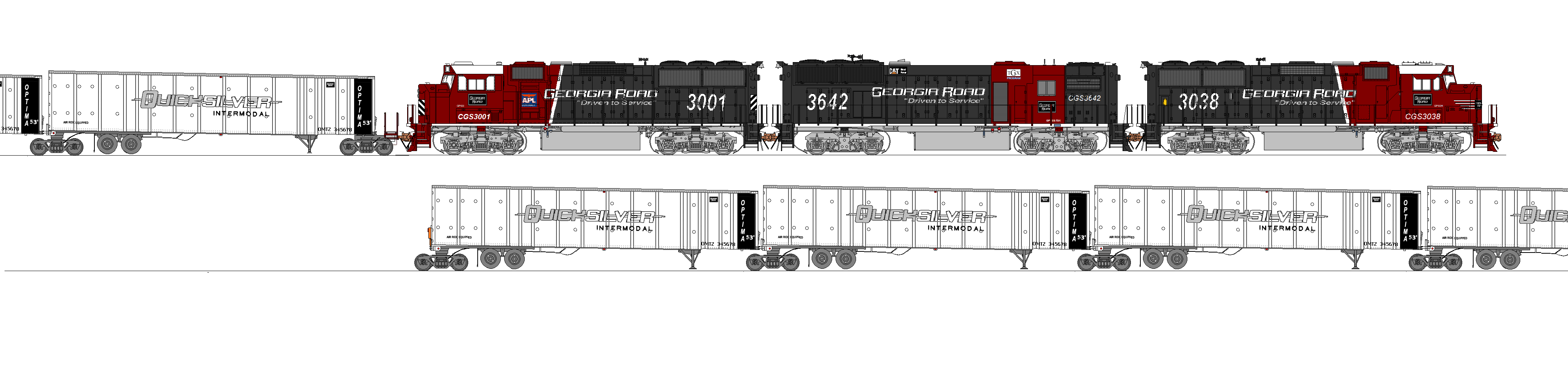
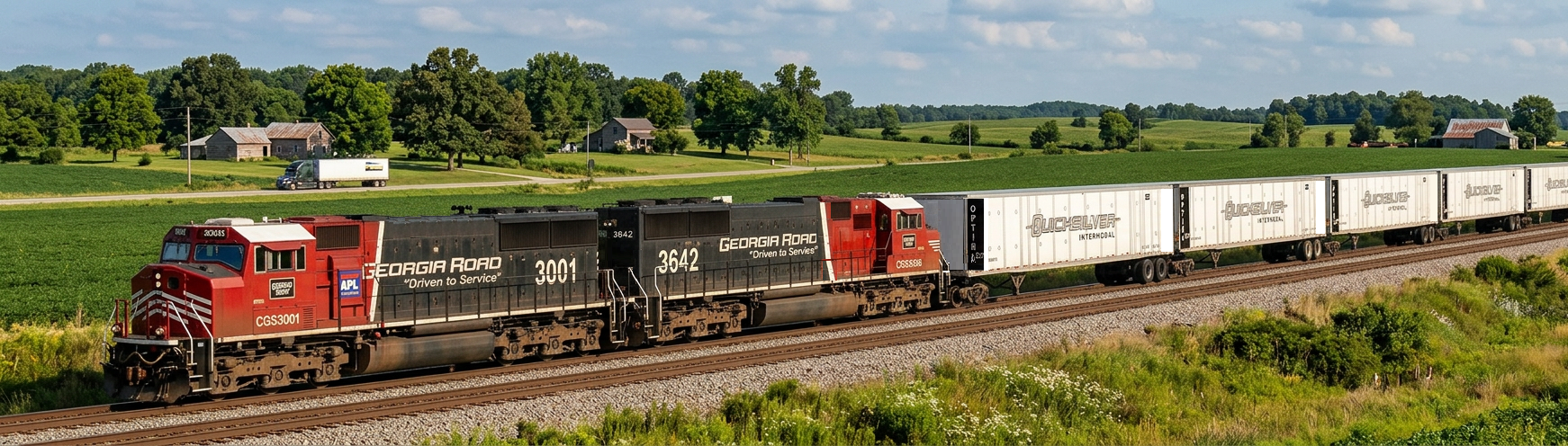
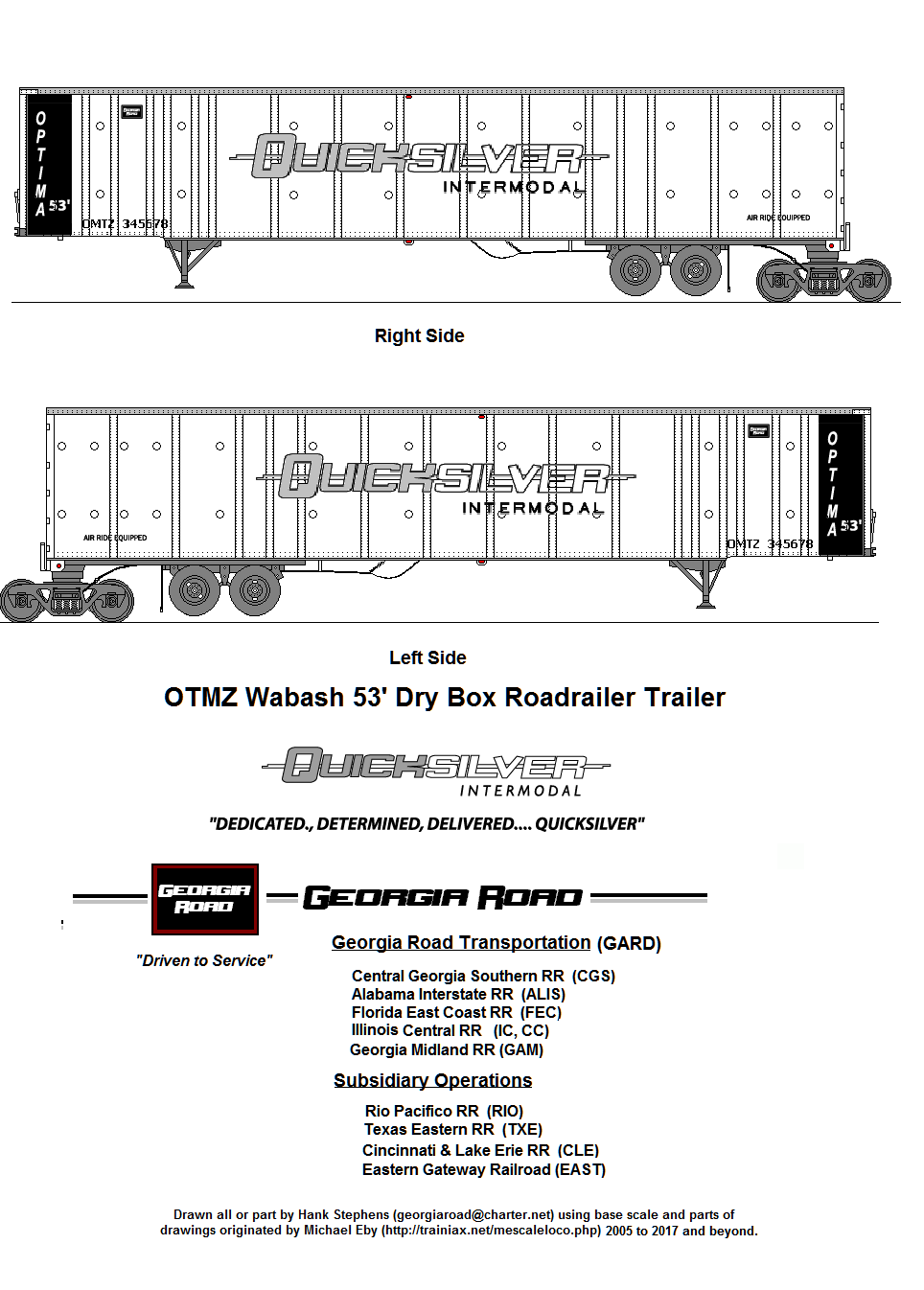
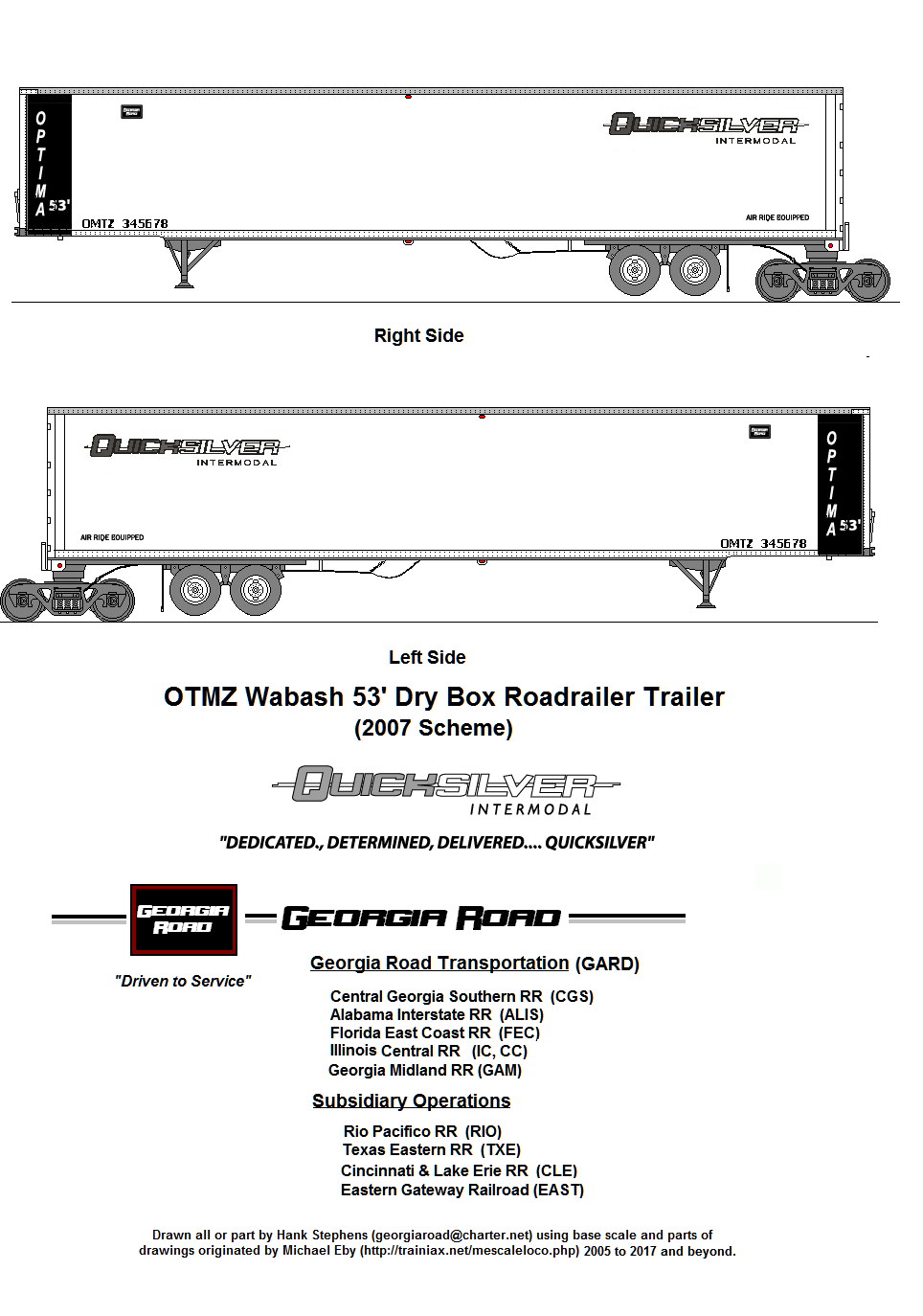
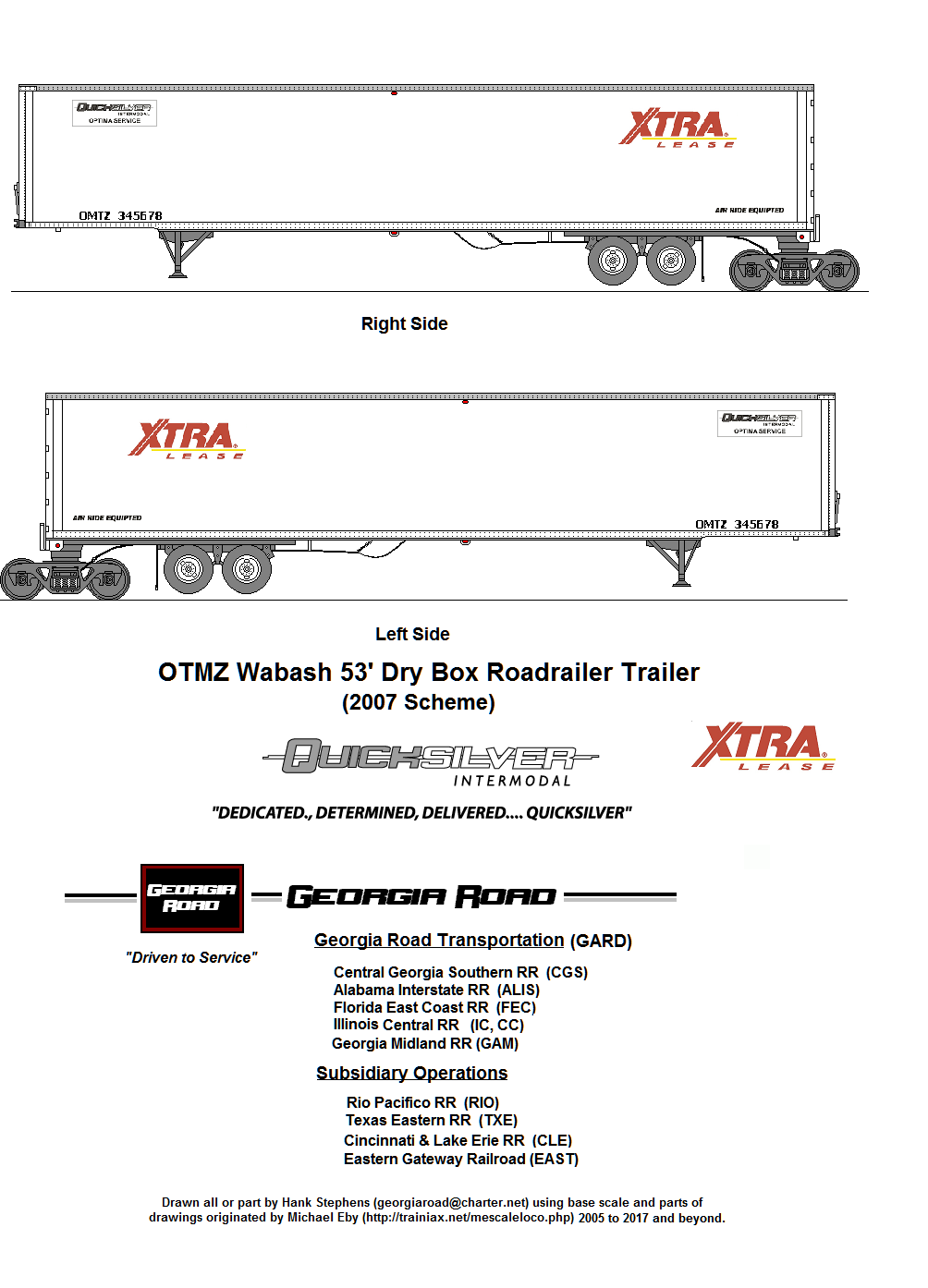
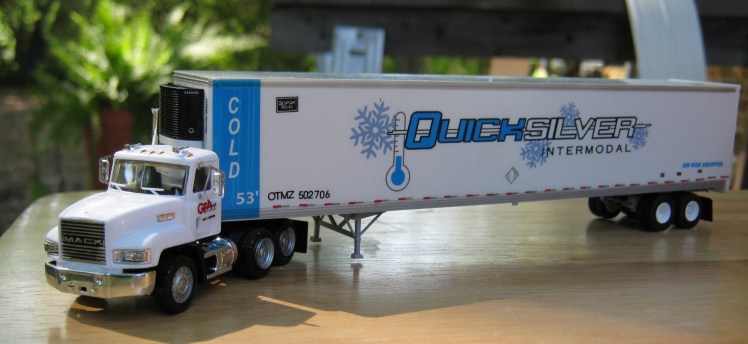
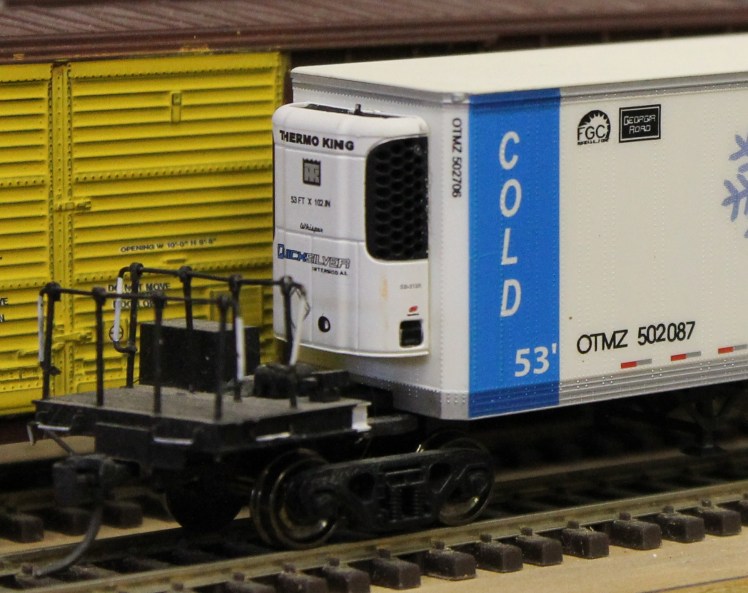
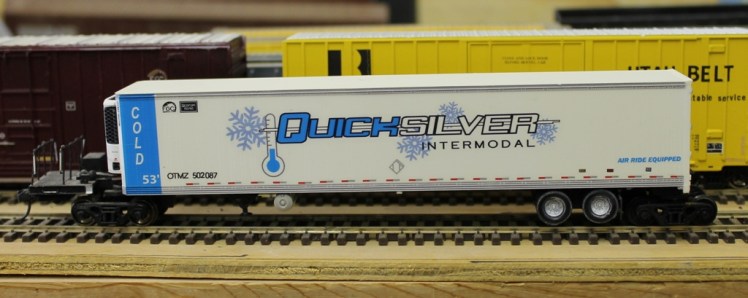
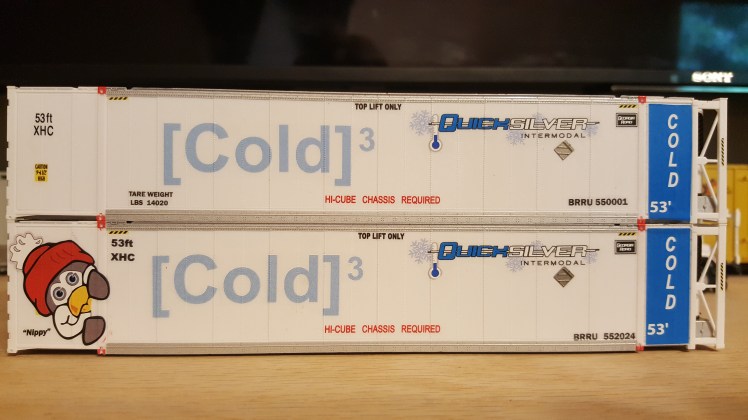
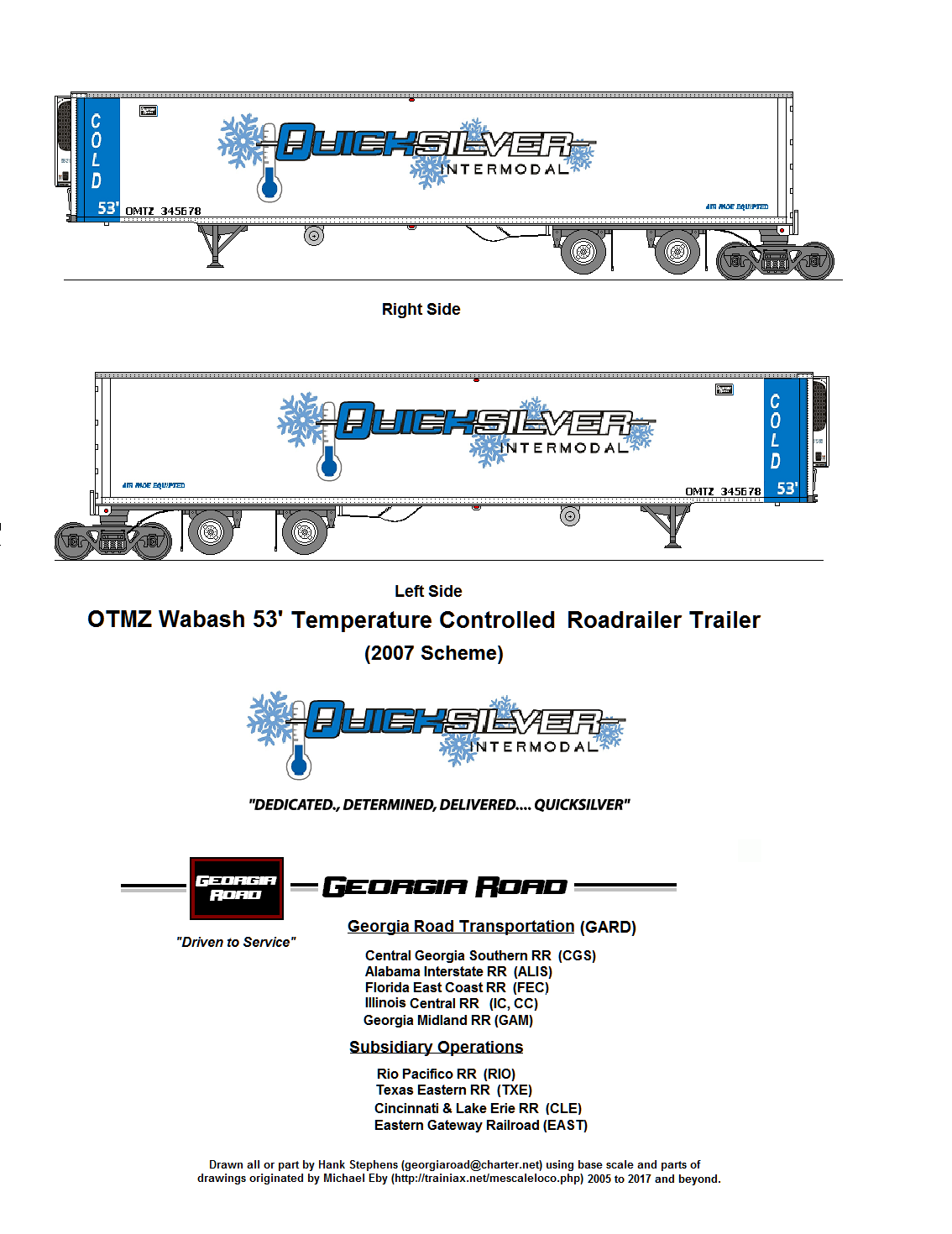
The Optima Service not only widened the use and reach of Roadrailer to all its network but introduced perishable customer specific QuickSilver “Cold” Service refrigerated Roadrailers into general use. The result of the Roadrailer integration allowed customers to access increasing tiers of service and handling characteristics designed to their specific needs.
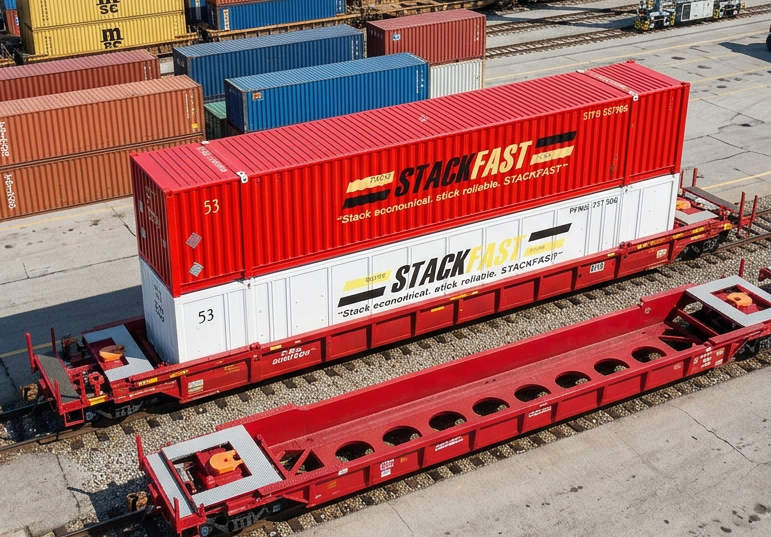
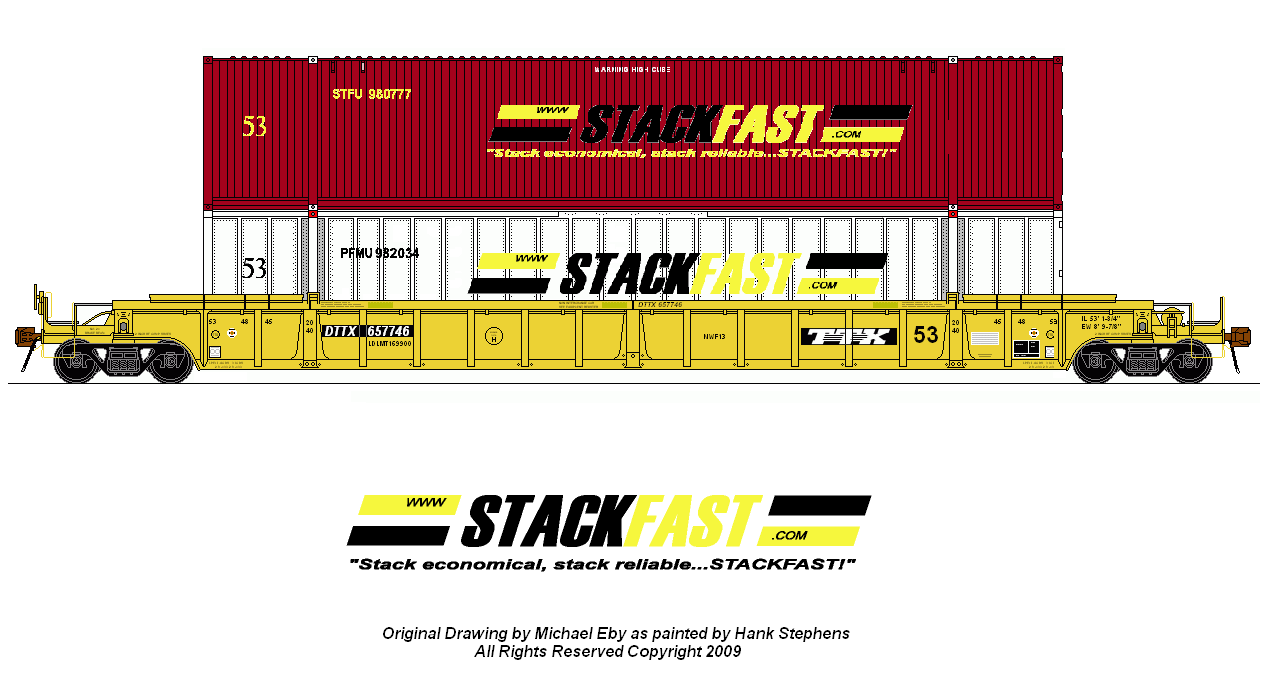
In 2002, Georgia Road and several partner railroads created the STACKFAST (STFU and PFMU) pool of containers to capture growing cross country domestic container business. This service featured a fleet of red corrugated and while smooth dry van containers to guarantee availability for Georgia Road domestic intermodal customers. Some 2000 53ft units formed a pool where customers either originated or terminated on the QuickSilver Intermodal Service Network.
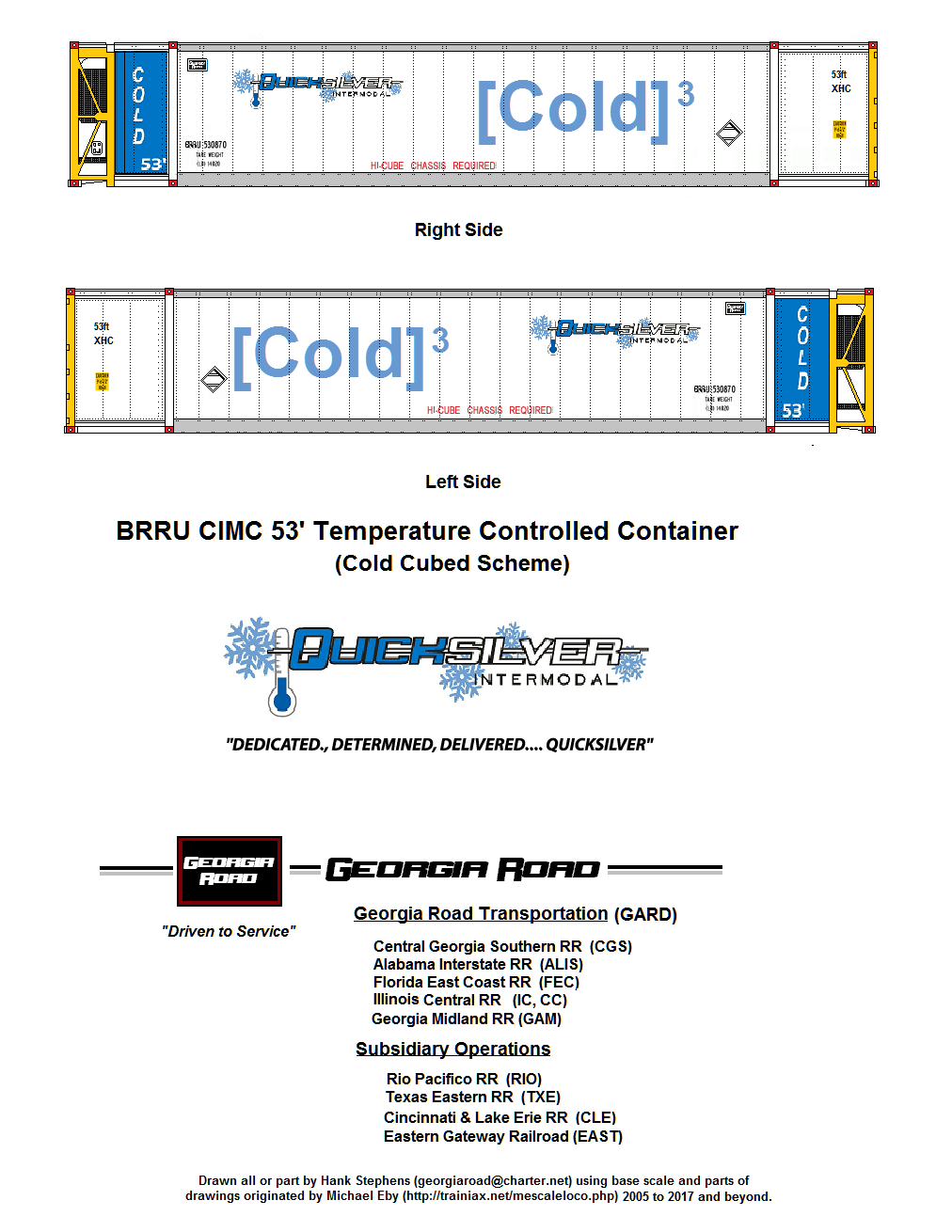
As the service matured, QSI added domestic mechanical refrigeration containers under the brand name “COLD CUBED (BRRU).” The bracketed word COLD was raised to the third power in graphics applied to traditional QuickSilver COLD markings to distinguish the service.
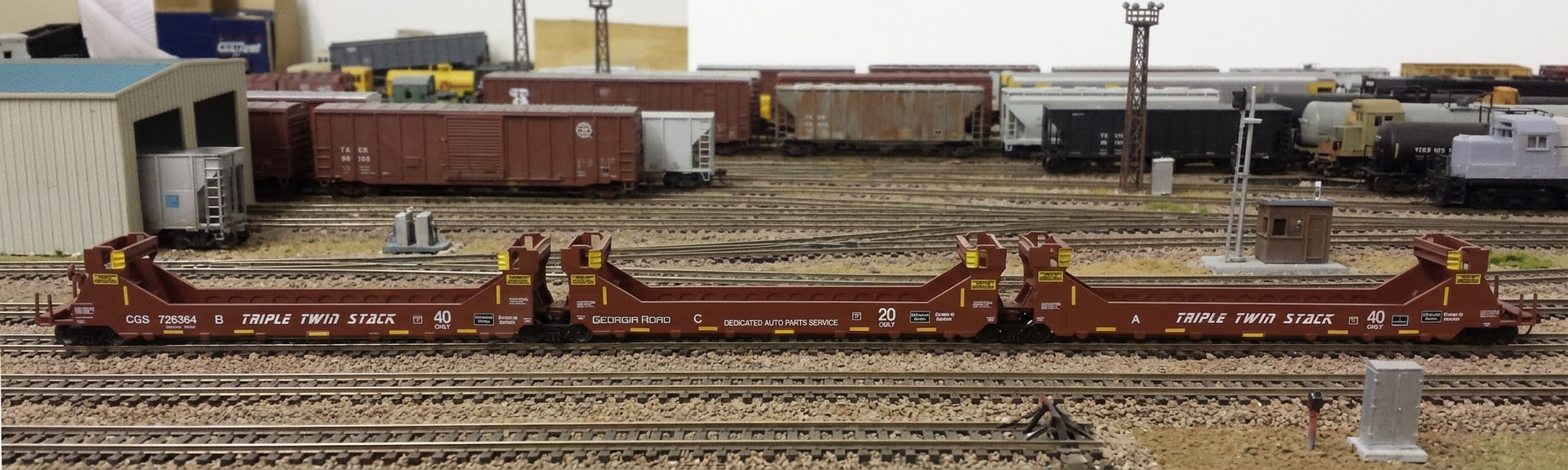
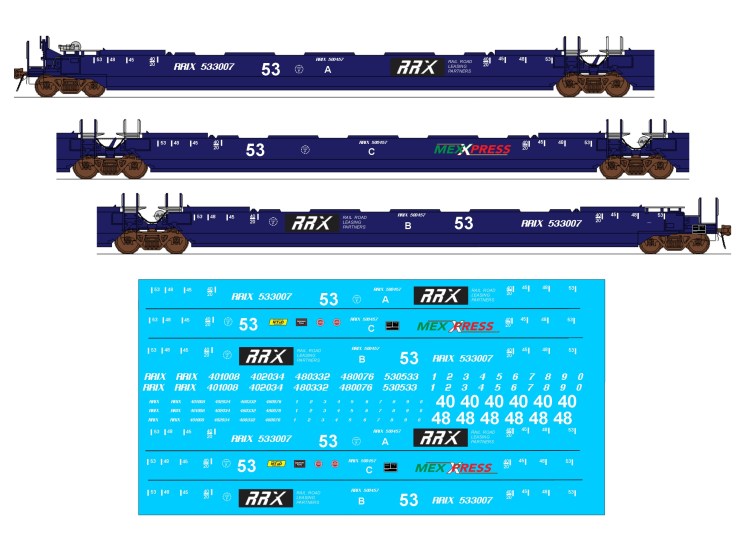
With well cars supply strained as intermodal grew exponentially, RAIL ROAD LEASING PARTNERS (RRX) was formed as a railcar pooling broker owned by Georgia Road and its partner railroads. This in-house supplier purchased new and refurbished TOFC, COFC and double stack well cars to run in the growing QSI network. RRX provided short- and long-term lease equipment to meet growing demand and guarantee equipment during high demand cycles when traditional pools such as TTX Corp. could not fulfill demand.
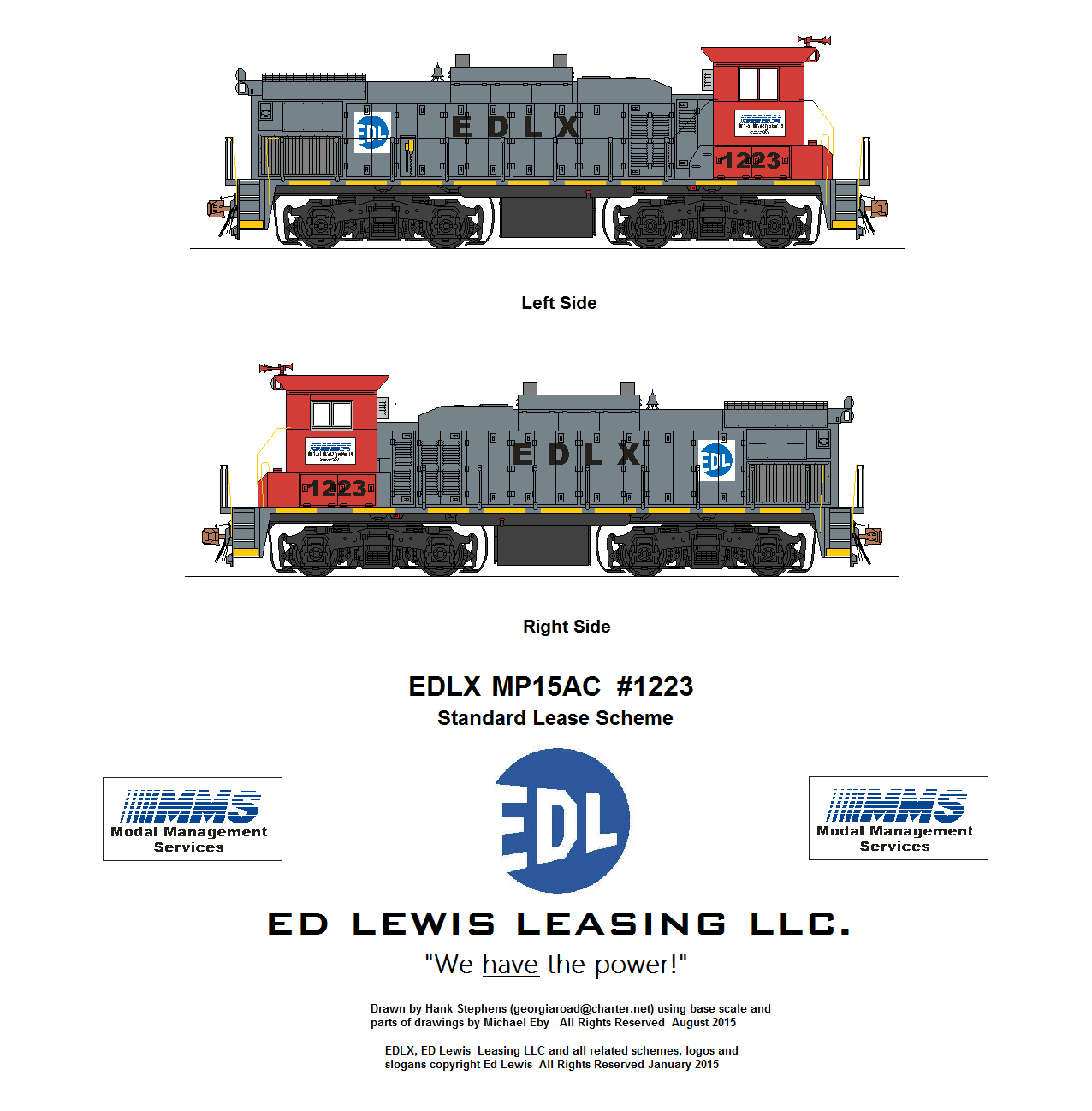
MODAL MANGEMENT SERVICES (MMS) is the Quicksilver Intermodal Service ramp service provider for all the hub and spoke ramps over the network. This company provides all manpower, trailer shuttle service, ramp trailer switching, railcar switching and logistic support surrounding the loading, unloading, sorting and on-site storage of intermodal units. Included in logistical support is operating on-site and satellite container and trailer repair yards, storage yards, inspection and running repair of railcars along with anything needed to maintain smooth operation. Administrative activities such as security and customs declaration/clearance services. also fall under the scope of MMS activities.
MODELS