SD70MAC
The 7600 series SD70MAC locomotives represented a diametrical shift in locomotive design and in the motive power philosophy of the Georgia Road. Like competitor Norfolk Southern (which ironically Georgia Road found its management style similar), the roster was heavy on EMD products and stanchly set on running DC current locomotives. The catalyst for the decision to acquire AC traction unit lay in the Southern Electric Generating Company (SEGCO) and its attempts to meet more stringent EPA stack emissions rules in the 1990s. Reduction of sulphides in the exhausts of existing coal fired generation plants could only be reached in two ways. The first and most expensive in terms of time and money was the retrofitting of limestone scrubbers to chemically precipitate sulphur and further cool and filter emissions. The second and easily implementable solution was burning sub-bituminous coal typically located in the Wyoming Powder River Coal Basin. Southern Company, as SEGCO was typically known, opted for the latter option, signing contracts to move the Wyoming coal by rail across the country to its major coal generation plants at Palos, AL and Macon, GA. Georgia Road was the final leg of the trip, moving coal from Burlington Northern Railroad’s East Thomas Yard in Birmingham, AL to and from the Georgia Power Plant Scherer. Moves were also made to both plant Yates and Plant Wansley near Carrollton, GA and the plant at near Cartersville, GA. BN purchased a large fleet of SD70MACs for this business, and encouraged Georgia Road to do the same so hand-offs and run through agreements would save the time needed to swap locomotives in Birmingham. As a result, Georgia Road tacked 25 units to the final BN order of SD70MACs in 1994. These units were built to BN specifications with the only difference being ‘Georgia Road standard colors instead of BN “Grinstein” green.
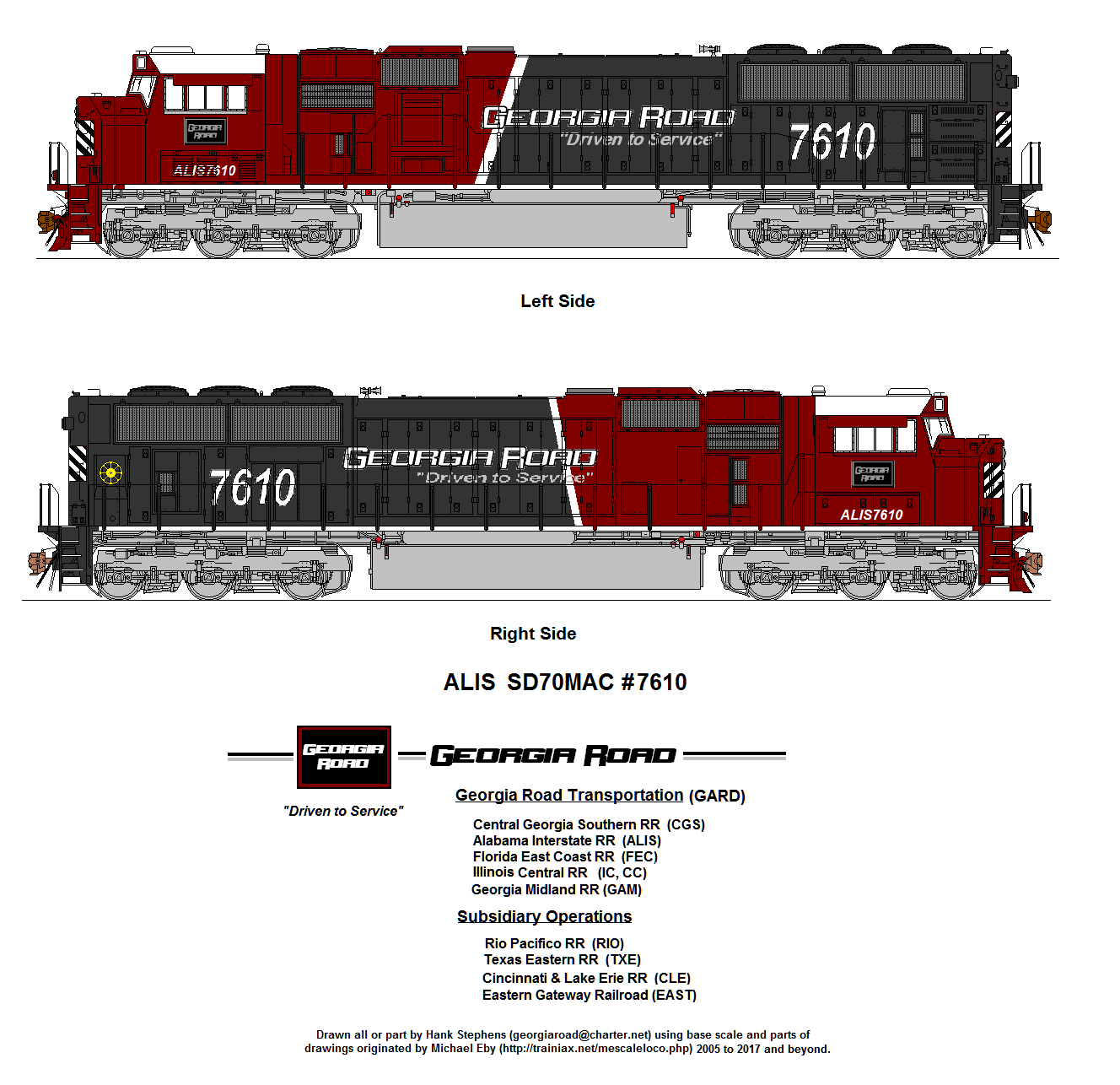
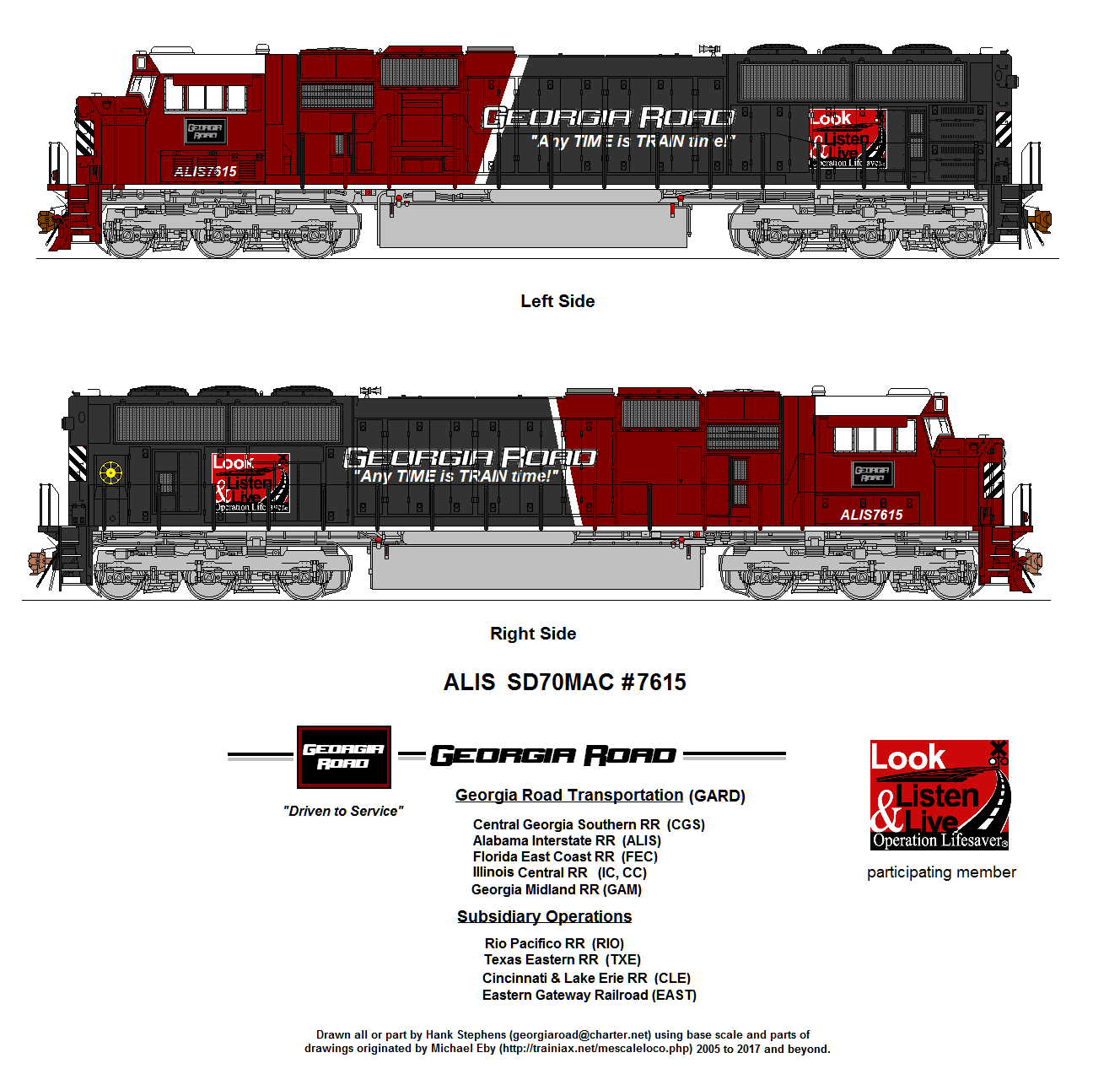
In the early 2000, Georgia Road completed purchase of the DME-ICE lines with the idea of completing its own access to the Powder River Coal Basin. The DME Powder River Extension was completed three years later with the first Georgia Road trains making the full cycle between Bill, WY and the Southeast in 2003. Georgia Road added 50 more SD70MACs during 2001 on the end the last CSX order placed in 1999 with all units delivered prior to the completion of the Extension. These fifty units were identical to the CSXT SD70MAC Heavy order which used thicker steel to increase the weight and tractive effort for heavy coal train service. CSX was less than satisfied with its units and cancelled additional orders in favor of GE offerings. CSX crews nicknamed their SD70MAC-heavies “thunder cabs” , complaining of excess vibration and noise while using them as leaders. The issue not only caused crew discomfort but resulted in high numbers of road failures. It was so bad that CSX banned their use as lead units in a consist and stored them in large numbers as they pushed EMD to find a fix. Another rather pesky issue was a single bad traction motor would require the whole truck to be cut out instead of the one offending motor. This effectively halved the traction of the SD70MAC- Heavy unit, a problem that easily stalled heavy trains and severely affected availability of the locomotives as a group. CSX had a stanchly modern and predominately GE roster at the time, with GE power having the advantages of individual isolation versus full truck isolation when traction motors failed. The combination of rough riding, loud cabs, traction motor isolation problem and abnormally frequent primemover failures soured CSX on EMDs in the early 2000s much as the SD50 did in the 1990s.
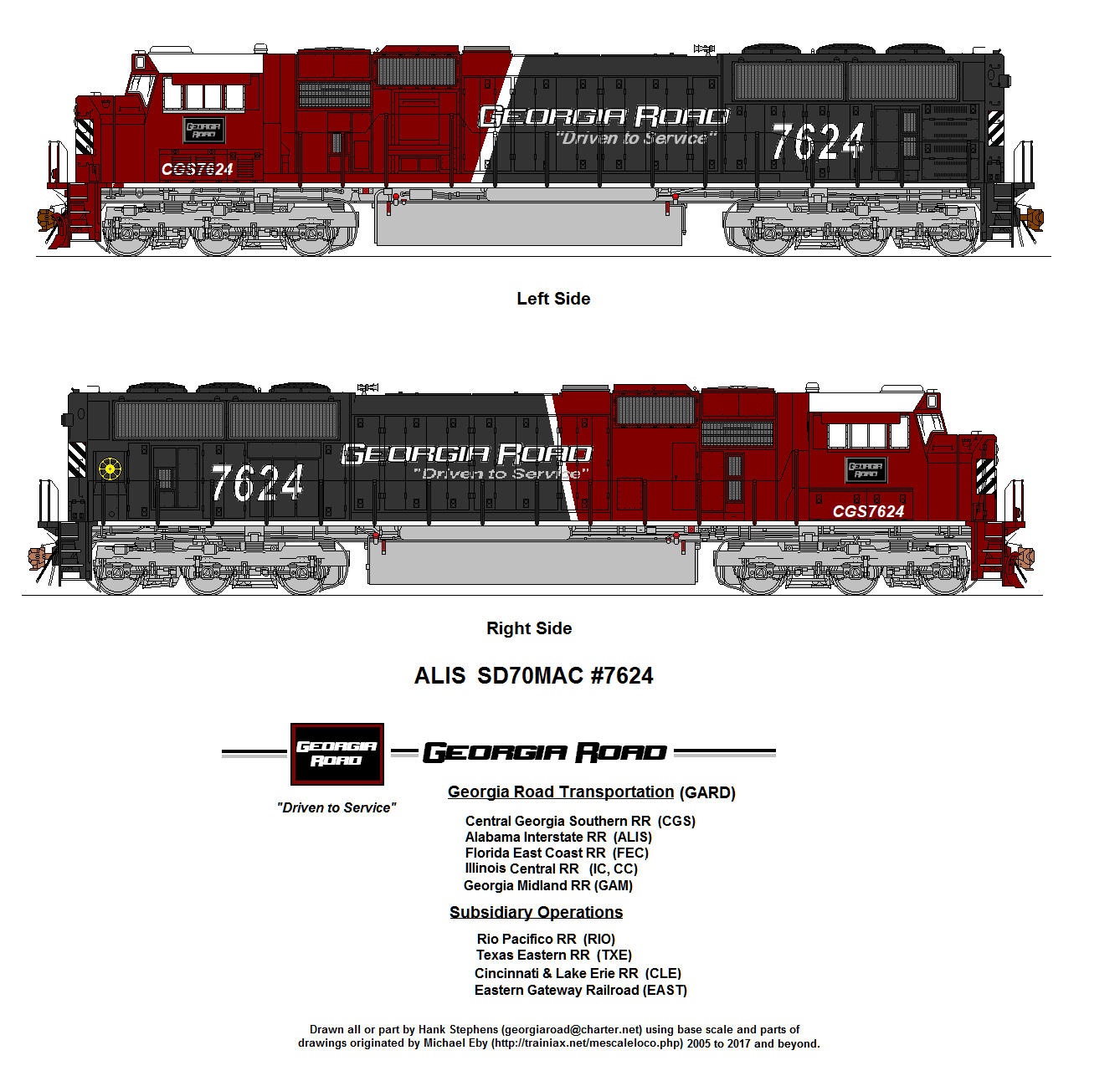
CSX canceled its last SD70MAC-Heavy order and Georgia Road picked up the vacated production slots. Fifty CSX specified SD70MAC-heavy versions were delivered to Georgia Road as it worked to build a pool of units large enough to move SEGCO coal trains all the way from Wyoming to the powerplants in the Deep South and back again. Georgia Road pushed EMD to correct the issues experienced by CSX and the Georgia Road CSX spec SD70MAC-Heavies were the first EMD units to feature the ability to isolate single traction motors in case of trouble. The cabs were also soundproofed, and changes to the primemover reduced vibration thereby reducing the frequency of road failures. These fifty units were delivered in 2001 and 2002. Many were delivered and immediately stored for nearly eighteen months until Georgia Road started its “closed loop” Powder River coal trains making the full circle between the mines at Bill, Wyoming to the power plant leads of SEGCO coal fired generation plants using the newly acquired DME and the newly built Wyoming Powder River Coal Extension. A group of these units carried DME sublettering to note their assignment area.
After nearly 20 years in service, all the SD70MACs were in need of heavy work to maintain the high availability and heavy haul characteristics presented by the continuous cycling of “closed loop” coal trains. Units racked up millions of miles in punishing service and were showing their age. As a result, Georgia Road opted to do a life-extension remanufacture of 7600 series. The BN spec early SD70MACS were completely overhauled in kind. As units were pulled from service and reworked, they exited the program and went to work not in the coal pools they came from, but were instead put in general bulk unit train and manifest service. Brand-new GE ES44ACs and SD70AH took their place on the coal trains.
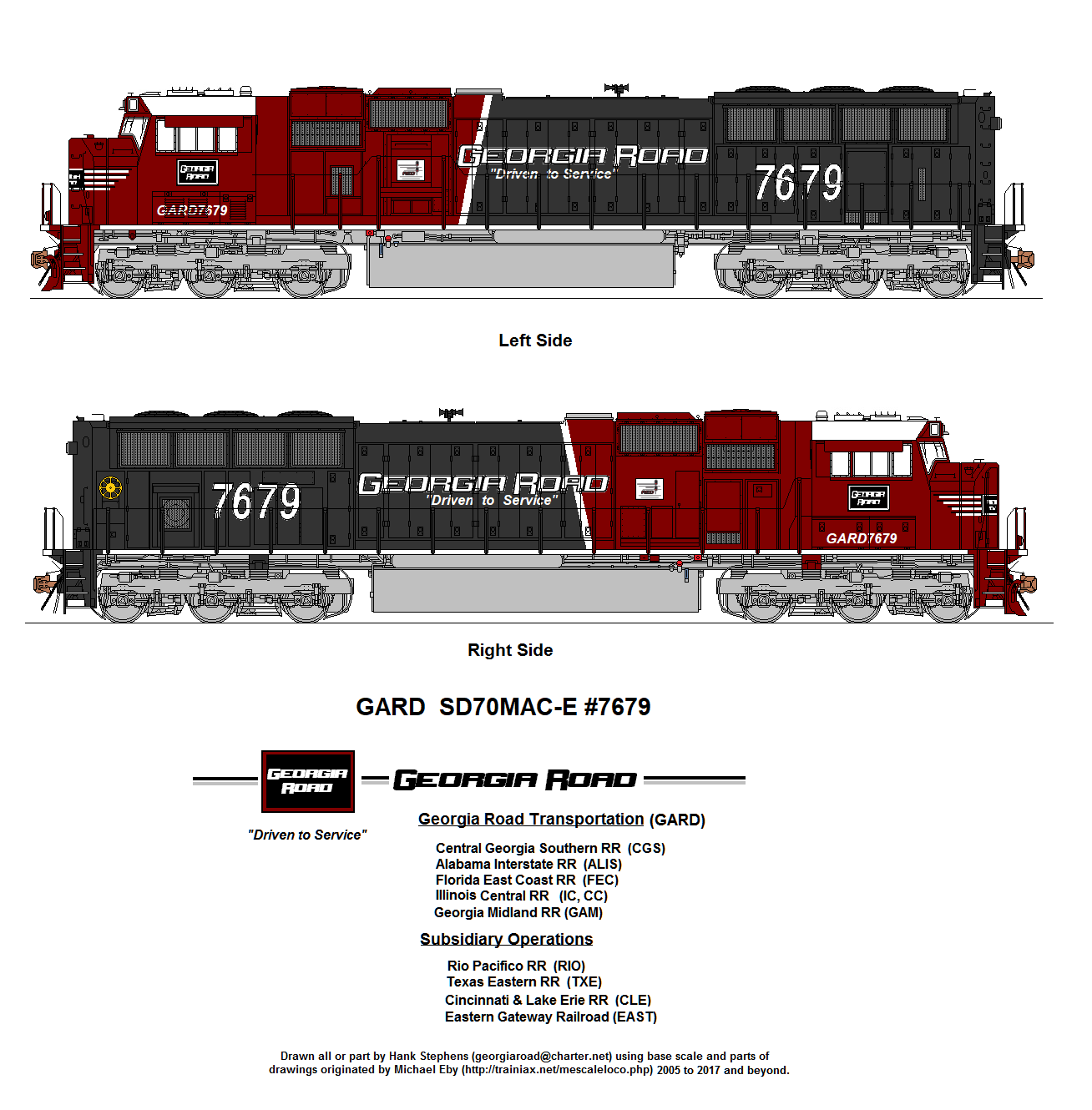
When the CSX spec SD70MAC-heavy units were back shopped, the decision was made to recapitalize and upgrade them with retrofit electronics and components to raise them to near SD70ACe standards to run with new SD70ACe and ES44AC units. The CSX spec units were considered EPA Tier 2 locomotives with newer electronics and flared aftercooling split radiators typical of new Tier 3 compliant SD70AH units. With proper upgrade kits provided by EMD, the 710G powerplants could be upgraded to 710ECO versions and a new electrical cabinet and wiring would provide control systems to effectively create a “hybrid SD70ACe” unit designated as the SD70MAC-E. (The BN specified units had standard third generation cooling and the cost of conversion for these units to SD70MACe units was considered prohibitive). The “MAC-E” Program started in 2019, but lost traction during the COVID-19 pandemic only to be resumed in earnest again in 2021.
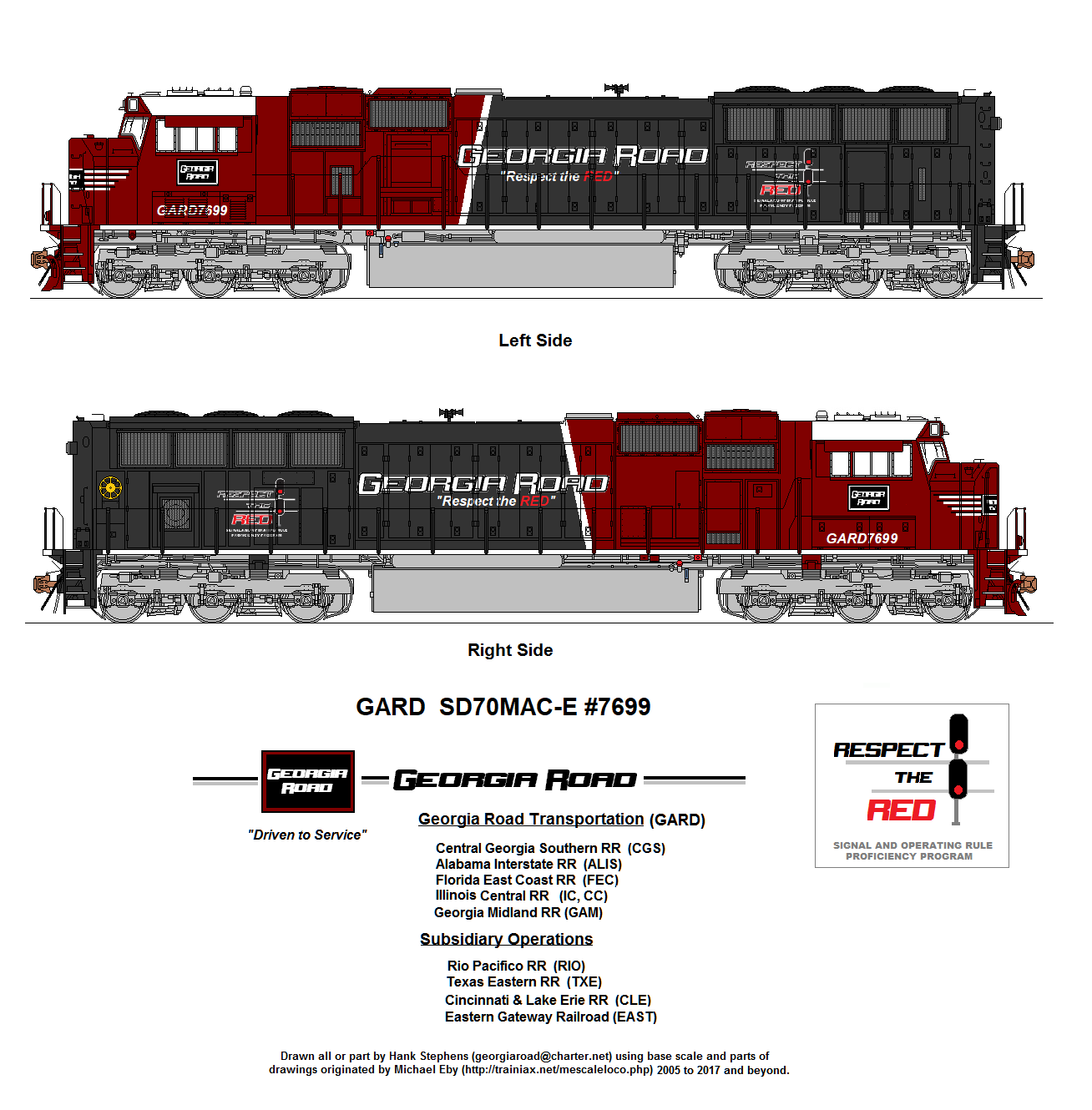
Following remanufacturing and upgrades, the CSX spec units were sent back to the Wyoming coal pools from whence they came. As some SEGCO plants closed or converted to cleaner natural gas during the post COVID-19 2020s, it became obvious that not all the “MAC-E” units would not be needed as the reduced demand for coal shrank the needed locomotive pool size. As a result, units requiring extensive frame repairs were set aside for parts supplies and others were diverted upon completion to the coal operations of the Gateway System, an independent regional subsidiary of the Georgia Road. Georgia Road ended the MAC-E Program in late 2024 when it announced it would take delivery of new GE ES44-T4 and EMD SD70AT4 units in late 2026 into 2028. A total of 40 of the original 50 CSX spec Georgia Road SD70MAC-Heavy units were remanufactured and upgraded to with four more going to the Western Gateway (WEST). Six units were sidelined at Stephens Railcar for good, becoming parts donors for their 40 operational sisters. Rebuilt SD70MAC-E units were given numbers starting with 7699 backward in sequence. The BN spec early model SD70MAC units were not renumbered and remained in the 7600-7824 low number series. Georgia Road considered the SD70MAC capital program a financial and operational success. Rebuilt units allowed Georgia Road to push out new locomotive purchases several years through the cyclical shifts in traffic revenue as the world moved away from the 2000s era globalism and the shocks to the economy following the COVID-19 shutdowns and shortages.
 Georgia Road Transportation