OVERVIEW
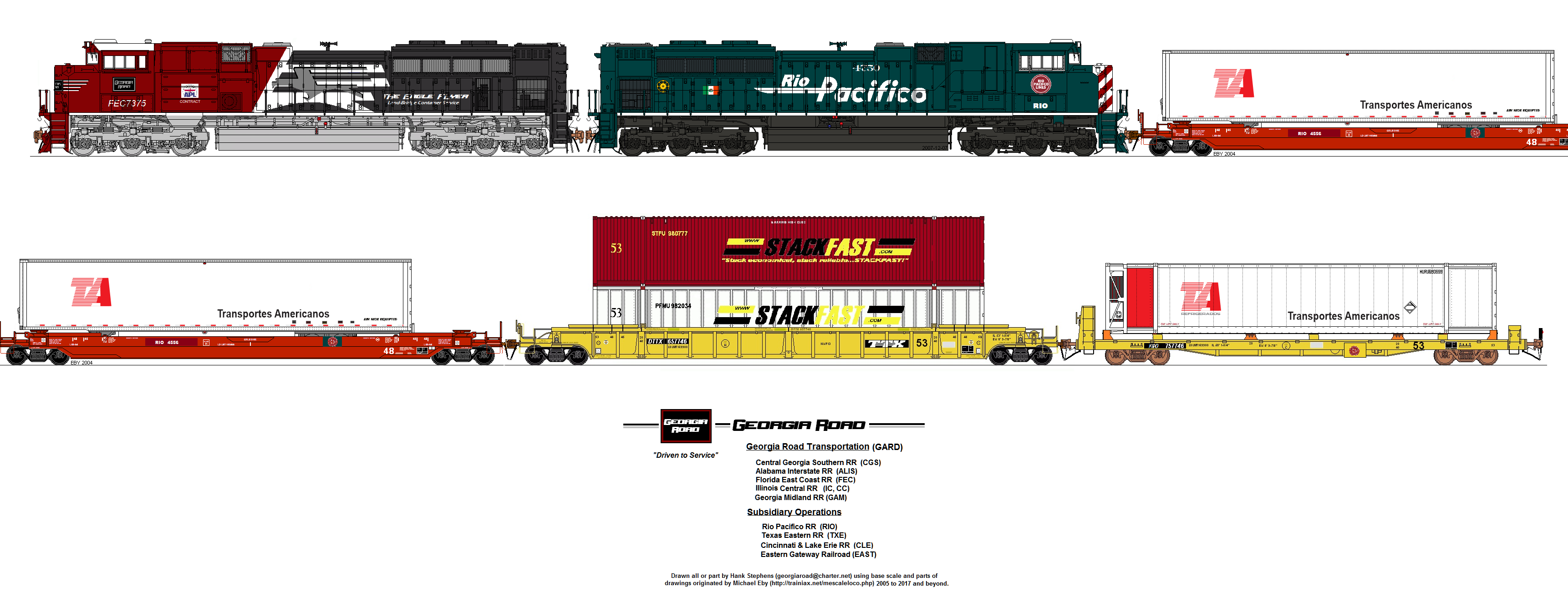
The Rio Pacifico de Mexico, or Rio Pacifico, is an operating subsidiary of the Georgia Road Transportation comprising trackage from Dallas/Fort Worth to the Mexican border and over much of the economic and industrial base inside of Mexico. The story of the Rio Pacific is a true “David and Goliath” story where Georgia Road managed to literally snatch the railroad from Union Pacific following the privatization and breakup of the Ferrocarriles Nacionales de México (NdeM). Rio Pacific operates the 3,315-mile former (5,335-km) Northeast Railroad connecting Monterrey and Mexico City with a US port of entry at Laredo, Texas and seaports at Lázaro Cárdenas and Veracruz. RIO also with connection to several key cities in Mexico, including Monterrey, Mexico City, Guadalajara and San Luis Potosi. This track carries 46% of all rail traffic in Mexico and 60% of all freight incoming from the United States. Eleven of the fourteen of Mexico’s auto assembly plants, plus two more under construction, are located on the railroad. Automobile traffic (autos and parts) accounted for 12% of the 2005 total carloads when the railroad was completely integrated. The MexXpress Service was implemented in 2015, looking to move cross-border highway traffic including perishables and automobile parts. As of 2025 this business has grown exponentially, seeing dedicated trains of intermodal-borne agriculture and auto parts and autorack trains moving finished automobiles between the US, Canada and Mexico. Domestic oil and gas also saw subsidiary Texas Eastern Railroad rapidly increasing its carloadings on the desolate former South Orient line of incoming frac sand and outgoing oil trains moving to Houston and the Gulf Coast to refineries.
HISTORY
Ferrocarriles Nacionales de México (known for short as NedM with reporting marks FNM) was Mexico’s state-owned railroad company from 1938 to 1998, linking Mexico City to the major cities of Ciudad Juárez, Nuevo Laredo and Matamoros on the U.S. border. Due to FNM’s serious financial difficulties, the Mexican government announced that FNM would be privatized and divided into four main systems in the early 1990s as a way to save the crumbling state-owned rail system. As part of the restructuring for privatization, FNM suspended passenger rail service in 1997 in an effort to quell losses caused by a developing modern highway system. By 1998, FNM ceased to be the operator and administrator of most of its major railway routes, turning them over to four private entities. These companies were the Georgia Road subsidiary Rio Pacifico, Ferromex, Ferrosur, and Ferrocarril y Terminal del Valle de México (known as Ferrovalle), Ferrovalle was owned jointly by the three companies and operated railroads and terminals in and around Mexico City. Rio Pacifico de México, S.A. de C.V. (reporting mark RIO) formed in 1996 when Georgia Road Transportation (GARD) and Transportación Maritima Méxicana (TMM) purchased a government concession to operate on a rail system in Mexico. It was the Mexican President, Ernesto Zedillo, who proposed the privatization of the Mexican railways because the Mexican railway system had fallen into a state of disrepair and needed drastic work to become profitable. Since the late 1930s, Mexican trains and tracks were the property of the government as under the NedM (FNM). When the decision to privatize the railroad was made, only 15% of freight was moved by rail in Mexico compared to 42% in the United States.
The most sought-after portion of the concessions, called the Northeast Railroad, was bid on by many major companies, including the United States’ largest railroad company, Union Pacific Railroad (UP). Georgia Road and TMM bid and won the concession for US$1.4 billion for the rights to operate the concession, paying 49% and 51% respectively. While a snub in the face of the larger UP, industry analysts found it intriguing that a welter-weight Class One like Georgia Road would invest its future in a south of the border gamble where UP and BNSF controlled the US connections at both established border crossings in Texas. Georgia Road had a plan. Georgia Road already spent millions established a joint operation with the Natchez, Texas and Orient Railway (NTO) line between Dallas, TX to Meridian, MS on what the two railroads called “The Meridian Speedway”. NTO formed from the former Georgia Pacific Corporation (timber, pulp and paper manufacturer) railroad operations around Fordyce, AR. The G-P railroads went independent and purchased several former Rock Island and former IGG lines in order to maintain access to stable interchanges in the face of the ICG sell-off of nearly a third of its system in the late 1980s. Its nickname after the purchase of the former ICG Meridian east-west corridor became “The Meridian Speedway.” This name was carried on in the joint agreement that allowed NTO through the Georgia Road to completely rebuild and transform the route into a signaled Class One property. Georgia Road in turn was allowed to have joint run through access.
In 2005, Georgia Road bought out its partner TMM, giving it full control of the Northern Lines under the Rio Pacifico name. To gain direct access to the railroad, Georgia Road purchased the former Atchison, Topeka & Santa Railroad (ATSF) Orient secondary from the owner South Orient Line (SO). This portion was transferred to the Rio Pacifico along with newly acquired Fort Worth and Western Railway (FWWR) as a joint US operating subsidiary renamed the Texas Eastern Railroad (TXE). With joint trackage and ownership already negotiated over the Meridian Speedway trackage with NTO and upgrades long in place, the Georgia Road embarked on an upgrade program on the TXE to integrate and upgrade the former FWWR and South Orient trackage. An oil boom fueled by horizontal fracking in the mid 2000s helped defray costs as sand and oil shipment terminals popped up on the upgraded line. The TXE traced its route though rugged desert and remote terrain of Southwest Texas which also happened to be across the bottom of the Permian Basin Gas and Oil Field. (Dallas, TX to Presidio, MX) to establish a third major mainline border crossing at Presidio, TX. The Meridian Speedway partnership allowed both railroads to exploit the new Mexican gateway with none of the congestion and delays at the two major border crossings at Eagle Pass and El Paso to the east of the new connection.
MEXXPRESS SERVICE
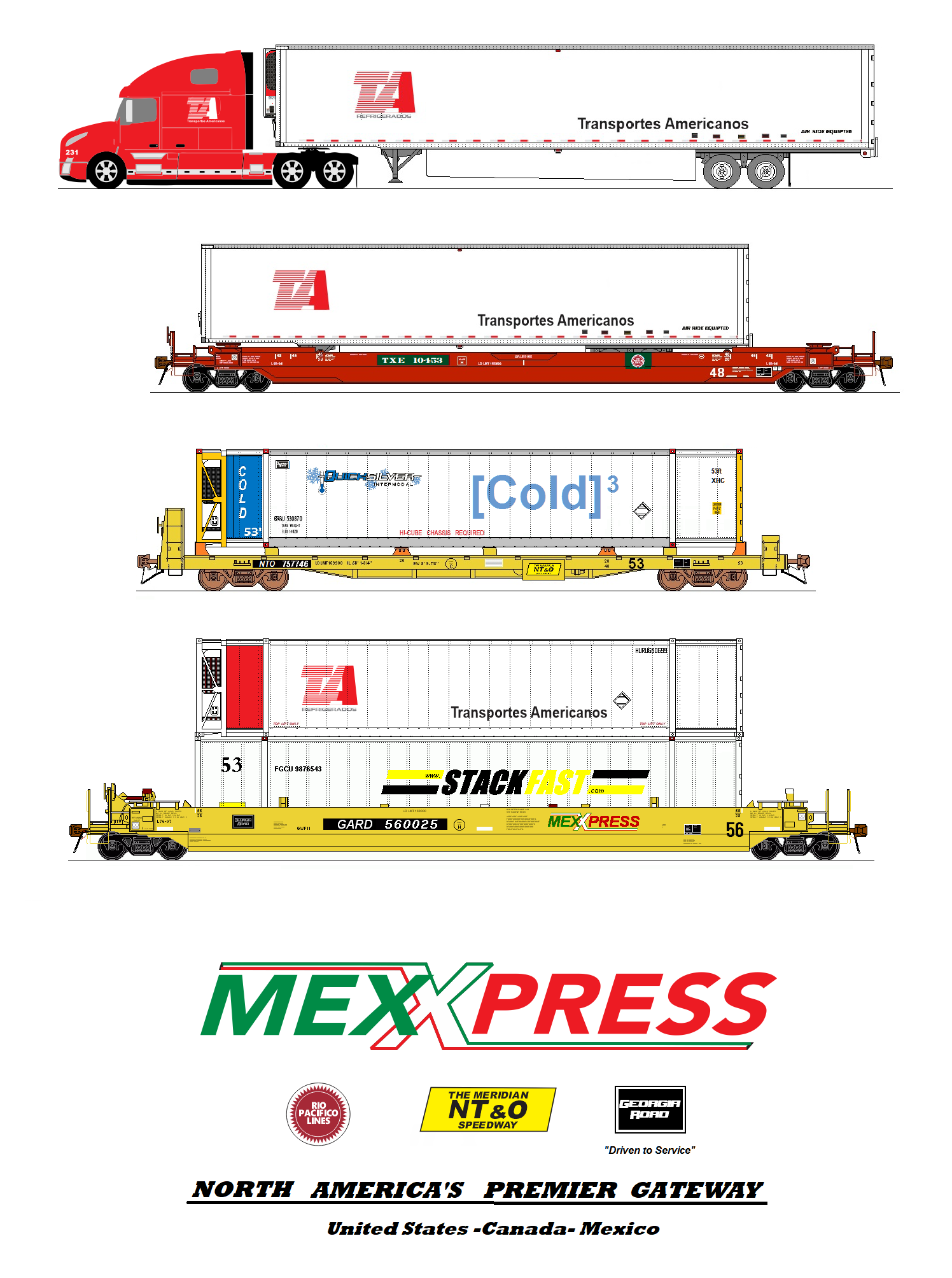
Georgia Road and Rio Pacifico began aggressively promoting cross border rail service to Southeastern foreign automotive manufacturers and domestic OEMs in the Midwest/Great Lakes region. Using its subsidiary Rio Pacifico and the partnership with the NTO, Georgia Road launched a three-day service MexXpress Intermodal Service from San Luis Potosi, MX to Birmingham, AL in 2018. A large QuickSilver Intermodal hub in Birmingham, AL could connect assembly plants in Alabama and Georgia to suppliers in Guadalajara, MX. NTO established its own terminal near Jackson, MS at its new High Oak Yard to supply two automakers which settled in Mississippi. As traffic grew, perishable container traffic from the vast agricultural industry in Mexico (which generally traveled by truck) was pursued, adding an additional pair of trains to the growing MexXpress Service which now extended into the Eastern Seaboard. Georgia Road export unit grain trains off the former IC also began moving over the service lane, increasing the profitability of the MexXpress Service initiative, and resulting in a reasonable return on the infrastructure investment in 2023. Rio Pacifico along with the Mexican government in 2025 launched its own Pacific-Gulf land bridge to garner intermodal traffic as historic droughts in river estuaries caused shipping issues across the Panama Canal. This adding another income stream to the Rio Pacifico investment seen as folly so many years ago.