.
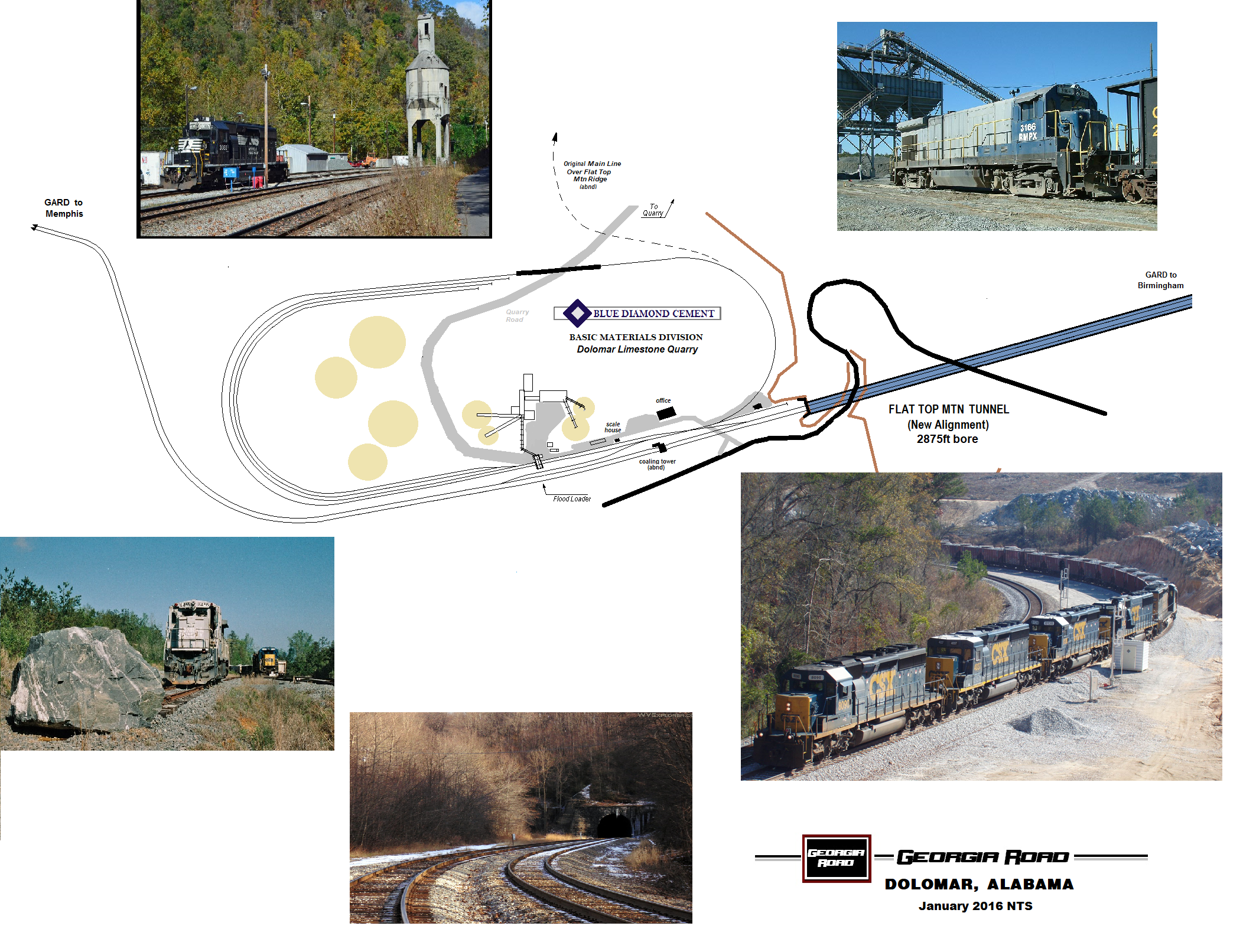
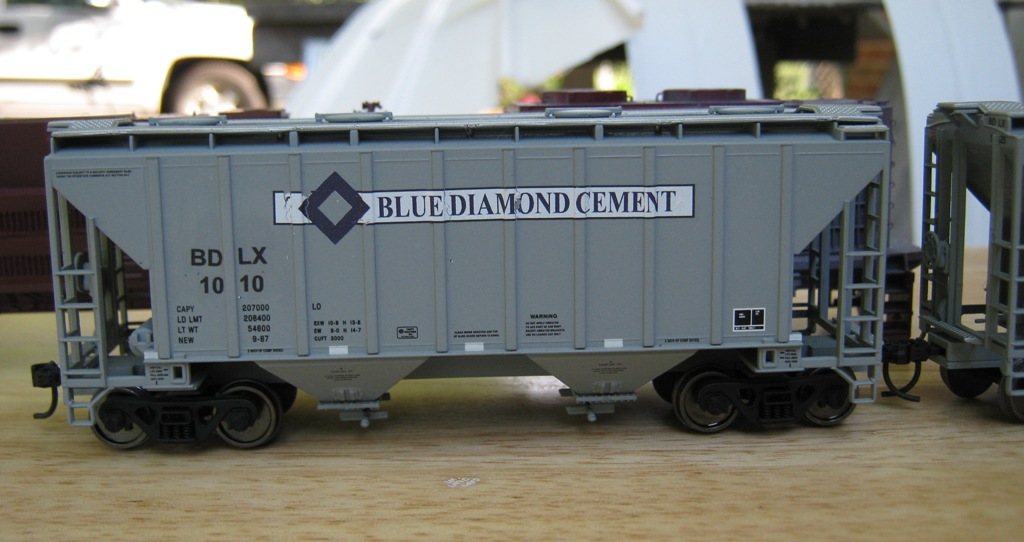
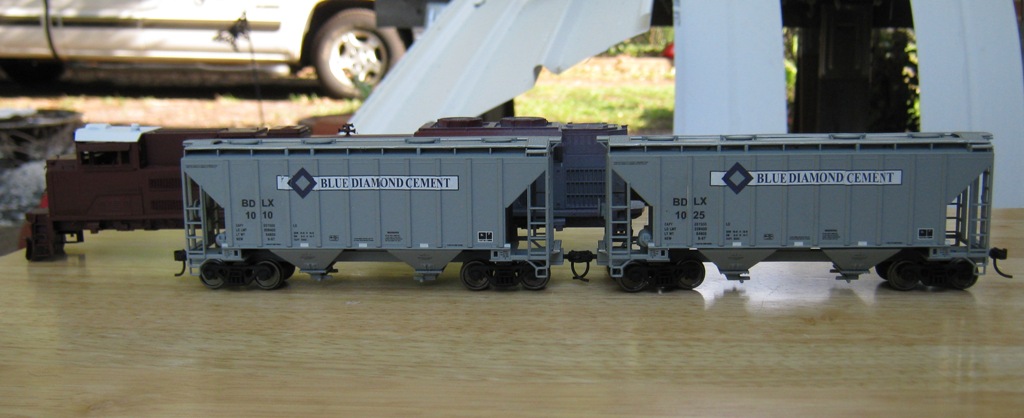
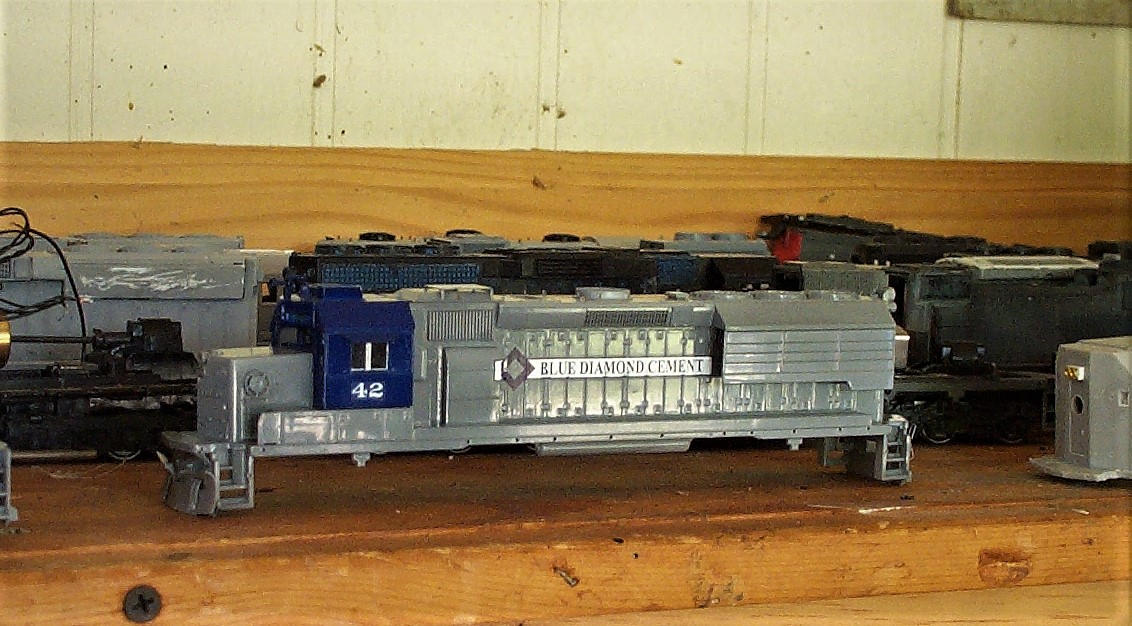
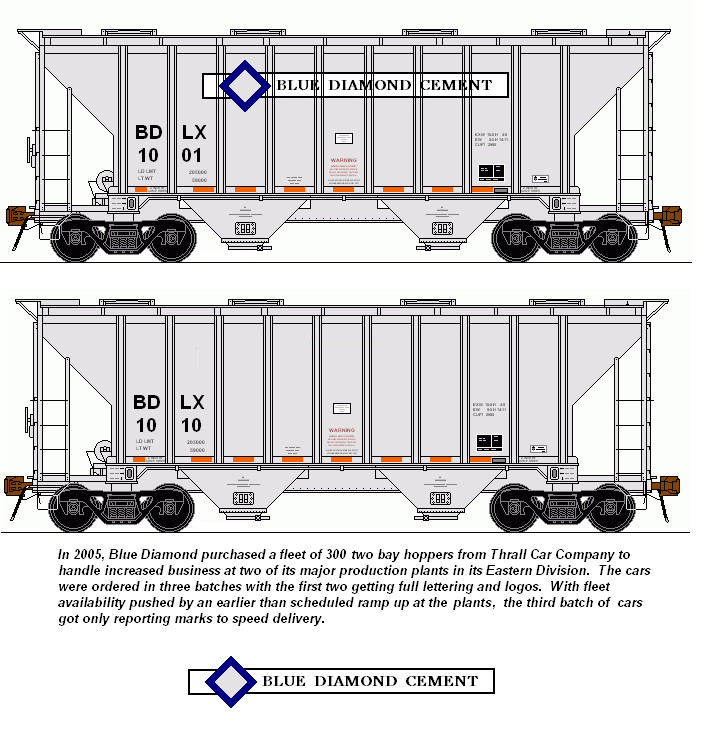
BLUE DIAMOND CEMENT (BDLX) is a freelanced industry that operates a quarry on the Georgia Road layout at Dolamar, AL at the old Drummond Coal Company Flat Top Strip Mine. It finds its original concept from the days of the old Yahoo! PFMsig bulletin board, now long gone. Group members attempted to create a freelance industry and decals that any member could model based on their respective era and location. BLUE Diamond Cement possessed clinker plants, cement distribution and quarries in various locations over the US and Canada. Locomotives, boxcars, aggregate and cement hoppers were also owned to support these operations and deliver product to customers. The operation could be represented by random run through rolling stock, batch plants that received materials large plant operations.
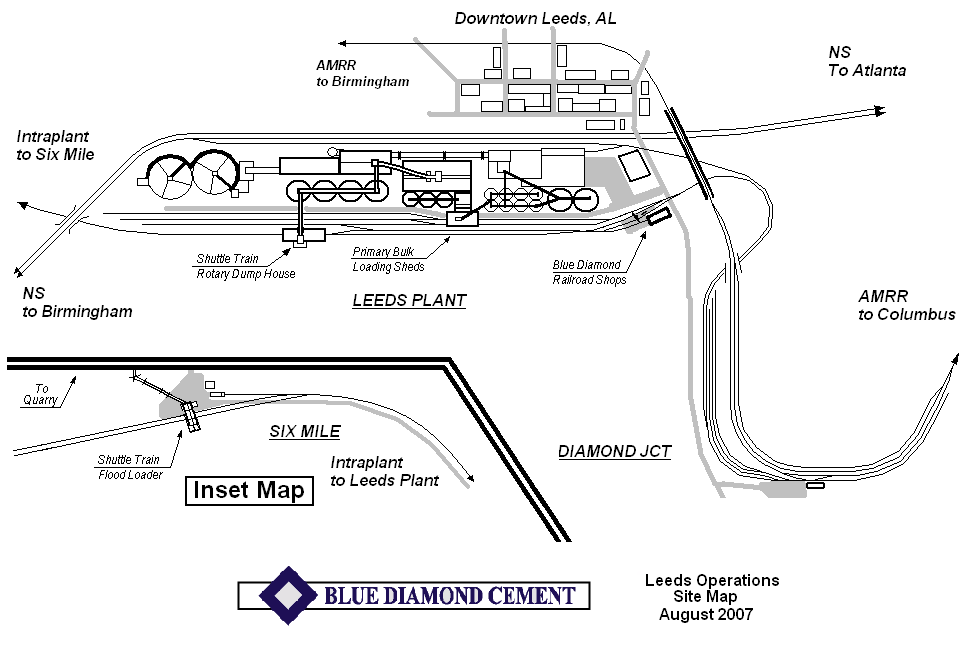
On the Georgia Road layout, Blue Diamond Cement was to be represented initially as a prototype freelance version clinker plant in the east Birmingham, AL of Leeds, AL where an actual prototype Lehigh Portland clinker mill (now Heidelberg Materials) was located. The plant included its own intra-plant railway that delivered quarried limestone for conversion to finished cement, mortar and concrete. This design was to be a fully operating Layout Design Element feeding substantial traffic into the Georgia Road at is yard in adjacent Irondale, AL. During the locomotive power shortages experienced by the Georgia Road in the early 2000s, Blue Diamond actually acquired its own road power to allow full trainsets to be built at the Leeds Plant and moved complete with company owned motive power to facilitate interchange operations with Georgia Road.
After the decision was made to shift the layout focus west of Birmingham, AL to the Blue Creek Coal Seam around Brookwood, AL the idea of a large clinker plant with its own railroad was no longer plausible. Several models were either built or in the process of being built and I did not want to lose the work or the design concept. While doing research for the updated focus of the layout, i discovered a substantial but non-rail served limestone quarry near Adjer, AL at location once known as Dolomar, AL which provided dolomite for the BOF steel industry in Birmingham in the mid 20th century. A reclaimed coal strip mine existed nearby known as Flat Top mine. This discovery allowed me to take a second look at the Blue Diamond Cement concept with a different twist. As mentioned, the original freelance idea incorporated mills, quarries and distribution points. A Blue Diamond Cement Quarry operation was possible, so I set about pulling the Blue Diamond concept out of the proverbial design “recycle bin” and giving it a new angle and life.From a modeling standpoint, the idea is to incorporate the mainline, tunnel and close structures against a backdrop near a helix.
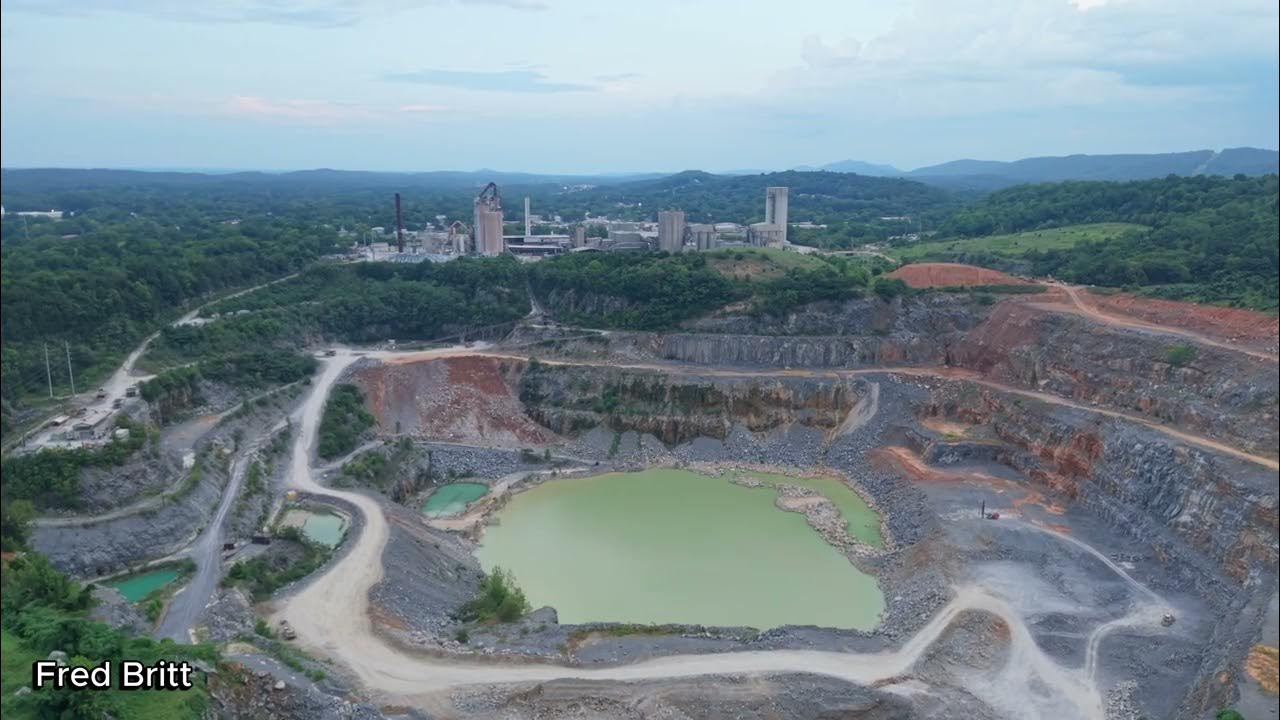
The backstory for the Blue Diamond Dolamar Quarry developed to feature the change in area. . The quarry concept was created as a new Blue Diamond operation opened on the remains of a 1980s mined out coal mine. Drummond Coal Company operated its Flat Top Strip Mine into the 1990s but found coal mining was troublesome due to granite outcroppings in the area breaking up the coal seam, making strip mining in this particular area of the Blue Creek Coal Seam expensive due to amount of blasting and removal of limestone overburden required to reach the seam. When domestic coal demand waned, Flat Top was quickly closed and reclaimed. Blue Diamond Cement came along a decade later looking to replace its economically mined out quarry at its Leeds Cement Mill with a new source. It purchased the mineral rights for a granite quarry to supply limestone and aggregate to its Leeds clinker kilns and concrete /aggregate yards around Greater Birmingham, AL. The granite reserves at the old Flat-Top Strip Mine proved extensive (even more than the original coal seams. The Georgia Road mainline beside the new quarry fed straight through Birmingham to all the local Blue Diamond operations including the Leeds mill. Georgia Road was more than willing to move regular unit trains of stone and crusher feed stock to Leeds, and the quarry was built to quickly load unit trains of stone. Business increased as the quarry could easily support customers all over the Gulf states region. One such movement involved supplying stone to Conrad Yelvington in Florida. Basic material producers in Florida (of which Conrad Yelvington was one of the larger) had to rely on adjoining states to feed its massive residential and commercial growth as Florida offer little in the way of useful stone deposits. As a result, companies like Conrad Yelvington relied on stone being transported from out of state to large distribution yards. The result was regular stone and crusher fines movements between the Blue Diamond Dolamar Quarry and distribution points in Forida. This business was completely separate from the already established stone “shuttle trains” into Birmingham and Leeds that gave the Dolomar operation a reason to be built initially.
Dolomar, Alabama sits near the crest of the Georgia Rooad Flat Top Mountain helper grade, just west of the new double track tunnel and mainline alignment between Bessemer and Brookwood, Alabama, respectively. The original station was home to coal mining lead that became little more than overgrown trackage after coal was mined out in the 1960s. Limestone dolomite, was plentiful in the region also, and in the early 2000s, Blue Diamond Cement opened its Dolomar Quarry adjacent to the old Flat Top mine spur. With Georgia Road opting to rebuild its mainline in the area in the late 1990s to reduce curvature and grade, the Georgia Road mainline morphed into a double track feeder between Memphis. TN and Birmingham, AL. A new tunnel and mainline alignment cut through the southern “hip” of Flat Top Mountain to reduce grade and curvature. This new main track allowed both faster speed and longer Georgia Road trains due easing the profile and replacing an original section of mainline over and around the north side of the mountain at the Dolomar Quarry. Blue Diamond expanded operations in the early 2000s using this old grade to create the current balloon track configuration to handle unit trains to Florida in addition to existing Leeds trains. Blue Diamond transferred mainline power from its Leeds operation to load units trains no longer needed by the idled intra-plant railway that once moved stone from the now depleted adjacent quarry to the actual clinker mill.
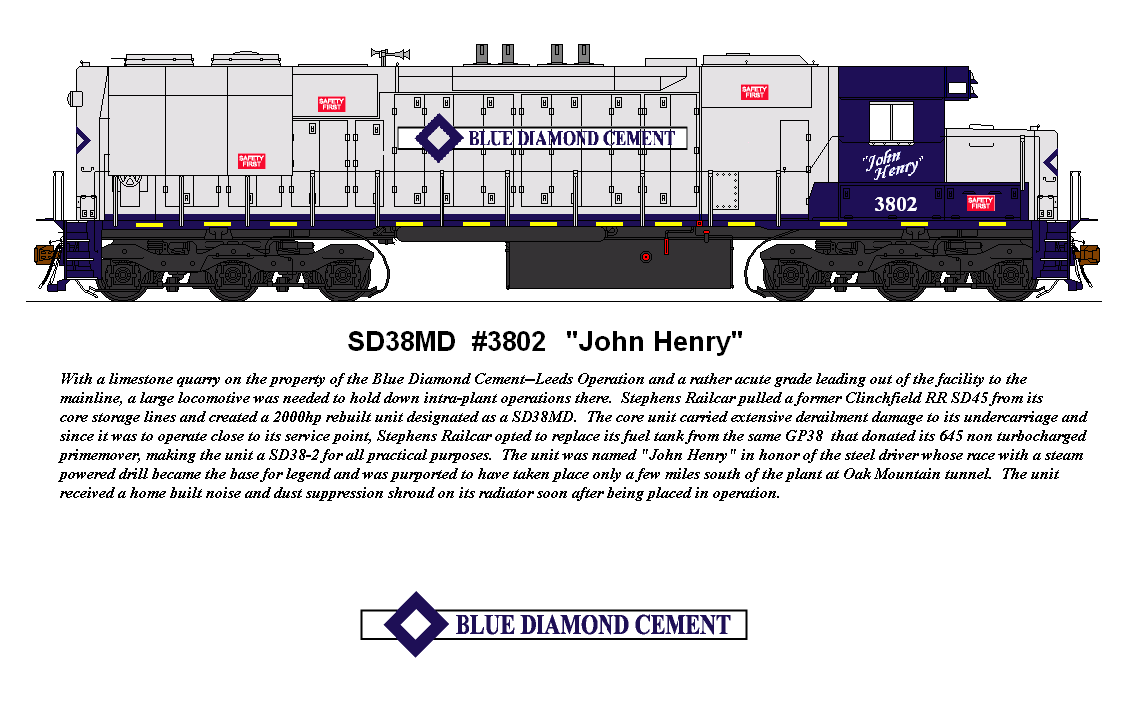
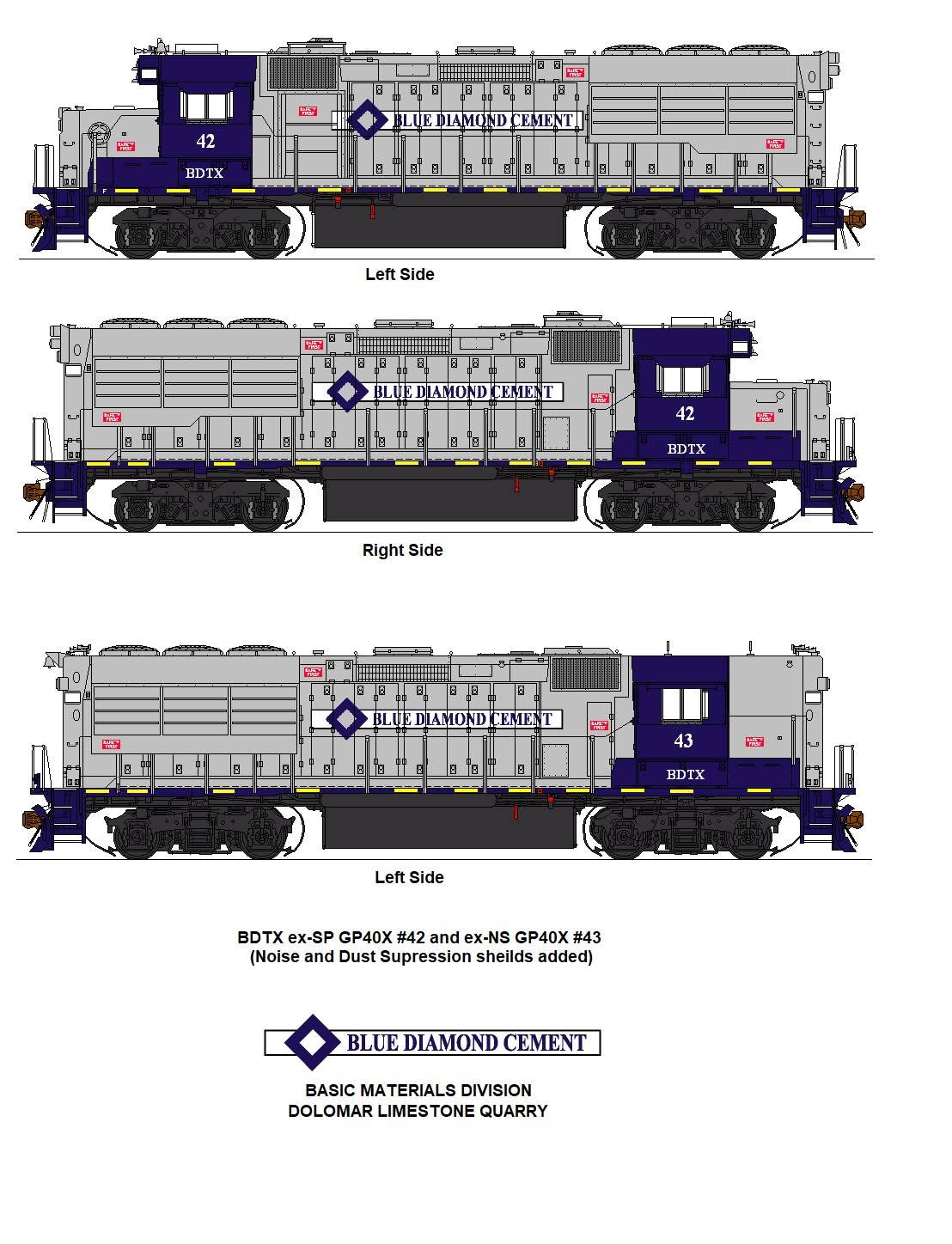
Four Blue Diamond owned locomotives now call the Dolomar Quarry home. These were drawn from the idled Leeds intra-plant quarry railroad after being stored for several years. At one time during the early 2000s, Blue Diamond supplied its own power to move unit clinker trains from its Leeds, AL plant to the Georgia Road terminal in Birmingham, AL, a run of about twenty miles. Once Georgia Road resolved its motive power shortage, the units returned to intra-plant and quarry railroad duty until the quarry ended mining operations in 2004. After several years stored on the idled intra-plant engine house at the plant, Blue Diamond needed heavy power to load growing numbers of stone trains at that location. Three GP40X units and one heavily modified and de-turbocharged SD45 called an SD38MD were moved from Leeds to the Dolomar Quarry where they continue to work today. The elephant ear shields were retained to reduce rock and dust damage to the radiators and reduce fan noise as the units load trains in enclosed loading areas..