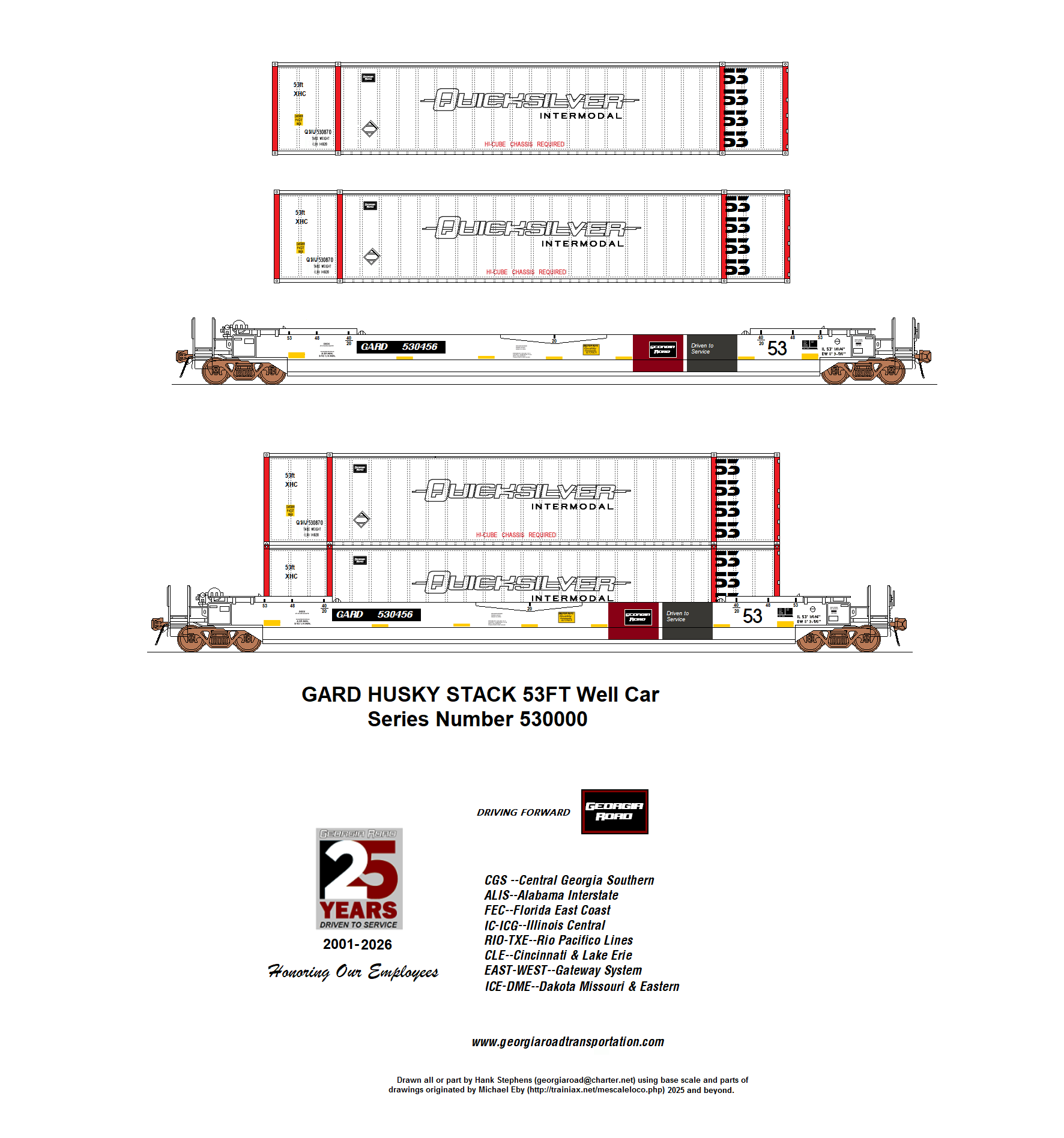
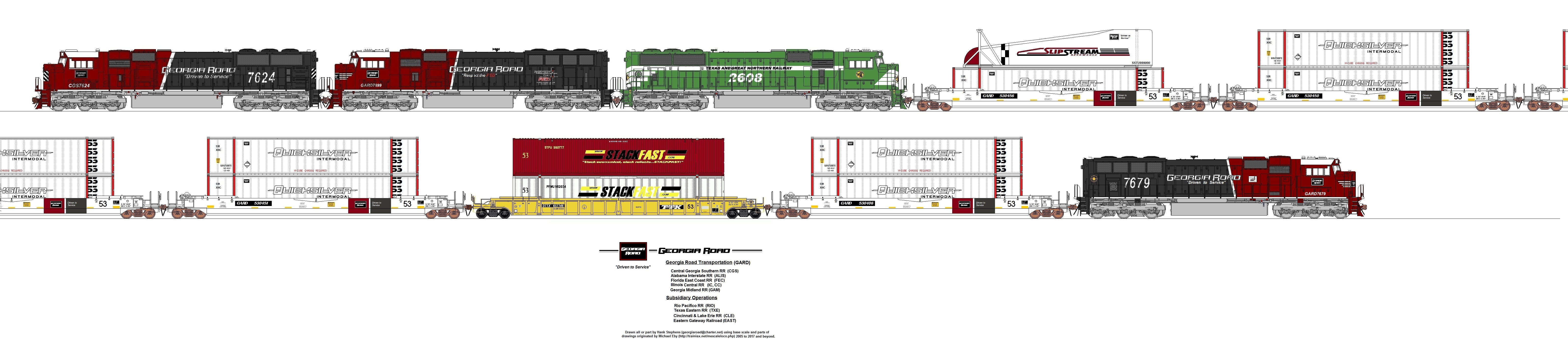
Double Stack Container Well Car Roster
Key to any modern Class One Transportation portfolio is domestic and international container traffic. The intermodal trend moved from a curiosity and potential new traffic segment aimed at making rail competitive to highway trucking to an industry changing wave that now dominates any rail market discussion. Georgia Road committed to this market early on, signing on the very early American Presidential Lines (APL)land bridge trains linking the Far East and Europe through a US cross-country rail link in the 1990s. These crack “Eagle Flyer” APL Contract trains set bloomed into several Southeastern and Seaboard region inland and ocean-going ports such as the APL port in Atlanta and SeaPath 1 facility in Charleston, SC at the repurposed and idled Charleston Naval Yard. From this beginning, Georgia Road developed its QuickSilver Intermodal Service subsidiary to handle the logistics, fleet management and marketing of the Georgia Road service routes for all intermodal services and terminals.
Domestic cross-country container service grew out of these international services as the railroad industry worked to regain traffic lost to highways and fill out trains. By the early 2000s, the combined international and domestic containerization of rail traffic in general had eclipsed all other market segments.
While QuickSilver Intermodal handles all facets of getting containers from terminals to customers and return, Georgia Road is responsible for the proverbial “heavy lifting” of providing equipment and moving for its QuickSilver Intermodal Service arm. As with most North American railroads, Georgia Road relies on pooled railcar fleets from TTX Corp and private car leasers. However, in volatile markets, Georgia Road has acquired a large fleet of container handling equipment to ensure its customers do not experience car shortage during growth opportunities and demand spikes.
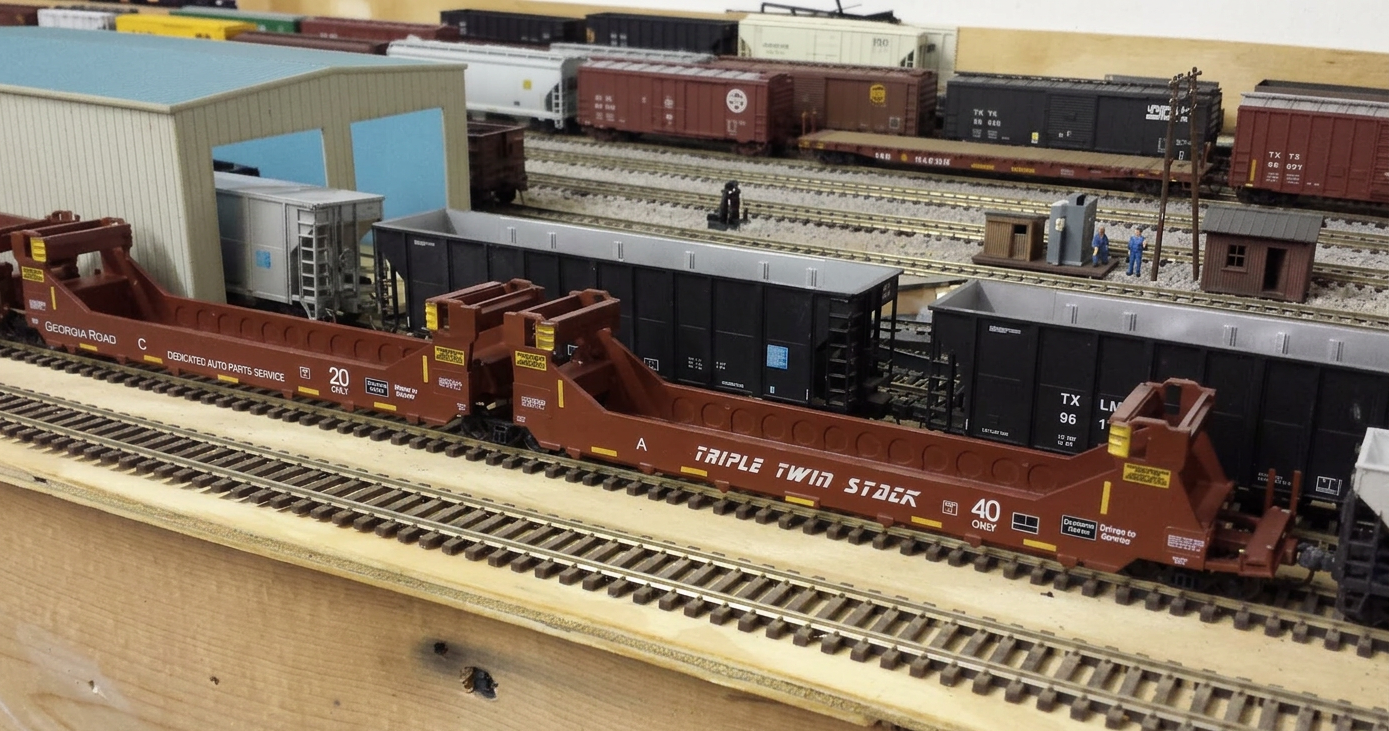
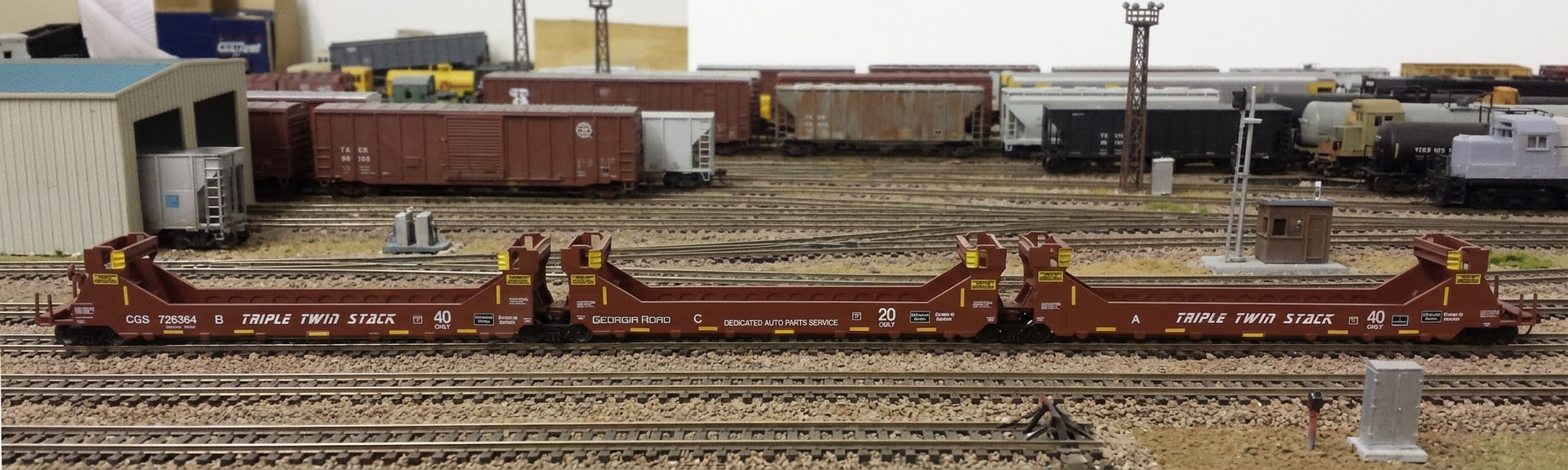
Well Cars–Automotive Parts Service
Well Cars–Transcontinental Dry Van Service