July 2026
July proved to be hotter than usual for this time of the year due to an early heat dome that settled over most of the Eastern half of the US. For those of us living in the Deep South, the additional humidity pushed temperature heat indices into the low 100s. Two weeks of rainless, humid conditions always dampens my propensity to railfan. The sun produces high shadow angles and plenty of glare to go around. The photography quality does not justify standing in the blazing sun simmering in your own juices and the AC in the struck struggles to keep up as much as my stamina. All this being said, a phone call from Jeb Stuart, Head of Security at Stephens Railcar managed to coax me out of cooler pursuits inside my domicile to brave the heat for a rare appearance at the John Tyler Locomotive Shops (JTLS) in the Ensley Suburb of Birmingham, AL.
I made the drive down Steel City Parkway over the familiar digs at Georgia Road Transportation’s Leigh Yard to the JTLS to meet Jeb for a short tour through the facility. He always called me to document happenings around the locomotive repair and rebuilding facility as the unofficial company photographer. This was my assigned title given to me by the company owner when my first visit to the facility a decade ago introduced me to Jeb as a result of my determined trespassing effort to photograph several rare locomotives behind the perimeter fence in the backshop storage tracks. I managed to find a break in the fence and had several times managed to slip in and out unnoticed after quickly snapping my pictures. On that fateful meeting with Jeb, I was caught red-handed inside the fence and was detained. Instead of getting a ride to the police department, the owner looked at my pictures and decided he liked them and how they chronicled the various projects I captured. I eagerly traded a potential pair of handcuffs for a pass to be regularly escorted by Jeb over the facility to make pictures for the owner and myself. Jeb was appointed my facilitator and keeper. As long as the owner got copies and I got pictures specifically requested, I had free access as a “contract photographer”.
I typically took a few moments to see what was moving on the Georgia Road before headed to meet Jeb at his office in the mezzanine of the building 10 backshop. Some days he drove me around and somedays we walked depending on the ground that we had to cover to satisfy the requests of the owner. On this day the Yard was full, but nothing was moving, save a pair of SD25M rebuilds trimming cars in the classification tracks. Even the railroads seemed to feel the malaise of the excessive heat, as nothing particularly notable was ongoing in the sweltering heat of the day. I had no interest in wandering around to the usual vantage points to see the power of various trains that reposed on the bypass mains and the long tracks of the holding yard tracks, It was just too hot and being soaking wet from sweat was just not overly appealing.
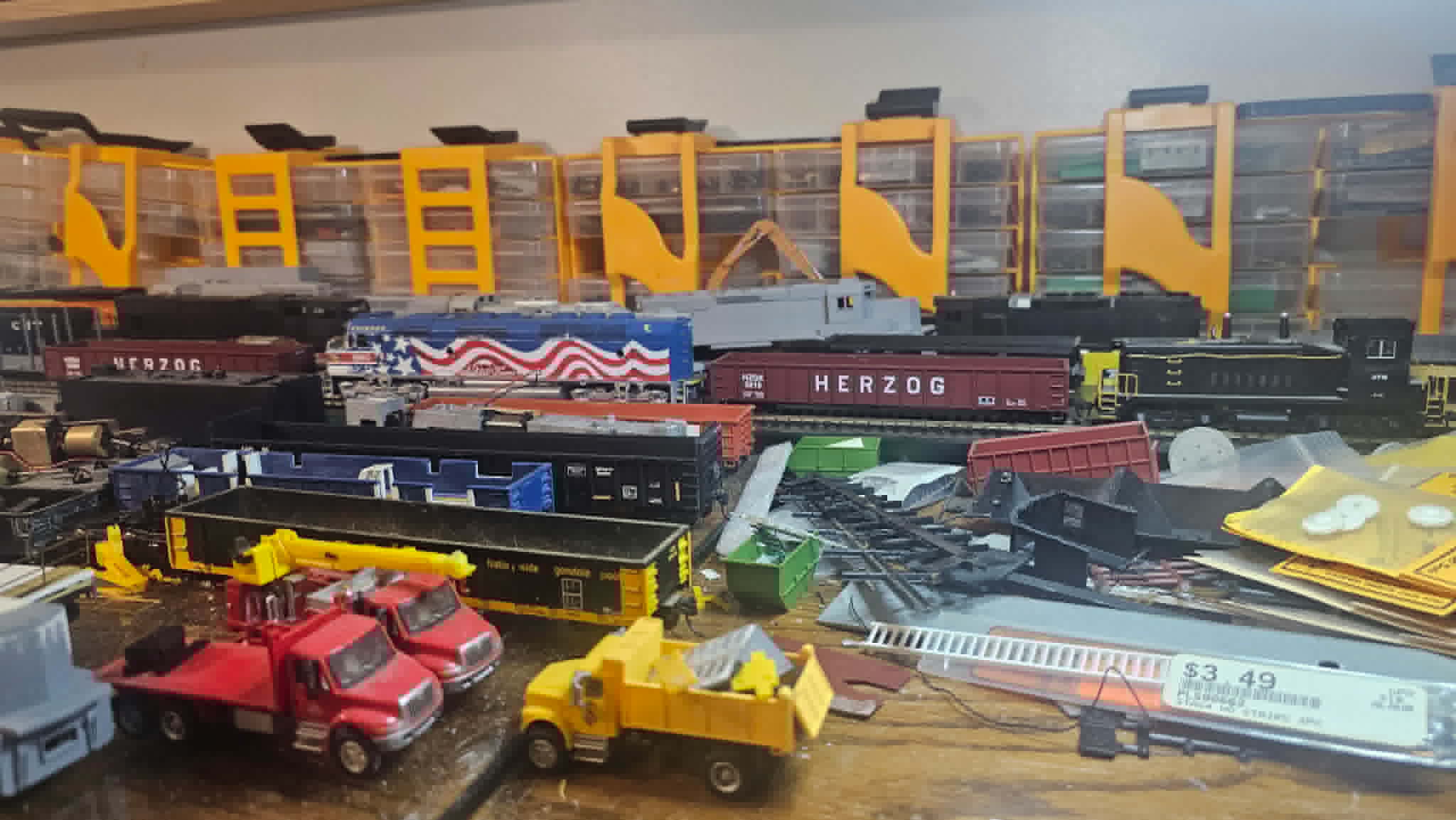
After getting my pass from the guard at the front gate I passed the main shop complex and pulled into the back area of the facility at the Building 10 parking lot. As I got out, I scanned the yard and quickly picked out a Chinook Lines (CHNK) FP45M on the thoroughfare track. It was being shuffled around the shop bracketed by two Herzog Gondolas in for repair of bent safety equipment. I noticed some of the stirrup steps on each end were missing or severely bent. The non-descript SW1200 worked the string deftly as it spotted the locomotive and cars in the main shop. After I arrived upstairs in the Security office, Jeb and I exchanged the usual pleasantries before he filled me in on my assignment for today. The subject was in fact the Chinook unit in its stars and stripes livery. The unit arrived in Birmingham trailing on a QuickSilver Intermodal Service container and piggy-back train bad-ordered with a malfunctioning cab rooftop HVAC. The unit had been interchanged by Georgia Road to Stephens Railcar for a quick fix. The unit was on its way for display at the Washington DC Union Station with other patriotic painted locomotives from various railroad operations all over America during July. This was a rare sighting for the unit outside of the Chinook system and the unit mainly pulled the CHNK varnish around the upper Northwest and Midwestern US. Had the HVAC not needed attention, the unit would have quietly drifted into and out of town in the pitch-black darkness of night in the very early morning with no fanfare. Unfortunately, my only shot of the whole train was from the access road in the JTLS backlot with the reclamation yard in the foreground. Here a non-descript SW1200 tows the CHNK unit bracketed between two scrap cars recently unloaded after bringing in the remains of several derailed and cut up railcars. While the reclamation yard functioned mainly to disassemble locomotive cores for eventual rebuilding, it doubled as an unloading and scrapping point for derailed, damaged and non-economically viable rollingstock and locomotive cores.
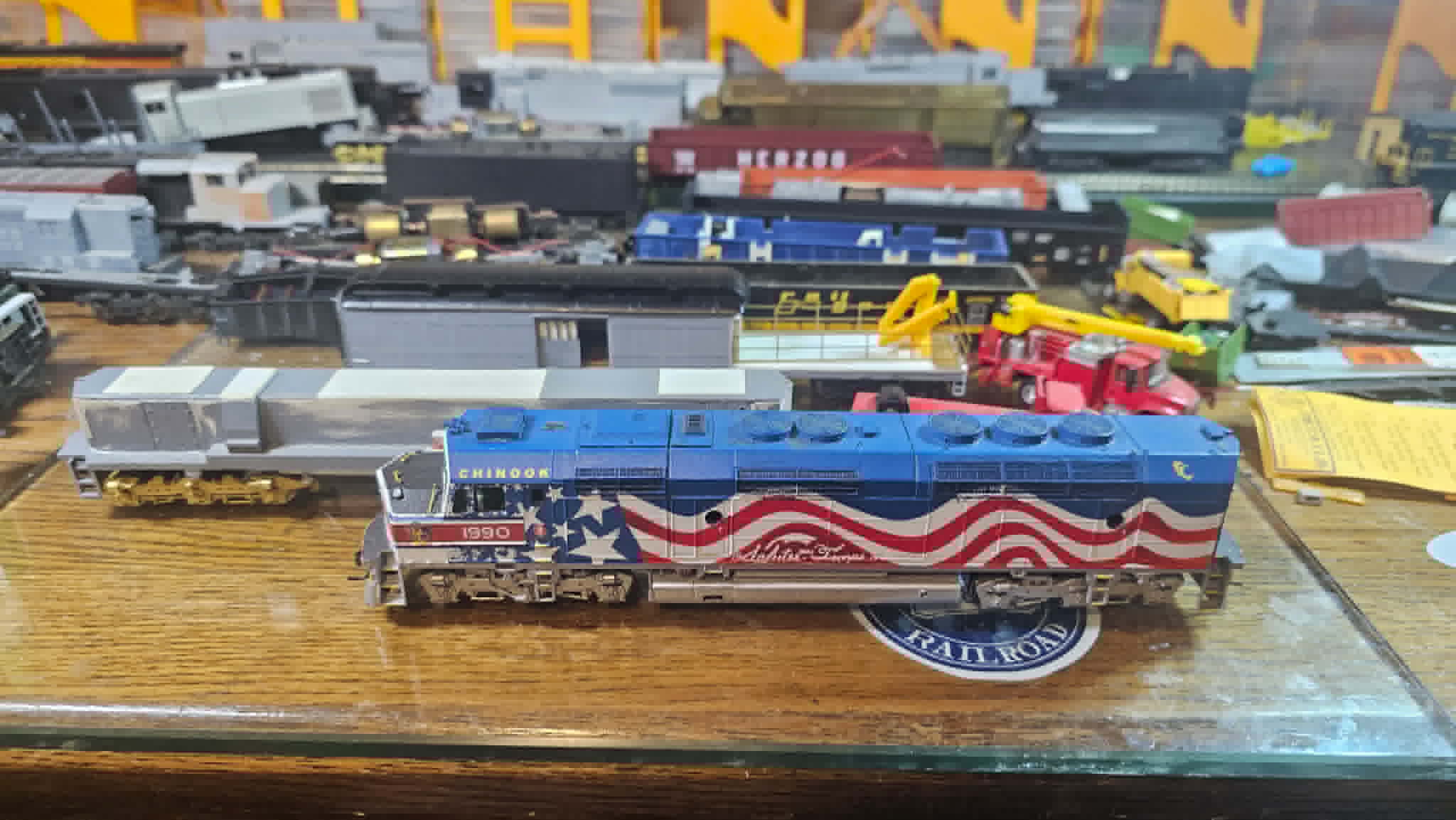
The CNMK FP45M #1990 is show below spotted inside the shop area shortly before getting its Prime HVAC unit changed out. Jeb pointed out it was a rush job so not to delay the unit making its way for display in Washington D.C. for the July 4th week celebration. Two other notable projects were going on in adjacent shop tracks, being a TAYA-6 (Tractive Assist Yard Application-6 axle) yard slug converted from an SD50 core and a tool car conversion for Bethel & Southern from a former heavy weight baggage car.
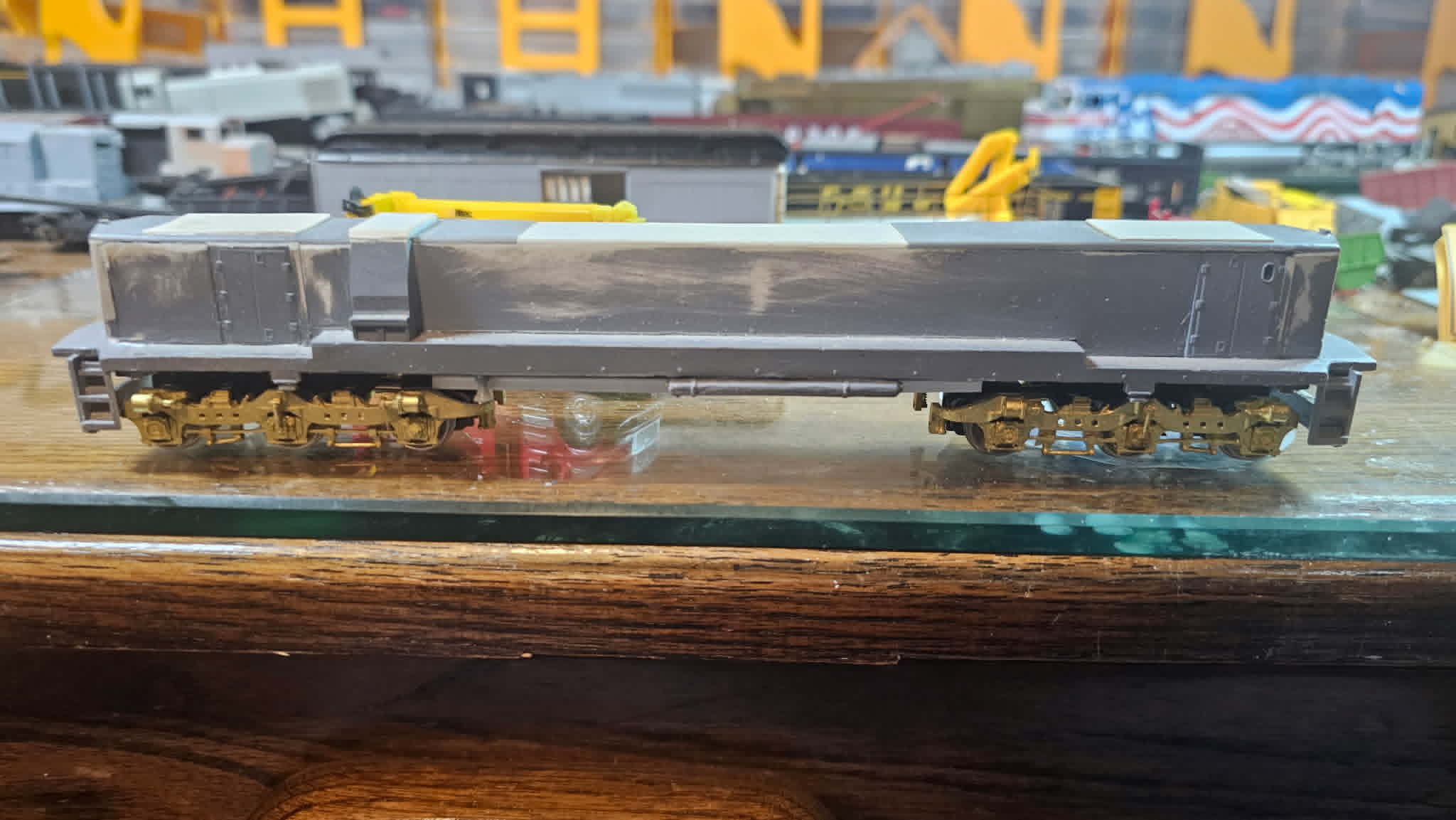
I managed to get a side shot of the TAYA-6 slug showing the completed sheet metal work. Stephens Railcar chose a SD50 due to the fact that it had an inordinate amount of them laying around left over from the early days of the TGX Program for conversion into SD65S1-CAT units. As the Program matured and specifications changed, the SD50 cores fell out of favor for SD70 cores. Always looking to utilize current resources, this early EMD production ex CNW core will soldier on in yard service in its new configuration.
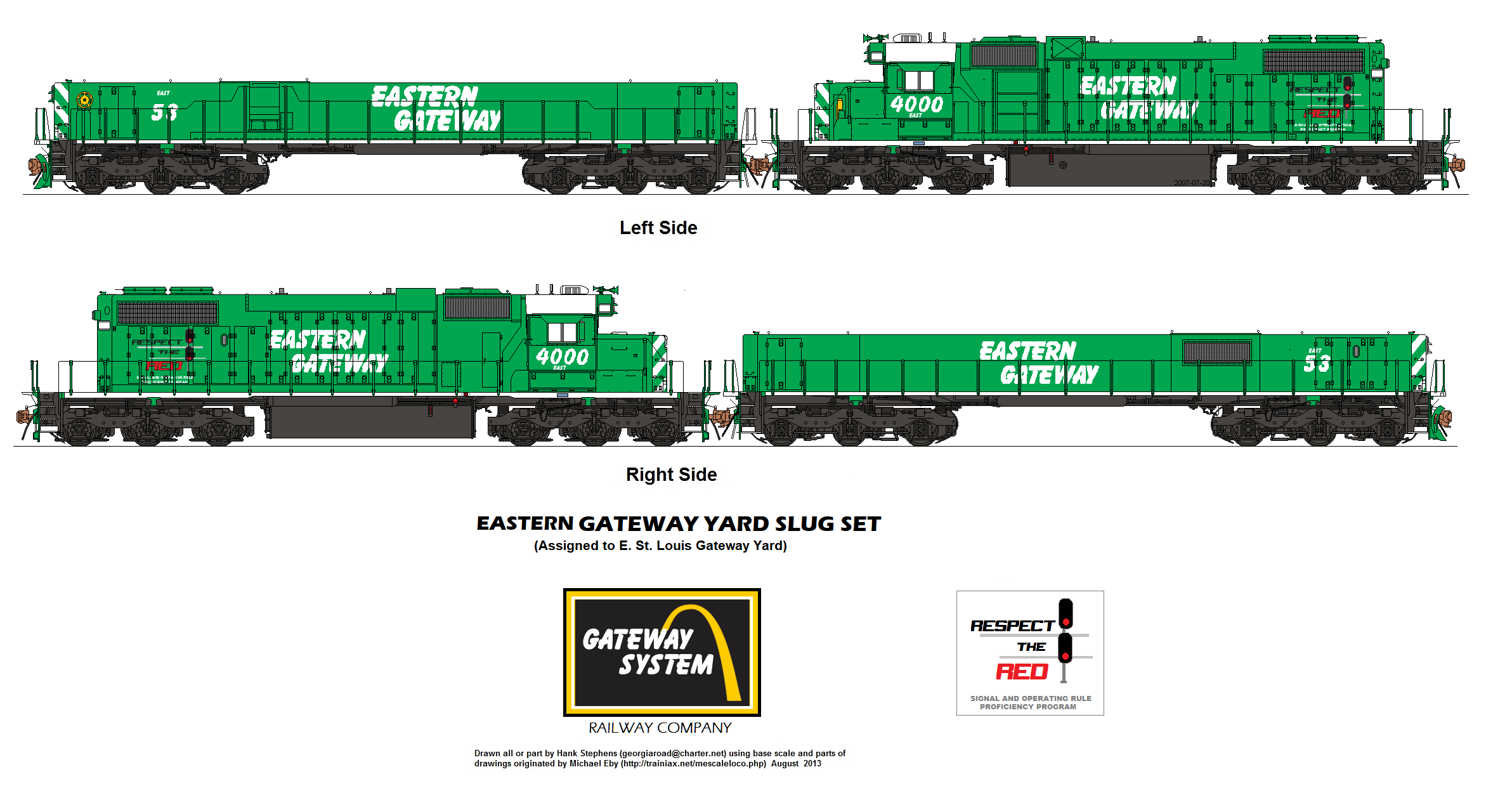
Jeb gave me a specification sheet for the TAYA-6 conversion. This happens to be an Eastern Gateway RR (EAST) version. Georgia Road commissioned the SD50 core build for itself and its EAST subsidiary. The neat thing about Stephens Railcar sharing its location with Georgia Road’s Leigh Yard is the fact that I get to see many of these completed projects in action. Leigh Yard in a very convenient place to break in completed projects and work out operational issues with the shop nearby. Once qualified in service around Birmingham, the finalized and proven efforts of Stephens Railcar can be delivered to customers with confidence.
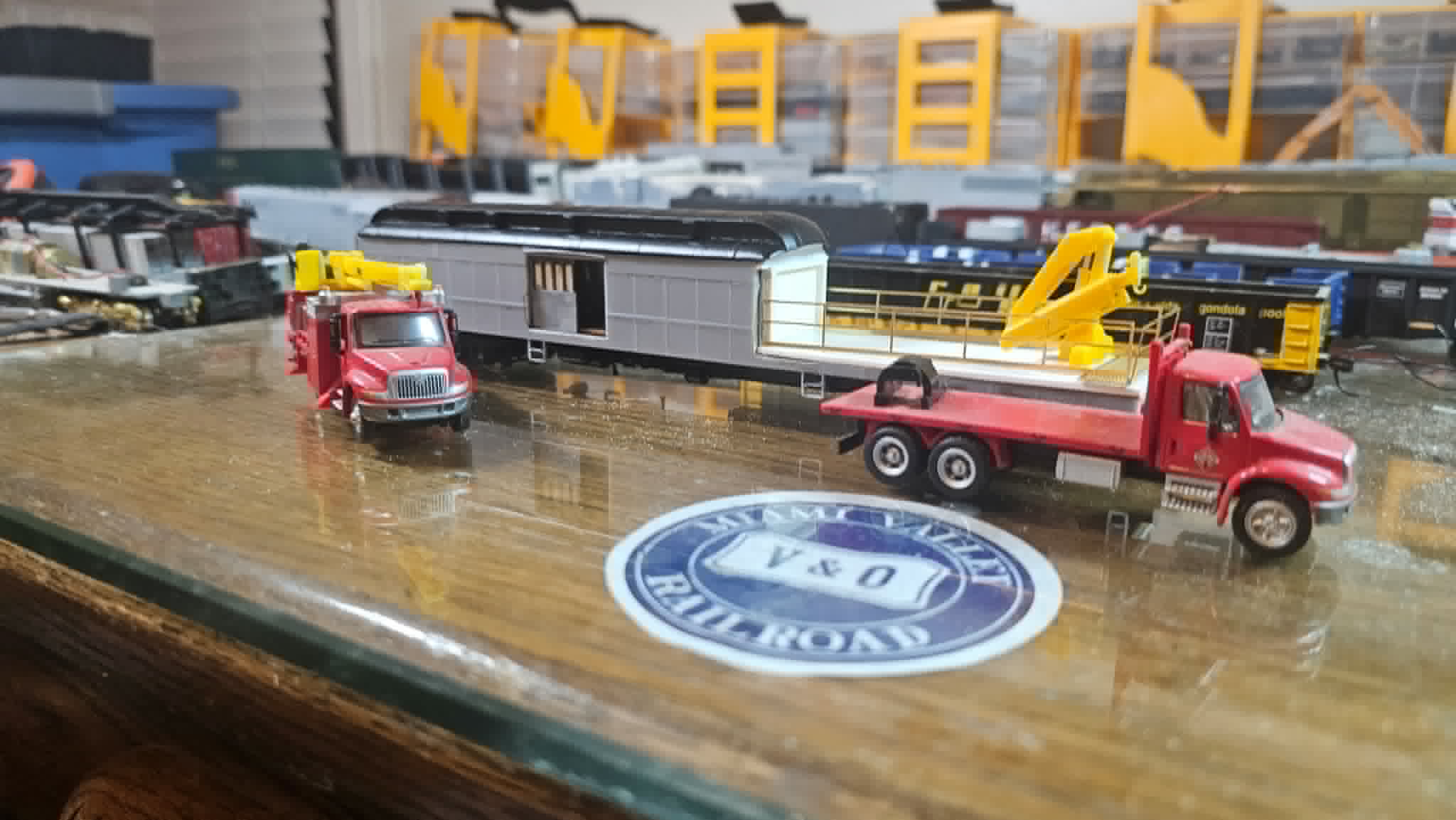
Various Stephens Railcar Services trucks gather around the tool car after workers set the knuckle boom on the open platform of the Bethel & Southern Railroad (BS) tool car conversion. This car will become a rolling machine shop to support BS program maintenance of way gangs who have to carry everything with them to keep the men and machines working effectively and efficiently. The converted car has workstations to do anything from assembly refabrication, hydraulic pump and cylinder rebuilding along with any repairs that cannot be performed trackside on the gang.
With the heat of the day approaching and ambient temperatures approaching 96 with humidity driven heat indices hovering around 102, Jeb and I both decided to retreat back into the office for a snack of coffee and doughnuts I just happened to bring with me. Neither of us was interested in touring the facility further as his patrol pick up AC struggled to keep up. Welcome to Summer in the Deep South.
H in AL
 Georgia Road Transportation