FREELANCING THE PROTOTYPE
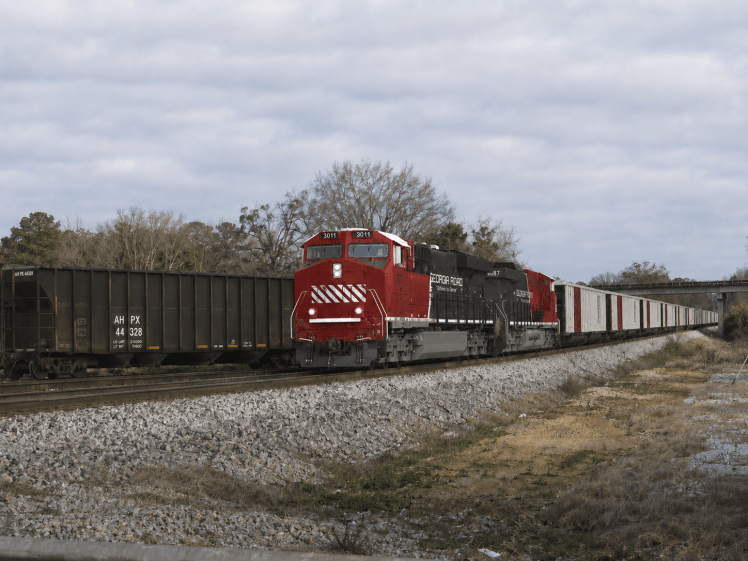
From my formative years in college in the 1980s and 1990s, I was fortunate to be exposed to many articles and books in railfan publications highlighting the likes of the Clinchfield, L&N Kentucky Coal lines and NW Pocahontas lines. I also read many articles on the coal operations around Grafton, VA on the Chessie roads. As a modeler, I discovered “The V&O Story” by W. Allen McClelland where he literally wrote the book on how to create an operations-oriented prototype freelance railroad set in the coal hollows of the Appalachians. For many years, I practiced concept design trying to emulate his principles, designing a freelance something akin to the Clinchfield.
During my college years in the 1980s-1990s, I got to explore my new home state of Alabama, primarily the lines in and around Birmingham, AL. I witnessed the SBD and later CSX operations at their peak on the Brookwood line that is the focus of my layout design. At the time I did not know the operation or history in any depth, but the fact coal operations were in my new home state a good distance for the typical Appalachia coal haulers in KY, TN, WV and VA fueled my freelance thoughts. During these years I created Georgia Road Transportation, a modern prototype freelance set in the Southeast in modern times. The idea of the Georgia Road reflected heavily from articles written about not only Allen McClelland’s V&0, but Tony Koester’s Alleghany Midland, Eric Brooman’s Utah Belt and Jim Heidiger’s Ohio Southern. I mixed all this with research into all the 1980s spin-off railroads featured in railfan magazines and my own research and observations of CSX and NS operations as they worked around me near home.
In my early adult years, I mixed all the freelance information with my experiences of Deep South railroading to move the maturing Georgia Road concept toward an operating layout. My take was mostly mainline railroads, moving manifests and coal to and from places far away from my normal railfan haunts. This regular experience was peppered with irregular trips seeking out obscure Class One operations or shortline branches that made a living moving the paper and timber products typical of railroads of the time. The troubling point became how to draw all this information together and integrate it into a prototype freelance concept that would sound plausible and fitting in the area in which I was familiar. I wanted a little of everything I saw, researched and read about. As the years dragged on and work and family took the forefront, I practiced the model railroad hobby drilling down the Georgia Road concept and expanding it as my knowledge and understanding grew. The hard part was turning what I knew into a plausible concept that could easily be an alternative reality if certain key historical and prototype operations could be tweaked into the world of “what if”.
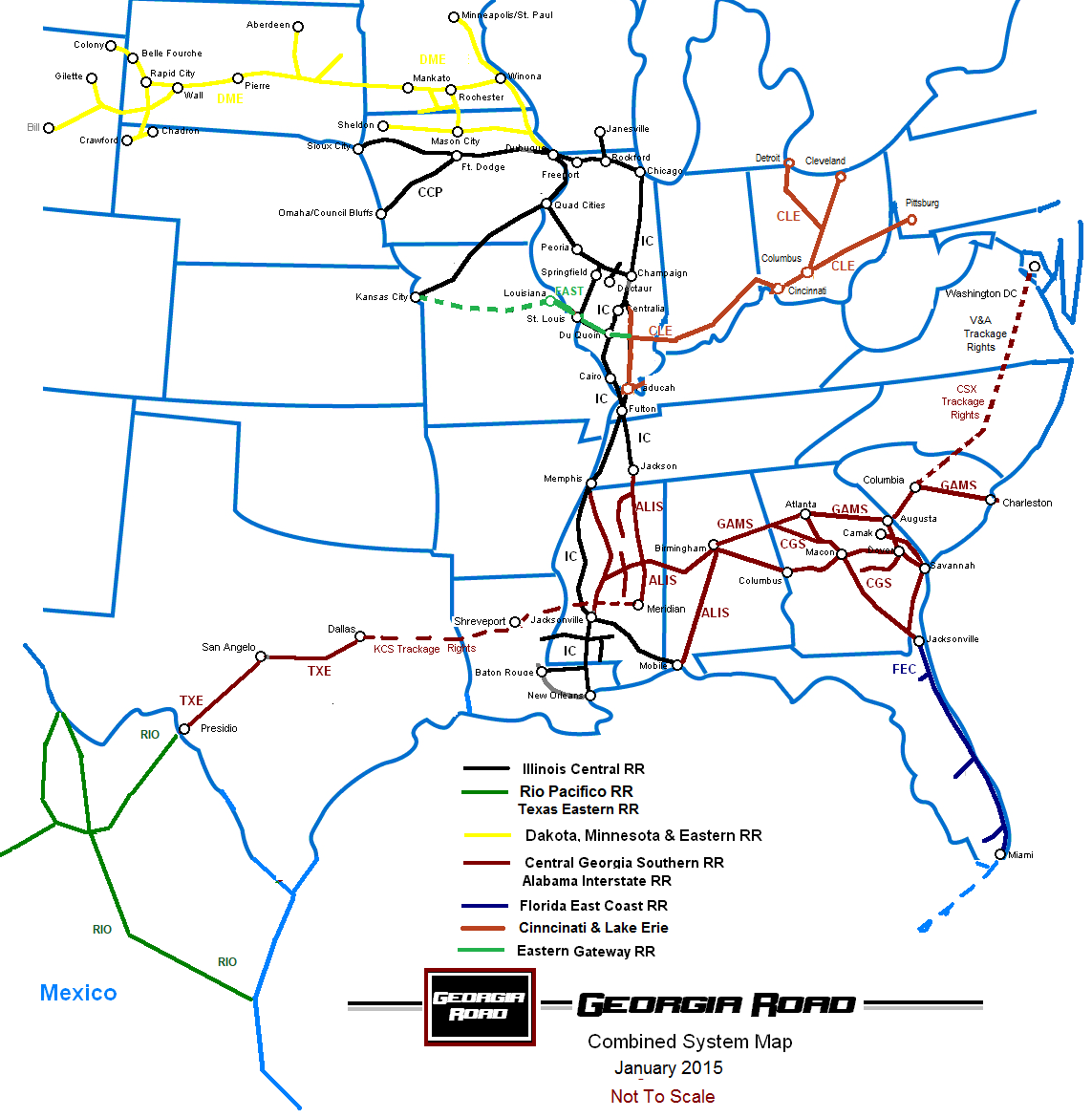
I pieced together a “third Deep South” welter weight Class One called the Georgia Road (GARD reporting marks) using secondaries and long abandoned lines, I settled back on the Brookwood coal operations in Alabama due to my wanderlust of Appalachia coal railroading around Brookwood, AL to the west of Birmingham, AL. While the prototype was an end of the line branch, it did connect to Midsouth, then KCS when they acquired Midsouth and finally a WATCO shortline called the Alabama Southern Railroad when NS leased out its side. Georgia Road was weaved out of a lot of old ICG GM&O tracks into Mississippi and CofGA lines in Alabama. Key acquisitions of the FEC and IC in the 1990s expanded the Georgia Road into a reasonable Class One. The CSX Brookwood line sat right in the middle of my supposed system map, giving it potential as a mainline connection for Georgia Road between the CofGA lines to the east and the IC lines from the west. With a little manipulation of history, I ended up with coal operations on a Class One mainline similar to what I saw, living most of my life around West Georgia and East Alabama on the CSX ex West Point Route main. Using the “local color” of what I observed close to home over the years formed a backbone mainline operation through the Blue Creek Coal Seam. I could easily integrate the pulp and paper traffic, manifest, long distance Wyoming steam coal trains and even personal work experiences around the foreign automotive OEM assembly plants settling in the South. I observed a manufacturing Renaissance in the 2000s in the Deep South and saw how railroad operations changed to meet the needs of these new industries. The area between Birmingham and Tuscaloosa offered a little of all of this along with the coal operations I always wanted in a layout. I could embellish the lines some without it feeling completely outlandish, but at the same time capture every point on my wish list for the Georgia Road layout. Modeling aspects of what I observed on a daily basis near home could easily be used as the basis of the train operations. While different, these operations had the same general traffic patterns and commodities. in short, I planned to incorporate rail operations I knew with an area I was familiar with in a scenario that was not unheard of. This made clandestine attempts to force my desires into a concept that was not readily amenable to them unnecessary. This did make the attempt harder, as I forced myself through research and experience to realistically justify each of the facets of my concept. The result was around 100 miles of track between Birmingham, AL and Tuscaloosa, AL. I sewed together a divisional map of the area to be modeled, built from hours of studying prototype maps of the area, current and historical. I did have the Georgia Road acquire key lines, but never any of the current key lines of the prototype Class Ones. The abandoned lines, secondaries and spun off lines gave me what I needed. Adding a twist that Georgia Road acquired the IC instead of the reality of CN in 1999 gave the Georgia Road reach outside the South. Following plans that KCS had in Mexico gave Georgia Road a NAFTA connection. The fact that St. Joe Industries divested the FEC in the 1990s gave Georgia Road the ability to gain access to the growing East Florida markets. Secondary line through Georgia and South Carolina to Charleston ports gave Georgia Road overhead intermodal traffic. The DME acquisition and an effective lobby unlocked the hypothetical third route into the Wyoming Powder River Coal lines early enough in the late 1990s to allow Georgia Road end to end coal service to Southern Electric Generating Company (SEEGCO). These income streams gave the Georgia Road a heavy traffic system that would justify the newest locomotives on heavy mainlines and many trains daily.
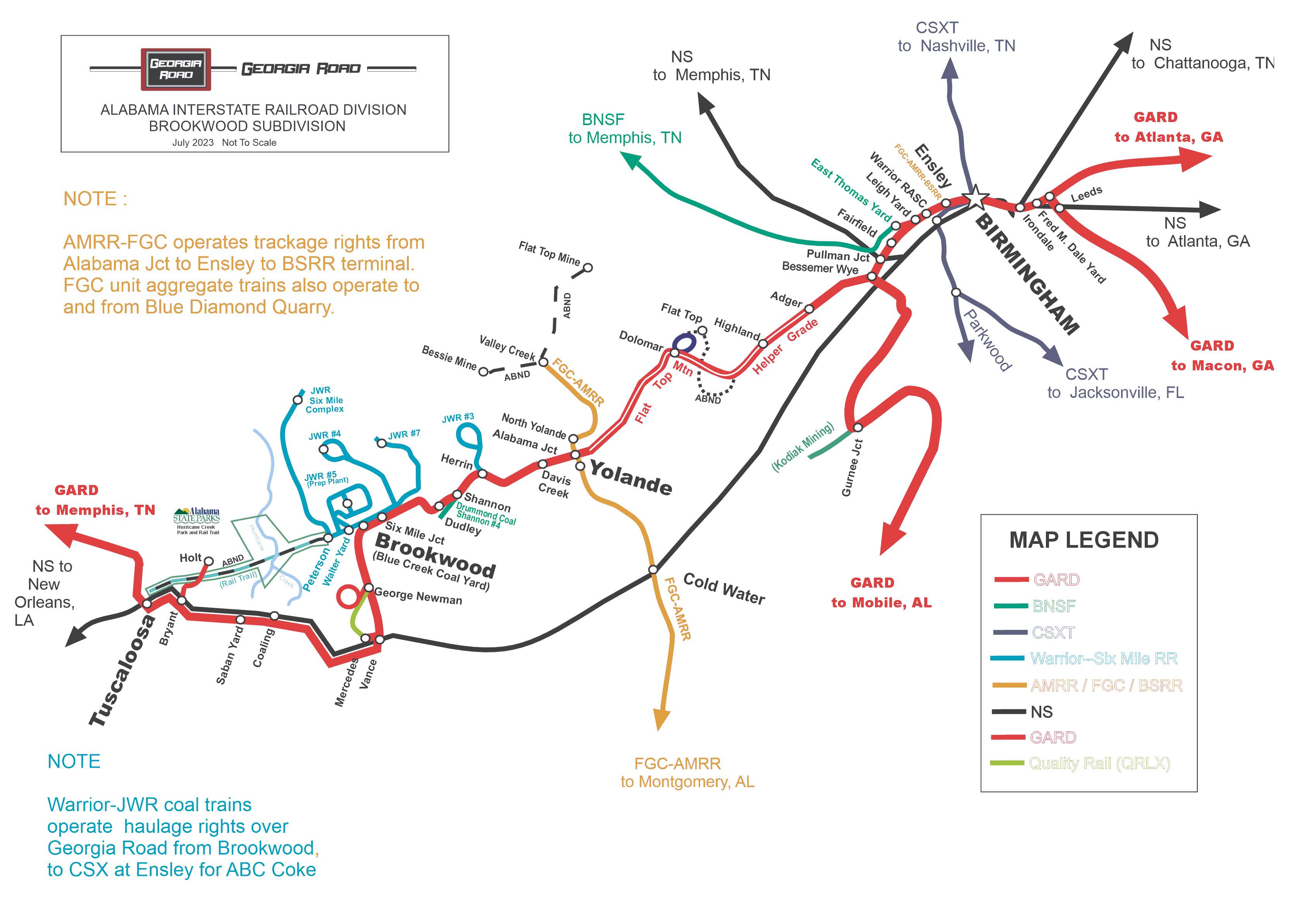
I now had my locale around Brookwood, decided to keep the time period modern (though the loss of diversity in all aspects of the industry since PSR implementation in the 2020s stagnated my “constantly modern” concept). I had coal operations, and due to the resurrection of some old connections I could also incorporate my love for short lines with the advent of a regional concept complete with a forlorn branch. Add to this the prototype Mercedes OEM Assembly plant near Brookwood and some “imported” industry from the region created a good mix of industry. The CSX Brookwood line was curvy and had a significant grade around what is now the Drummond Coal -Shannon Mine according to an inside railroad source. A little freelance tweaking morphed a helper section that L&N used back in the early to mid-1900s when rail was the only means of reasonable transportation. I had My regional railroad connection through the Florida & Gulf Coast and its recently merged subsidiary, the Alabama Midland RR (the Genesee & Wyoming shortline empire activities in the 2000s was my inspiration here). My concept was actually gelling into something that touched all my experience as a railfan and modeler. The work now focused on drilling down operations, rosters and actual track plan ideas. I decided to focus on each facet of operation, designing track site maps, assigning industries based on prototypes I documented in my travels, and building locomotive and railcar fleets to address the needs of a living and breathing railroad similar to the V&O, UB and many others I followed over the years in railfan publications and recently via the Internet.
Coal was king on my list, but instead of a few random loadouts, I dug deeper into the modern version of the CSXT Brookwood line and realized that principal coal mining business Jim Walter Resources actually ran a mine railroad through its USP&F acquisition. Research uncovered more pieces of the puzzle (these are documented in Part One). While Jim Walter and later Warrior Met Coal opted for overland coal conveyors, I alter history to say that the railroad experience won over miles of coal belts between mines and the preparation plants. I went looking at the prototype and found operations like the US Steel Cumberland Mine Railroad mine to barge operations, US Steel Subsidiary Transtar owned Birmingham Southern RR (based in Ensley and part of my modeled area), the Chicago and Illinois Midland RR (CI&M), Yankeetown Dock RR and even mine owned coal moves over the L&N such as the Shamrock Coal “Onieda & Western” trains and Southeastern Coal Company (SECX) moves over the L&N to move coal from loading branches to its preparation plant further down the mainline.
INSPIRATION FROM THE PROTOTYPE
CUMBERLAND MINE RAILROAD–INSPIRATION FOR AN OPERATION AND A TERMINAL
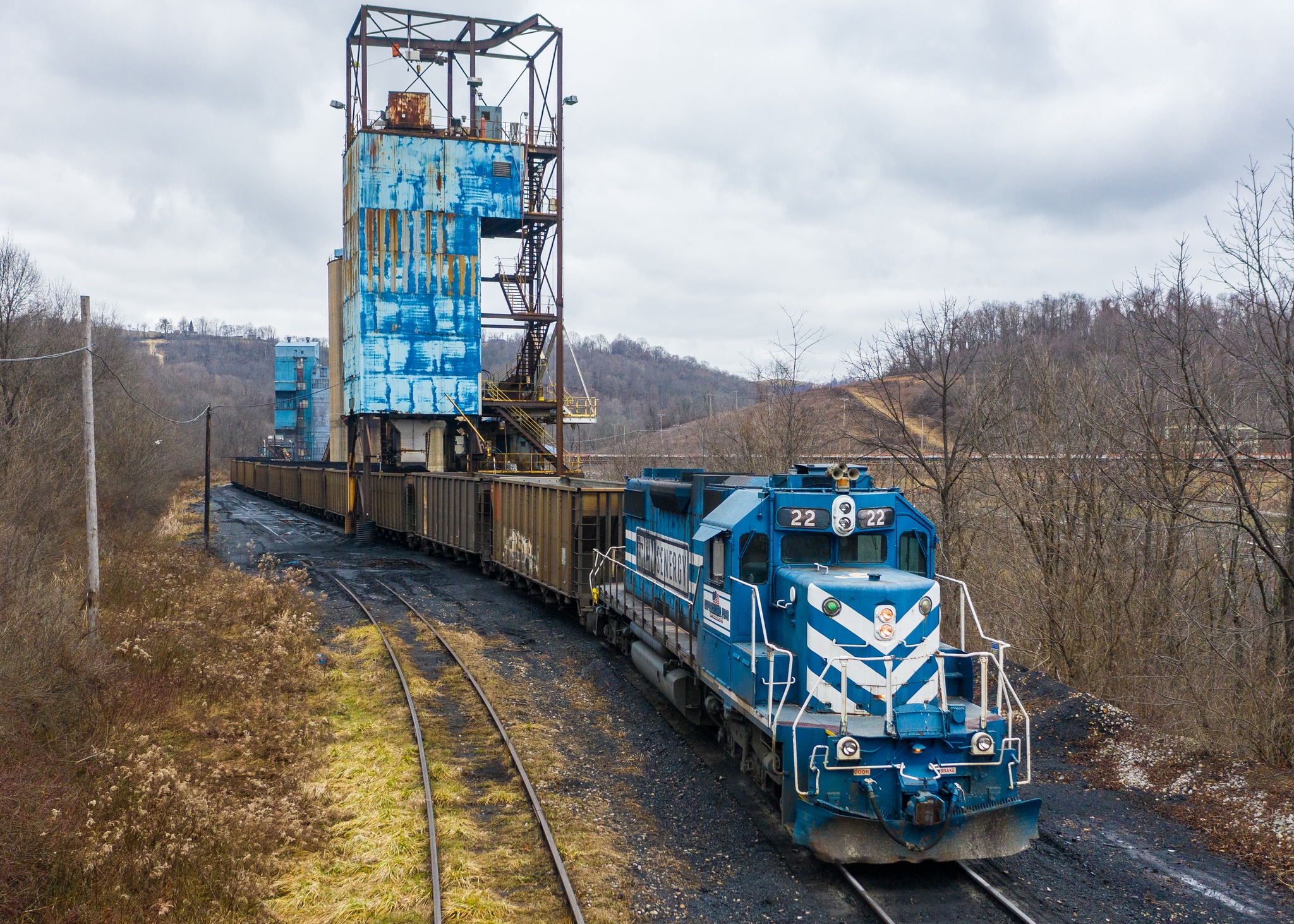
The Cumberland Mine Railroad of US Steel caught my imagination the first time Roundhouse offered the blue Ortner built Rapid Discharge hoppers in the 1990s. It took old fashioned book and magazine research back then but there was information out there. Then Kato came out with their SD38-2 in the Cumberland Mine original scheme. There was just something about the match set of locomotives and cars moving with singular purpose to ferry coal from a deep shaft mine loadout to a barge loading facility. It was literally a railroad rolling coal conveyor! Since Jim Walter Resources was no stranger to railroading with its Mary Lee operation and modern EMD SW1500s at the time, what if the management decided to duplicate such an operation at its Brookwood mines. The original prep plant was removed but central to all its mines that sat in a 15-mile radius from it. Jim Walterwas also trying to open a new mine further north of Brookwood. What if they decided to link it by rail to the existing preparation plant? They would need a small marshalling yard, and a base to service locomotives and cars. The Cumberland Mine Railroad demonstrated the bare minimums required. Jim Walter would scale up according to the number of mines. I used Google Earth to produce photo mosaic pictures of the yard and terminal with enough resolution to see details needed to model a believable terminal for the Jim Walter Resources railroad.
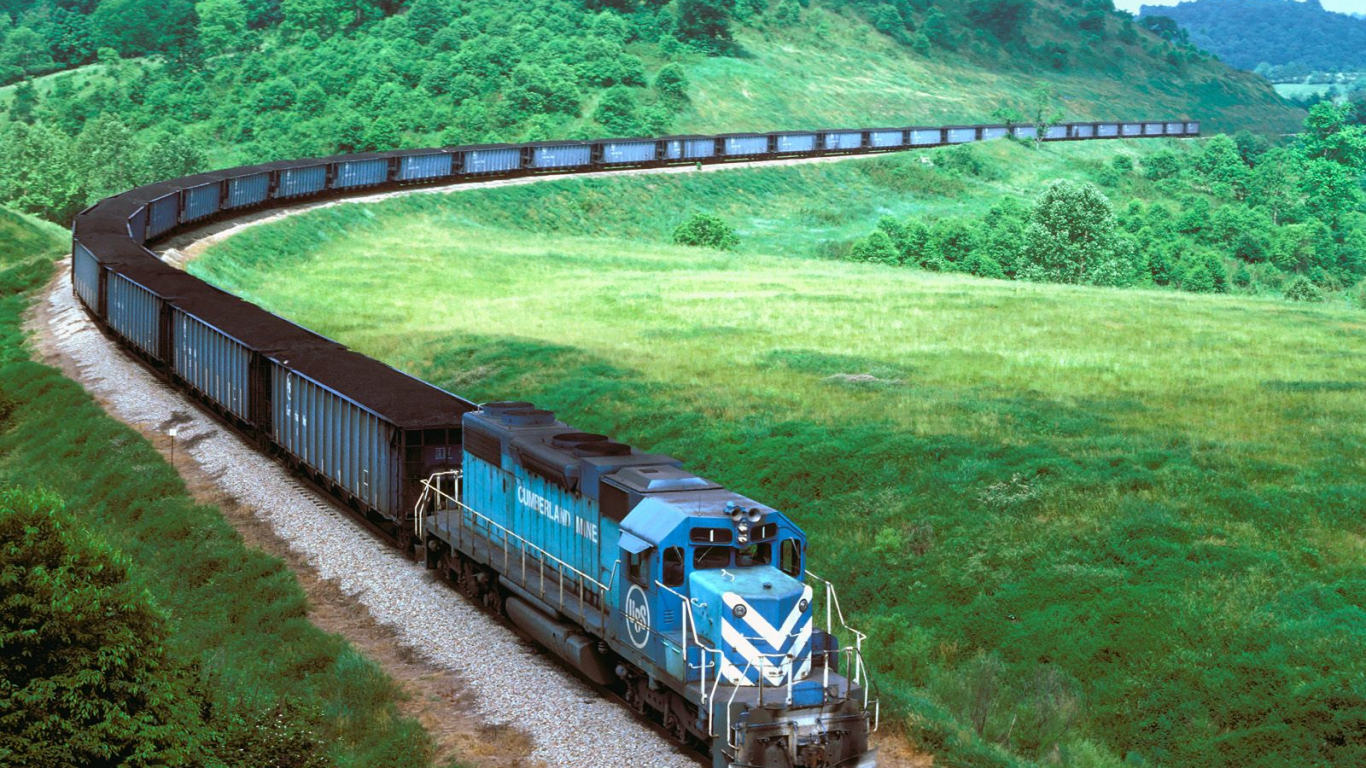
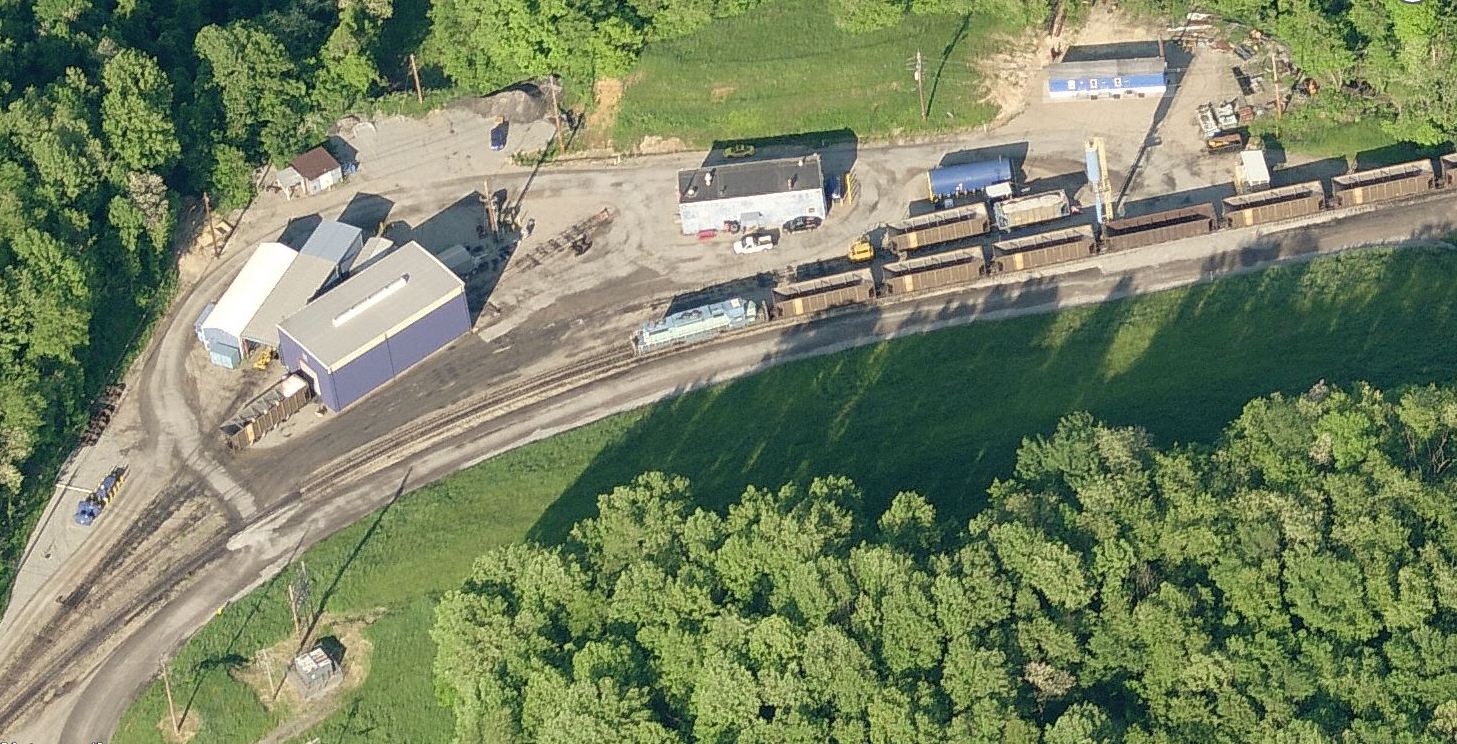
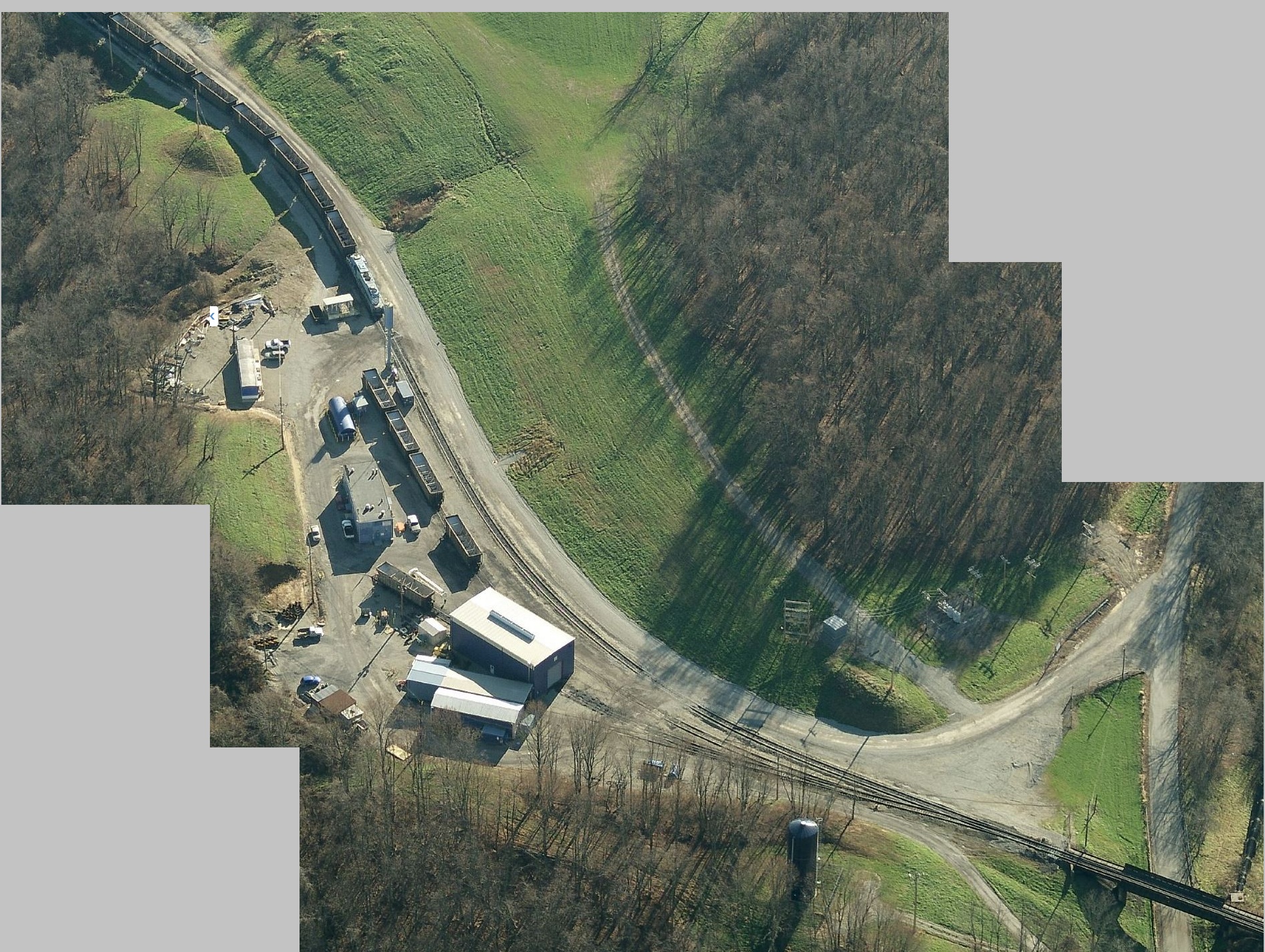
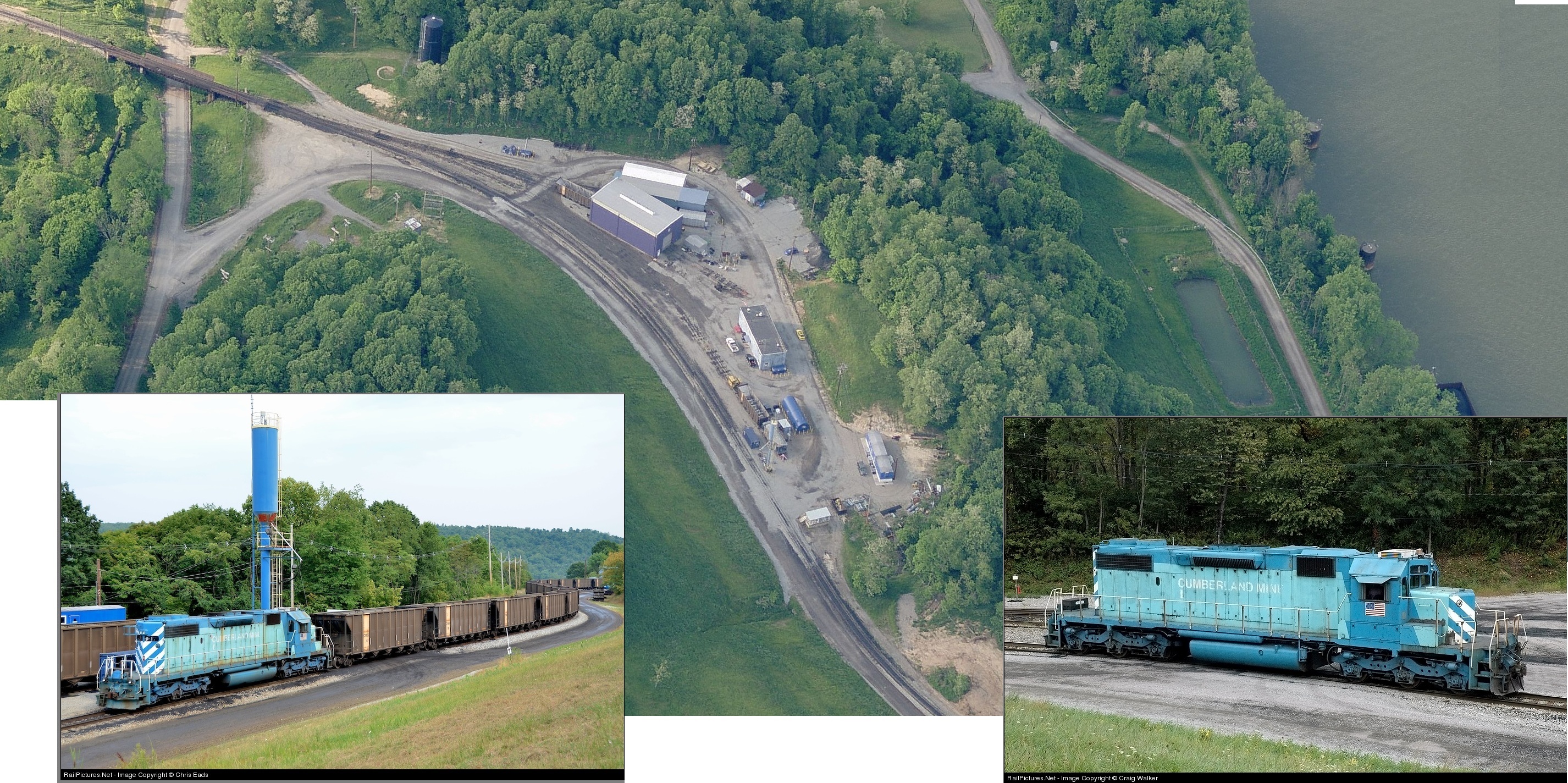
Now I had a prototype I could study and a bare bones example of a terminal that could be scaled up for the larger Jim Walters Operation. I am a fan of servicing facilities, large and small. I found most industrial railroads were spartan bare bones but well-funded operations. I found ideas all over the Internet for potential service terminals.
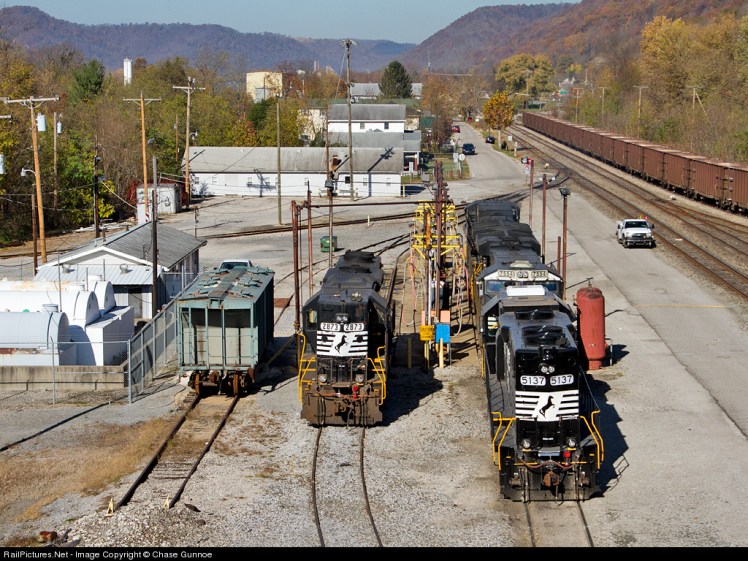
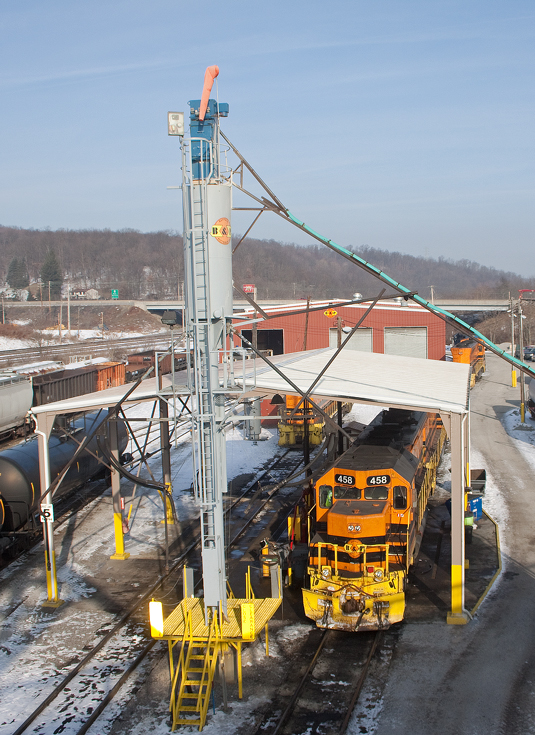
BIRMINGHAM SOUTHERN RAILROAD YARD INSPIRATION
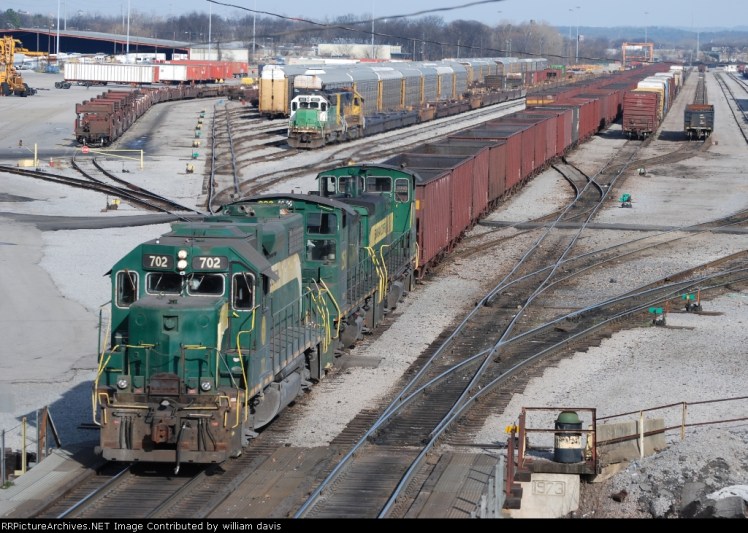
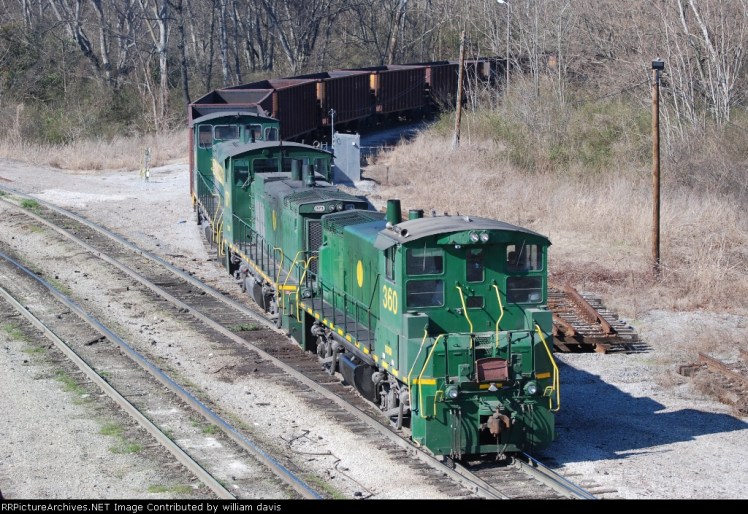
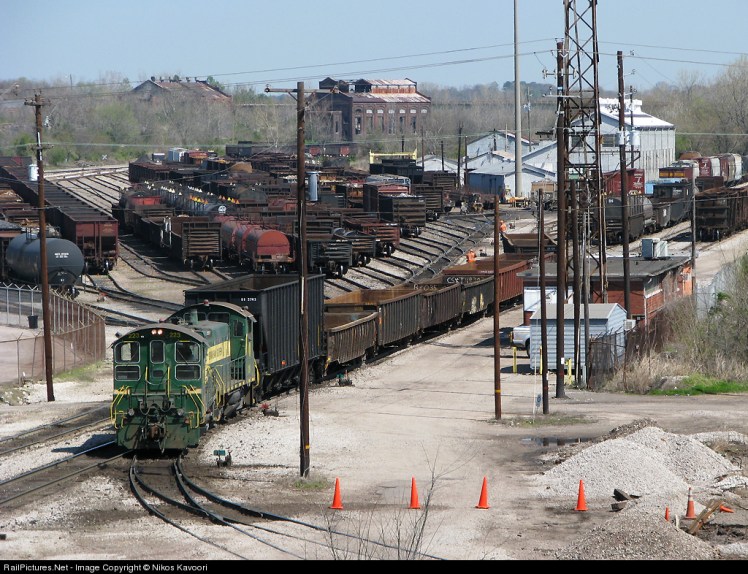
The Jim Walter coal railroad required a dedicated marshalling yard. The operation centered around mine owned locomotives and captive cars moving coal in multiple shuttle trains to a central point where a dedicated switcher would assemble and deliver the cars to the preparation plant using bottom dump cars. The yard would act as a storage point for additional cars and allow shuttle trains to make faster turns between the mine load outs and the yard. How would such a yard look? The Birmingham Southern RR of US Steel was tasked with primarily feeding the Fairfield BOF furnace and the various rolling mills and finish steel customers. it used a one ended yard in Ensley that was once part of the TC&I Ensley Furnace. The mill was long gone but the mill yard was repurposed.
THE CHICAGO AND ILLINOIS MIDLAND–MOTIVE POWER IDEAS
A book published by called “Birmingham Rails” gave me a background history of the steel and coal industry around Brimingham, AL. I found out about the United State Pipe & Foundry (USP&F) Mary Lee Railroad, moving coal from a series of Mines to coking plants and consumers that eventually came under Jim Walter Resources ownership when they bought USP&F. Jim Walter was a staple in the South as I grew up through the 1970s and became an adult in the 1990s and 2000s. I did not know it as a mining business, but through Jim Walter Homes, the builder. Signs and model home centers were all over the south in the 1980s with the signature Jim Walter Industries logo. With an acre of land, anyone could have a modest 3-bedroom, two bath home built to about 90 percent complete. The owner had to do the inside painting and floor covering and add appliances. This made an affordable way to build a starter home for many middle-class couples starting out in life. Here is a TV ad from the 2002. notice the logos at the end.
Much to my surprise, this was the same Jim Walter but in the Brookwood area, the name and logos substituted “Homes” with “Resources”. Apparently, Jim Walter decided to invest profits in its original home building and supply business into mineral rights and later coal and natural gas around Brookwood. In the 1980s and 1990s, each mine worked independently, loading trains full of steam coal for various Alabama Power steam generating plants as well as exporting the rather high carbon bituminous coal for growing steel production in Japan. These mines were consolidated and modernized and connected not by rail but overland conveyor lines. Changing that one detail from conveyor to rail (the cost of either was comparable in the late 1990s-2000s) would give me grounds for a fully integrated and independent coal mining railroad, which I would eventually dub as the Jim Walter Resources –Six Mile Railroad Operations. This concept was designed as a rail conveyor instead of an overland belt system that JWR chose in reality.
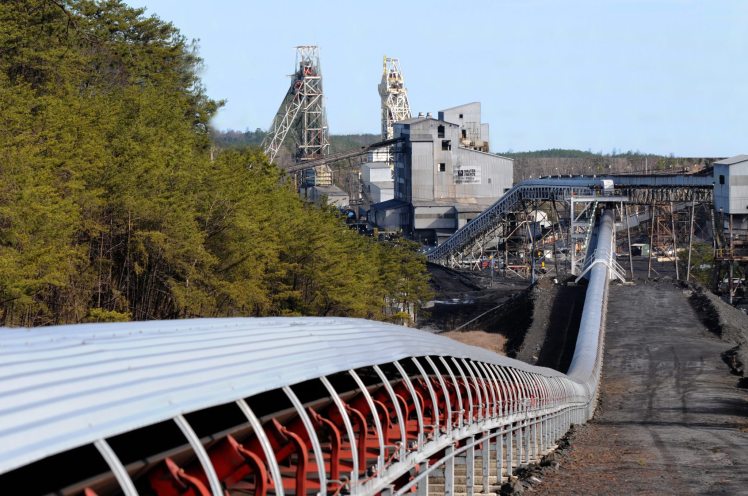
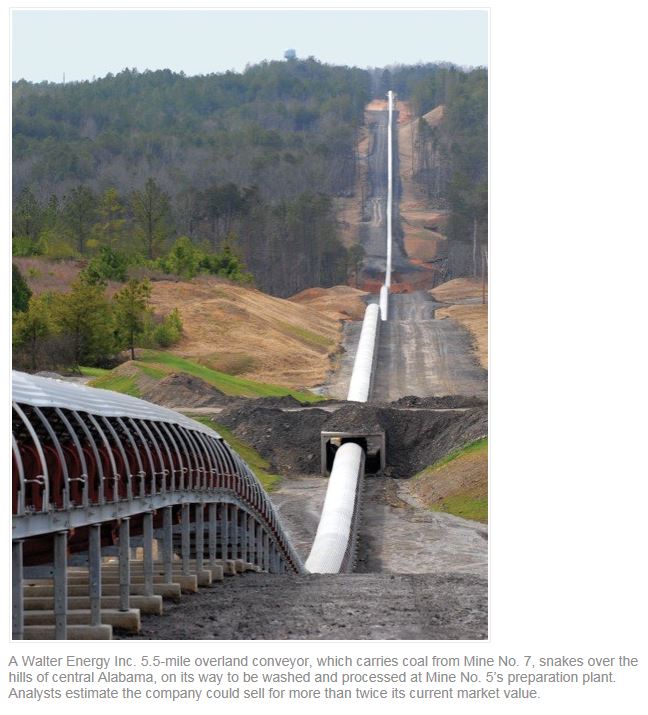
Most of the rail needed was already in place when JWR opted to use overland belt conveyors to connect its deep shaft mines to a new preparation plant. A small alteration in history made this a rail operation. The only need was to connect the mines with a “mainline” running track paralleling the mainline and construction of the new prep plant at the #5 mine instead of the #7 mine where it is today. The #5 mine would have its balloon loadout upgraded and a bottom dump house added so raw coal from the outlying mines could be brought in for sizing, cleaning, washing and finish loading on Georgia Road trains outbound for export at the port of Mobile or local coking in Birmingham, AL. Trains would also deliver steam coal to at least two Alabama Power steam generator plants, which JWR actually served using a barge loader on the Black Warrior River a few dozen miles north of Brookwood.
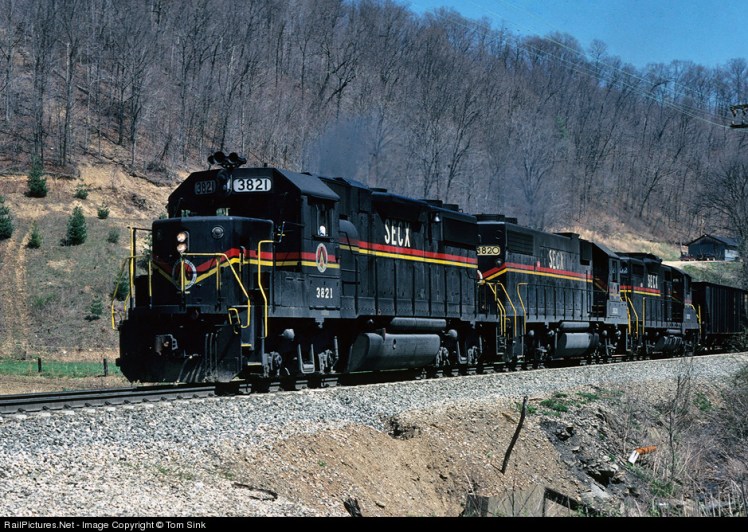
What about motive power? Again, I looked at prototype operations such as the DMIR, Northshore, BS, EJ&E, Cumberland Mine and even Mine to Generator operations such as the Squaw Creek and TVA Widows Creek operations in TN. The SD38 series locomotive seemed to be a reoccurring favorite for many of these operations. The 2000hp normally aspirated locomotives were equally adept at heavy switching and short runs at speed with heavy, homogenous loads. They lacked the extra complication of a turbocharger and could negotiate less than perfect track with a good balance of spread weight and tractive effort. Like most mining and heavy industry, the idea was to standardize to make repairs easy and economically in the modern cost-conscious late 20th century. As a result, the Six Mile Operation pulled SD38, SD38-2 and even converted turbocharged SD38M units for its trains. I noticed the use of slugs was common, so the railroad also got a gaggle of secondhand ex NW trainmaster and EMD SD slugs. To add a hint of something different, a single SD9M from the BN became the shop and yard switcher along with a Trackmobile for quick work when needed.
Rolling stock was easy. Jim Walter Mines in the area supplied steam coal to Alabama Power steam plants thorough the1960s, 1970s and early 1980s. EPA rules forced a shift to cleaner burning Wyoming coal until plants could either upgrade with limestone scrubbers or be phased out in the 2000s for cheaper natural gas turbine generating plants. A fleet of Ortner built 5-bay Rapid Discharge steel cars with JWRX reporting marks did the honors in the 1960s through the early 1990s. These looked like long versions of the Ortner 100T aggregate cars. The Blue Creek coal was considered sticky and required steeper end slopes in the coal cars to help them unload. Ortner kept the design as close to standard production cars as possible. The JWRX rapid discharge cars had the “porch” on each end, similar to the short 3 bay aggregate cars which shared a similar end slop angle. I documented several in the 1980s around Birmingham. These were mixed with standard Ortner cars in the later 1980s until they were phased out for Aluminum cars such as the Trinity RD-4. The JWRX reporting marks disappeared with the cars for good in the 2000s, used in aggregate and general service on at least one Carolina shortline in their final days of service.
As for modeling these cars, I have built several using either the old Roundhouse kits or even newer Ready-to-Roll Athearn versions with all the upgraded detail. I used some old upgrade kits to improve the original roundhouse cars, though the difference in a train is negligible to me as I adopted Mr. McClelland’s “layout quality modeling” and “good enough” philosophy. The Six Mile Railroad even in truncated model form will need a great many cars. Also, kitbashing the JWRX version is much more tedious using Athearn RTR upgraded cars. Check out the pictures for examples.
Operations on the Six Mile Railroad are divided into intra mine operations and Georgia Road finish unit train moves. On the prototype, as export coking prices rebounded, modest expansion has occurred. CSXT built Walter Yard around the prototype station of Adjer, AL near the beginning of the branch. This is a five-track yard with widely spaced sidings to inspect as many as four trainsets or hold three trainsets at the time. The fourth and fifth track are spurs, used to hold and service protection power and DPU units and store spare cars. The ends of the spurs are also used for running repair of coal cars, mostly changing wheelsets and correcting small defects. The inbound empty trains get repairs or car and locomotive consist changeouts. This is also where road train crews end and loading train crews meet. Loading is done by a turn crew, moving empty trains from Walter Yard to one of two loading tipples at #4, #7 or Shannon mines who bring the now loaded trains back to Walther Yard. From there a road crew again takes over to move loaded trains to their unload destinations. A new yard office and crew facilities were built also, and tanker trucks have a field office there where locomotives are fueled off the trucks. There is no other locomotive or railcar service as anything requiring extensive repair or FRA service or inspection goes to the main Boyles Yard location in Northern Birmingham, AL Boyles is the location of the full diesel maintenance and car repair shops. These coal trains cycle outside the Boyles Yard area, so rudimentary running service and repair is required to keep the trainsets working efficiently. Currently, with three mines running, CSXT cycles ten to twelve trainsets, most of which go to the Port of Mobile for export to China, Japan and recently India.
In the case of the Georgia Road concept version, this yard would actually be located just north of the primary finish coal tipple at the #5 mine site. The Georgia Road Blue Creek Coal Operations Yard works much like the prototype CSX Walther Yard with a few differences. Brookwood sports part of the original main through town where Georgia Road local L26 has to regularly cross over the Six Mile Running Track to reach several industries. Along with a Sabel Steel which operates a scrap reclamation yard and a structural beam fabrication mill, the old main serves a Berry Plastics extrusion plant, LNG regional distributor, lumber distribution yard and a GM parts warehouse. On the east end past the access crossovers, Hank’s Truck and Electric (HTEX) runs the coal car repair yard. This operation is capable of heavy repairs, though running repairs and spare coal car storage is its primary function. A very worn and equally tattered SW moves cars around. Georgia Road has its agency/ yard /crew facility south of the HTEX car repair shop across the unit coal train holding and inspection yard. A highway tanker truck dispatch office similar to the real one at the CSX Walther Yard is also located there. The Georgia Road main is set to itself, allowing Georgia Road coal trains to crossover onto the Six Mile Railroad, traverse through the Six Mile Walter Yard and travel the #5 balloon loading track. All of this can be done without fouling the busy mainline. After loading, these trains make a reverse move through the Six Mile Walther Yard and back into the Georgia Road Blue Creek Coal Operations Yard where a road crew will move them toward Mobile or the end user.
Six Mile Operations consist of a series of shuttle trains moving raw coal from the Six Mile Complex, #4 or #7 mines to the Preparation Plant at #5 mile. These trains are designated by their mine origination point and move coal from breakers to the bottom discharge dump house at the Preparation Plant complex. A total of three trains may be looping over a 24-hour period. If a finish coal train is loading, the Six Mile Waiter Yard is used to hold these trains as the loop trains then swap loads for empties and keep operations fluid. Later a yard job will dump these loads when the loop trains resume. Along with loop trains, the yard job assembles a regular train that supplies coal to ABC Coke in Birmingham using Six Mile equipment. These are called ABC Coke turns.
Georgia Road brings in 120-car DPU equipped trains for loading. These trains are brought to the Georgia Road Coal Operations Yard at Brookwood (known by local crews as Blue Creek Yard for short) where they are inspected and serviced as needed. Bad Order empty cars are switched out with spares and sent to the HTEX shop. Locomotives are swapped and fueled as needed. Six Mile Railroad Crews do the actual loading of the train and return them to the Georgia Road yard where road crews take them toward Birmingham and finally the Port of Mobile. Georgia Road adjusts the number of trains in the pool by storing full trains of cars on the dormant #3 mine loop that connects at the helper station at Herrin, AL. Georgia Road also works the Shannon #3 Mine with empty trains running to the Georgia Road Coal Operations Yard for inspection and servicing. Once ready, the empty train has its power reversed and the empty train moves east to the Shannon loadout. The empties are spotted for loads, and the loaded cars are assembled into a road train which takes the cars east to Birmingham for routing to end customers. Drummond uses its own locomotive to pull the coal cars under the tipple. If Georgia Road has no loaded train to pull, power deadheads to either Herrin or back to the Blue Creek Yard.

